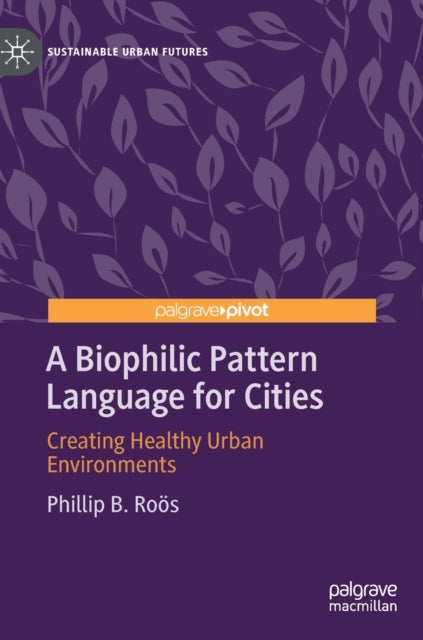
Phillip B. Ro s
A Biophilic Pattern Language for Cities: Creating Healthy Urban Environments
A Biophilic Pattern Language for Cities: Creating Healthy Urban Environments
💎 Earn 185 Points (£1.85) on this item.
We can order this item for you. Delivery usually takes about 4 to 6 weeks.
This item is not held in our immediate stock. We will order it for you after checkout.
Estimated delivery: About 4 to 6 weeks
YOU SAVE £7.83
- Condition: Brand new
- UK Delivery times: Usually arrives within 2 - 3 working days
- UK Shipping: Fee starts at £2.39. Subject to product weight & dimension
Bulk ordering. Want 15 or more copies? Get a personalised quote and bigger discounts. Learn more about bulk orders.
Couldn't load pickup availability
- More about A Biophilic Pattern Language for Cities: Creating Healthy Urban Environments
The book presents a holistic, integral, and sustainable design and planning method embedded in the hypothesis of biophilia, our innate connection to nature, used as a platform to chart a biophilic pattern language framework.
Format: Hardback
Length: 114 pages
Publication date: 07 December 2022
Publisher: Springer International Publishing AG
This book offers a comprehensive and holistic approach to sustainable design and planning, rooted in the concept of biophilia, our inherent connection to nature. By leveraging this connection, it provides a framework for developing a biophilic pattern language that can guide the creation of more sustainable and livable cities.
The author emphasizes the importance of considering the human-nature relationship in designing urban spaces, recognizing that it plays a vital role in promoting well-being, enhancing environmental quality, and fostering a sense of community. Through the use of a biophilic pattern language, cities can be designed to incorporate natural elements, promote biodiversity, and create a harmonious relationship between humans and the natural world.
One of the key principles of biophilic design is the integration of natural features into urban environments. This includes incorporating green spaces, such as parks and gardens, into the cityscape, as well as designing buildings with natural ventilation, daylighting, and thermal comfort in mind. By creating spaces that are connected to nature, residents can experience a sense of relaxation, reduce stress, and improve their overall health and well-being.
Another important aspect of biophilic design is the promotion of biodiversity. By incorporating a variety of plant species and wildlife habitats into urban areas, cities can support a diverse range of species and contribute to the conservation of biodiversity. This not only benefits the environment but also enhances the aesthetic appeal and cultural value of the city.
The book also discusses the role of technology in sustainable design and planning. While technology can be a powerful tool for promoting sustainability, it is important to use it in a way that aligns with the principles of biophilic design. For example, smart city technologies can be used to monitor and manage energy consumption, reduce waste, and improve transportation efficiency, all while promoting a sense of connection to nature.
In conclusion, A Biophilic Pattern Language for Cities provides a valuable resource for architects, planners, and policymakers seeking to create more sustainable and livable cities. By leveraging the concept of biophilia and developing a biophilic pattern language, cities can be designed to promote well-being, enhance environmental quality, and foster a sense of community. This approach offers a promising solution to the challenges of urbanization and provides a roadmap for creating a more sustainable future.
This book offers a comprehensive and holistic approach to sustainable design and planning, rooted in the concept of biophilia, our inherent connection to nature. By leveraging this connection, it provides a framework for developing a biophilic pattern language that can guide the creation of more sustainable and livable cities.
The author emphasizes the importance of considering the human-nature relationship in designing urban spaces, recognizing that it plays a vital role in promoting well-being, enhancing environmental quality, and fostering a sense of community. Through the use of a biophilic pattern language, cities can be designed to incorporate natural elements, promote biodiversity, and create a harmonious relationship between humans and the natural world.
One of the key principles of biophilic design is the integration of natural features into urban environments. This includes incorporating green spaces, such as parks and gardens, into the cityscape, as well as designing buildings with natural ventilation, daylighting, and thermal comfort in mind. By creating spaces that are connected to nature, residents can experience a sense of relaxation, reduce stress, and improve their overall health and well-being.
Another important aspect of biophilic design is the promotion of biodiversity. By incorporating a variety of plant species and wildlife habitats into urban areas, cities can support a diverse range of species and contribute to the conservation of biodiversity. This not only benefits the environment but also enhances the aesthetic appeal and cultural value of the city.
The book also discusses the role of technology in sustainable design and planning. While technology can be a powerful tool for promoting sustainability, it is important to use it in a way
In conclusion, A Biophilic Pattern Language for Cities provides a valuable resource for architects, planners, and policymakers seeking to create more sustainable and livable cities. By leveraging the concept of biophilia and developing a biophilic pattern language, cities can be designed to promote well-being, enhance environmental quality, and foster a sense of community. This approach offers a promising solution to the challenges of urbanization and provides a roadmap for creating a more sustainable future.
Weight: 313g
Dimension: 210 x 148 (mm)
ISBN-13: 9783031190704
Edition number: 1st ed. 2022
This item can be found in:
UK and International shipping information
UK and International shipping information
UK Delivery and returns information:
- Delivery within 2 - 3 days when ordering in the UK.
- Shipping fee for UK customers from £2.39. Fully tracked shipping service available.
- Returns policy: Return within 30 days of receipt for full refund.
International deliveries:
Shulph Ink now ships to Australia, Belgium, Canada, France, Germany, Ireland, Italy, India, Luxembourg Saudi Arabia, Singapore, Spain, Netherlands, New Zealand, United Arab Emirates, United States of America.
- Delivery times: within 5 - 10 days for international orders.
- Shipping fee: charges vary for overseas orders. Only tracked services are available for most international orders. Some countries have untracked shipping options.
- Customs charges: If ordering to addresses outside the United Kingdom, you may or may not incur additional customs and duties fees during local delivery.