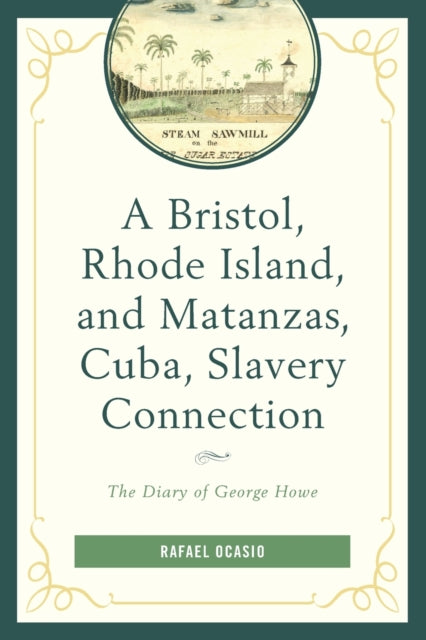
Rafael Ocasio
A Bristol, Rhode Island, and Matanzas, Cuba, Slavery Connection: The Diary of George Howe
A Bristol, Rhode Island, and Matanzas, Cuba, Slavery Connection: The Diary of George Howe
💎 Earn 191 Points (£1.91) on this item.
We can order this item for you. Delivery usually takes about 4 to 6 weeks.
This item is not held in our immediate stock. We will order it for you after checkout.
Estimated delivery: About 4 to 6 weeks
- Condition: Brand new
- UK Delivery times: Usually arrives within 2 - 3 working days
- UK Shipping: Fee starts at £2.39. Subject to product weight & dimension
Bulk ordering. Want 15 or more copies? Get a personalised quote and bigger discounts. Learn more about bulk orders.
Couldn't load pickup availability
- More about A Bristol, Rhode Island, and Matanzas, Cuba, Slavery Connection: The Diary of George Howe
In the early 19th century, Cuba was the world's largest sugar producer, and the United States was its most important buyer. A diary by Mr. George Howe, Esquire (1791–1837) sheds light on the close commercial relationship between Cuba and the Rhode Island coastal town of Bristol, where the citizens were heavily involved in the slavery trade. Howe expressed mixed personal feelings about local slavery work practices, feeling lucky to be employed but also struggling with his personal feelings regarding slavery. This book examines Howe's diary entries in the thematic context of the local Costumbrista literary production, which documented local customs and critically analyzed social ills.
Format: Paperback / softback
Length: 306 pages
Publication date: 15 July 2021
Publisher: Lexington Books
In the early 19th century, Cuba emerged as the world's largest producer of sugar, while the United States became its most important buyer. Despite being scarcely documented today, there existed a close commercial relationship between Cuba and the Rhode Island coastal town of Bristol. The citizens of Bristol were heavily involved in the slavery trade, owning sugarcane plantations in Cuba and also serving as staff workers at these facilities.
Available in print for the first time, a diary sheds light on this connection. Mr. George Howe, Esquire (1791–1837), documented his tasks at a Bristolian-owned plantation called New Hope, which was owned by well-known Bristol merchant, slave trader, and US senator James DeWolf (1764–1837). Howe expressed mixed personal feelings about local slavery work practices. He felt fortunate to be employed and was determined to do his job well, despite the harsh conditions operating at New Hope. However, he also struggled with his personal feelings regarding slavery. Though an oppressive system, it was at the core of New Hope's financial success and, therefore, Howe's well-being as an employee.
This book examines Howe's diary entries in the thematic context of the local Costumbrista literary production. Costumbrismo, both documented local customs and critically analyzed social ills. In his letters to relatives and friends, Howe depicted a more personal reaction to the underpinnings of slavery practices, a reaction reflecting early abolitionist sentiments.
Weight: 404g
Dimension: 220 x 155 x 17 (mm)
ISBN-13: 9781498562652
This item can be found in:
UK and International shipping information
UK and International shipping information
UK Delivery and returns information:
- Delivery within 2 - 3 days when ordering in the UK.
- Shipping fee for UK customers from £2.39. Fully tracked shipping service available.
- Returns policy: Return within 30 days of receipt for full refund.
International deliveries:
Shulph Ink now ships to Australia, Belgium, Canada, France, Germany, Ireland, Italy, India, Luxembourg Saudi Arabia, Singapore, Spain, Netherlands, New Zealand, United Arab Emirates, United States of America.
- Delivery times: within 5 - 10 days for international orders.
- Shipping fee: charges vary for overseas orders. Only tracked services are available for most international orders. Some countries have untracked shipping options.
- Customs charges: If ordering to addresses outside the United Kingdom, you may or may not incur additional customs and duties fees during local delivery.