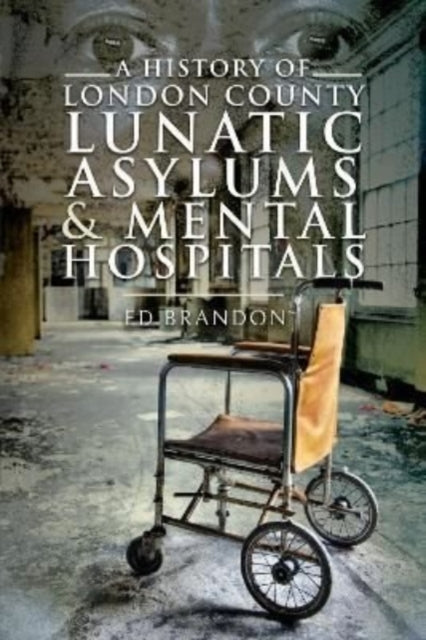
Ed Brandon
A History of London County Lunatic Asylums & Mental Hospitals
A History of London County Lunatic Asylums & Mental Hospitals
💎 Earn 60 Points (£0.60) on this item.
YOU SAVE £4.97
- Condition: Brand new
- UK Delivery times: Usually arrives within 2 - 3 working days
- UK Shipping: Fee starts at £2.39. Subject to product weight & dimension
Bulk ordering. Want 15 or more copies? Get a personalised quote and bigger discounts. Learn more about bulk orders.
Couldn't load pickup availability
- More about A History of London County Lunatic Asylums & Mental Hospitals
During the Middle Ages, London's Bedlam insane hospital housed the city's insane in filthy cells, where they were neglected and abused. The county asylums were the most humane or cost-effective way to offer the mass confinement and treatment believed necessary due to the unprecedented growth of the metropolis after the Industrial Revolution. Middlesex would build and open three huge county asylums, and when London became its own county in 1889, it would adopt all three and go on to build or run another eight such institutions. At their peak, London's eleven county asylums were home to around 25,000 patients and thousands more staff and dominated the physical landscape. Several gained a legacy that lasted even beyond their closure, as their hulking, abandoned forms sat in overgrown sites around London, refusing to be forgotten and continuing to attract the attention of those with both curious and nefarious motives.
Format: Paperback / softback
Length: 224 pages
Publication date: 30 July 2022
Publisher: Pen & Sword Books Ltd
From the Middle Ages onwards, London's notorious Bedlam lunatic hospital saw the city's mad locked away in dank cells, neglected and abused, and without any real cure or comfort. The unprecedented growth of the metropolis after the Industrial Revolution saw a perceived epidemic of madness take hold, with county asylums seen by those in power as the most humane or cost-effective way to offer the mass confinement and treatment believed necessary. The county of Middlesex, to which London once belonged, would build and open three huge county asylums from 1831, and when London became its own county in 1889, it would adopt all three and go on to build or run another eight such immense institutions. Each operated much like a self-contained town; home to thousands and often incorporating its own railway, laundries, farms, gardens, kitchens, ballrooms, sports pitches, surgeries, wards, cells, chapel, mortuary, and more, in order to ensure the patients never needed to leave the asylum's grounds. Between them, at their peak, London's eleven county asylums were home to around 25,000 patients and thousands more staff, and dominated the physical landscape as well as the public imagination from the 1830s right up to the 1990s. Several gained a legacy that lasted even beyond their closure, as their hulking, abandoned forms sat in overgrown sites around London, refusing to be forgotten and continuing to attract the attention of those with both curious and nefarious motives. Hanwell (St Bernard's), Colney Hatch (Friern), Banstead, Cane Hill, Claybury, Bexley, Manor, Horton, St Ebba's, Long Grove, and West Park went from being known as county lunatic asylums to mental hospitals and beyond. Reflecting on both the positive and negative aspects of their long and storied histories from their planning and construction through their eventual closure and legacy, these asylums played a significant role in the history of mental health care in Britain.
Dimension: 234 x 156 (mm)
ISBN-13: 9781399008730
UK and International shipping information
UK and International shipping information
UK Delivery and returns information:
- Delivery within 2 - 3 days when ordering in the UK.
- Shipping fee for UK customers from £2.39. Fully tracked shipping service available.
- Returns policy: Return within 30 days of receipt for full refund.
International deliveries:
Shulph Ink now ships to Australia, Belgium, Canada, France, Germany, Ireland, Italy, India, Luxembourg Saudi Arabia, Singapore, Spain, Netherlands, New Zealand, United Arab Emirates, United States of America.
- Delivery times: within 5 - 10 days for international orders.
- Shipping fee: charges vary for overseas orders. Only tracked services are available for most international orders. Some countries have untracked shipping options.
- Customs charges: If ordering to addresses outside the United Kingdom, you may or may not incur additional customs and duties fees during local delivery.