JonStewart
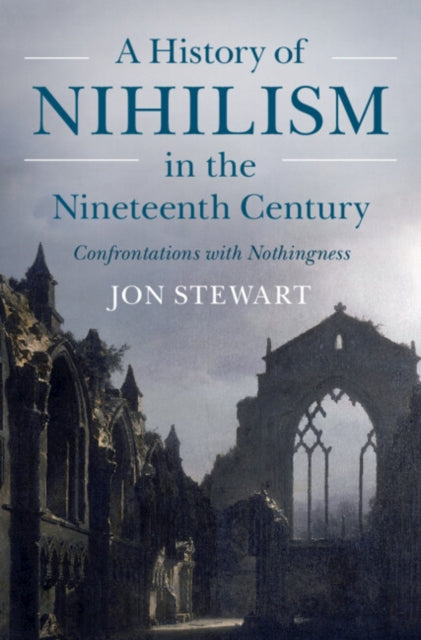
A History of Nihilism in the Nineteenth Century: Confrontations with Nothingness
A History of Nihilism in the Nineteenth Century: Confrontations with Nothingness
💎 Earn 155 Points (£1.55) on this item.
YOU SAVE £1.85
- Condition: Brand new
- UK Delivery times: Usually arrives within 2 - 3 working days
- UK Shipping: Fee starts at £2.39. Subject to product weight & dimension
Bulk ordering. Want 15 or more copies? Get a personalised quote and bigger discounts. Learn more about bulk orders.
Couldn't load pickup availability
- More about A History of Nihilism in the Nineteenth Century: Confrontations with Nothingness
Nihilism, the belief that life is meaningless, is often associated with twentieth-century movements such as existentialism, postmodernism, and Dadaism. However, Jon Stewart argues that its origins date back to the nineteenth century, with the rapid development of Enlightenment science establishing a secular worldview that diminished the importance of human beings in the universe. His book explores how nihilism developed in philosophy, religion, poetry, and literature and how it has continued to shape intellectual debates ever since.
Format: Hardback
Length: 342 pages
Publication date: 30 March 2023
Publisher: Cambridge University Press
Nihilism, the profound belief that life lacks inherent meaning, has been closely linked with twentieth-century movements such as existentialism, postmodernism, and Dadaism. It is believed to have emerged as a response to the devastating experiences of the two World Wars and the Holocaust. However, in his groundbreaking new book, Jon Stewart reveals that the roots of nihilism trace back much further, to the early 19th century.
According to Stewart, the true origin of modern nihilism can be attributed to the rapid development of Enlightenment science, which established a secular worldview. This shift diminished the significance of human beings, making them appear utterly insignificant within the vast expanse of space and time. The author's comprehensive exploration of how nihilism evolved not only in philosophy but also in religion, poetry, and literature highlights its urgency for thinkers of all kinds and its enduring impact on intellectual debates.
Stewart argues that nihilism emerged as a reaction to the perceived failures of traditional philosophical and religious systems. He points out that the Enlightenment's emphasis on reason and empirical evidence led to a questioning of the authority and validity of traditional beliefs. This skepticism, combined with the horrors of war and genocide, created a sense of hopelessness and despair that gave rise to nihilistic ideologies.
One of the key aspects of nihilism is its rejection of any overarching moral or ethical framework. Nihilists believe that there is no universal truth or purpose to life, and that individuals are free to create their own meaning and values. This can lead to a sense of individualism and freedom, but it can also be associated with apathy and a lack of responsibility towards others.
Nihilism has had a profound influence on various fields, including philosophy, literature, and art. It has inspired writers and artists to explore the depths of human existence and the meaninglessness of life. For example, the works of Friedrich Nietzsche, Fyodor Dostoevsky, and Albert Camus are often considered examples of nihilistic literature. In art, nihilism has been expressed through surrealism, abstract expressionism, and other forms of non-representational art.
Despite its negative connotations, nihilism can also be seen as a catalyst for change and innovation. Nihilists challenge the status quo
quo and encourage individuals to think critically and independently. They encourage individuals to question the established norms and values and to create their own meaning and purpose in life. This can lead to a sense of empowerment and self-discovery, but it can also be dangerous if taken to extremes.
In conclusion, nihilism is a complex and multifaceted concept that has been shaped by a range of historical, social, and cultural factors. While it is often associated with despair and hopelessness, it can also be seen as a source of inspiration and creativity. By exploring the origins.
Weight: 598g
Dimension: 236 x 160 x 29 (mm)
ISBN-13: 9781009266703
This item can be found in:
UK and International shipping information
UK and International shipping information
UK Delivery and returns information:
- Delivery within 2 - 3 days when ordering in the UK.
- Shipping fee for UK customers from £2.39. Fully tracked shipping service available.
- Returns policy: Return within 30 days of receipt for full refund.
International deliveries:
Shulph Ink now ships to Australia, Belgium, Canada, France, Germany, Ireland, Italy, India, Luxembourg Saudi Arabia, Singapore, Spain, Netherlands, New Zealand, United Arab Emirates, United States of America.
- Delivery times: within 5 - 10 days for international orders.
- Shipping fee: charges vary for overseas orders. Only tracked services are available for most international orders. Some countries have untracked shipping options.
- Customs charges: If ordering to addresses outside the United Kingdom, you may or may not incur additional customs and duties fees during local delivery.