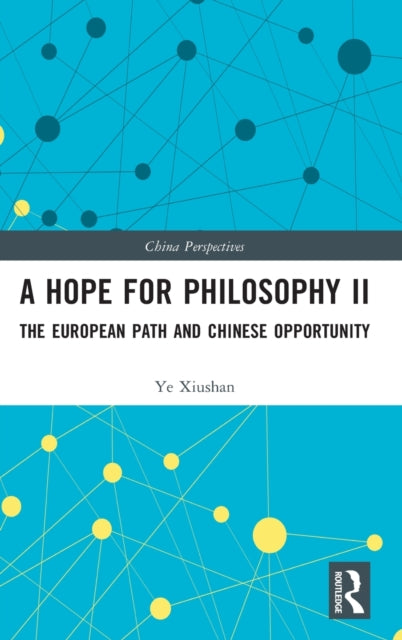
Ye Xiushan
A Hope for Philosophy II: The European Path and Chinese Opportunity
A Hope for Philosophy II: The European Path and Chinese Opportunity
💎 Earn 689 Points (£6.89) on this item.
We can order this item for you. Delivery usually takes about 4 to 6 weeks.
This item is not held in our immediate stock. We will order it for you after checkout.
Estimated delivery: About 4 to 6 weeks
YOU SAVE £8.18
- Condition: Brand new
- UK Delivery times: Usually arrives within 2 - 3 working days
- UK Shipping: Fee starts at £2.39. Subject to product weight & dimension
Bulk ordering. Want 15 or more copies? Get a personalised quote and bigger discounts. Learn more about bulk orders.
Couldn't load pickup availability
- More about A Hope for Philosophy II: The European Path and Chinese Opportunity
A comparison of Chinese and European philosophies, highlighting their similarities and differences, and exploring the potential for dialogue and integration.
Format: Hardback
Length: 142 pages
Publication date: 20 October 2022
Publisher: Taylor & Francis Ltd
Here is the rephrased text:
"This book explores the fascinating intersection of Chinese philosophy and European philosophy, delving into the rich tapestry of ideas and concepts that have shaped these two philosophical traditions. Through a comprehensive and interdisciplinary approach, the book seeks to initiate a dialogue that spans time and space, bridging the gap between these two philosophical giants.
The first chapter provides an insightful introduction to the historical and cultural contexts that have influenced the development of Chinese and European philosophy. It explores the philosophical foundations of ancient China, including Confucianism, Taoism, and Buddhism, as well as the influence of Chinese culture on the development of Western philosophy. The chapter also highlights the contributions of prominent Chinese philosophers, such as Confucius, Mencius, and Xunzi, to the world of philosophy.
In the second chapter, the book delves into the core principles and ideas of European philosophy, including rationalism, empiricism, and idealism. It examines the works of influential European thinkers such as Plato, Aristotle, Descartes, and Kant, as well as the impact of European colonialism on the development of Chinese philosophy. The chapter also explores the philosophical implications of the rise of science and technology in modern society.
The third chapter explores the philosophical implications of the interaction between Chinese and European philosophy. It examines how these two philosophical traditions have influenced each other, both positively and negatively, and how they can be used to address contemporary global challenges such as climate change, inequality, and political instability. The chapter also discusses the challenges and opportunities that arise from the cultural exchange between China and Europe, including the potential for mutual learning and growth.
The fourth chapter provides a critical evaluation of the strengths and weaknesses of Chinese and European philosophy. It examines how these two philosophical traditions have approached similar issues, such as the nature of reality and the role of the individual in society, and how they have differed in their approaches. The chapter also explores the potential for interdisciplinary collaboration between Chinese and European philosophers to address complex global challenges.
In conclusion, this book offers a comprehensive and interdisciplinary exploration of the fascinating intersection of Chinese philosophy and European philosophy. It provides a rich and nuanced understanding of these two philosophical traditions, their historical and cultural contexts, and their philosophical implications for contemporary society. By initiating a dialogue that spans time and space, the book seeks to inspire further exploration and understanding of these two philosophical giants."
This book explores the fascinating intersection of Chinese philosophy and European philosophy, delving into the rich tapestry of ideas and concepts that have shaped these two philosophical traditions. Through a comprehensive and interdisciplinary approach, the book seeks to initiate a dialogue that spans time and space, bridging the gap between these two philosophical giants.
The first chapter provides an insightful introduction to the historical and cultural contexts that have influenced the development of Chinese and European philosophy. It explores the philosophical foundations of ancient China, including Confucianism, Taoism, and Buddhism, as well as the influence of Chinese culture on the development of Western philosophy. The chapter also highlights the contributions of prominent Chinese philosophers, such as Confucius, Mencius, and Xunzi, to the world of philosophy.
In the second chapter, the book delves into the core principles and ideas of European philosophy, including rationalism, empiricism, and idealism. It examines the works of influential European thinkers such as Plato, Aristotle, Descartes, and Kant, as well as the impact of European colonialism on the development of Chinese philosophy. The chapter also explores the philosophical implications of the rise of science and technology in modern society.
The third chapter explores the philosophical implications of the interaction between Chinese and European philosophy. It examines how these two philosophical traditions have influenced each other, both positively and negatively, and how they can be used to address contemporary global challenges such as climate change, inequality, and political instability. The chapter also discusses the challenges and opportunities that arise from the cultural exchange between China and Europe, including the potential for mutual learning and growth.
The fourth chapter provides a critical evaluation of the strengths and weaknesses of Chinese and European philosophy. It examines how these two philosophical traditions have approached similar issues, such as the nature of reality and the role of the individual in society, and how they have differed in their approaches. The chapter also explores the potential for interdisciplinary collaboration between Chinese and European philosophers to address complex global challenges.
In conclusion, this book offers a comprehensive and interdisciplinary exploration of the fascinating intersection of Chinese philosophy and European philosophy. It provides a rich and nuanced understanding of these two philosophical traditions, their historical and cultural contexts, and their philosophical implications for contemporary society. By initiating a dialogue that spans time and space, the book seeks to inspire further exploration and understanding of these two philosophical giants.
Weight: 430g
Dimension: 234 x 156 (mm)
ISBN-13: 9781032248059
This item can be found in:
UK and International shipping information
UK and International shipping information
UK Delivery and returns information:
- Delivery within 2 - 3 days when ordering in the UK.
- Shipping fee for UK customers from £2.39. Fully tracked shipping service available.
- Returns policy: Return within 30 days of receipt for full refund.
International deliveries:
Shulph Ink now ships to Australia, Belgium, Canada, France, Germany, Ireland, Italy, India, Luxembourg Saudi Arabia, Singapore, Spain, Netherlands, New Zealand, United Arab Emirates, United States of America.
- Delivery times: within 5 - 10 days for international orders.
- Shipping fee: charges vary for overseas orders. Only tracked services are available for most international orders. Some countries have untracked shipping options.
- Customs charges: If ordering to addresses outside the United Kingdom, you may or may not incur additional customs and duties fees during local delivery.