Richard Firth-Godbehere
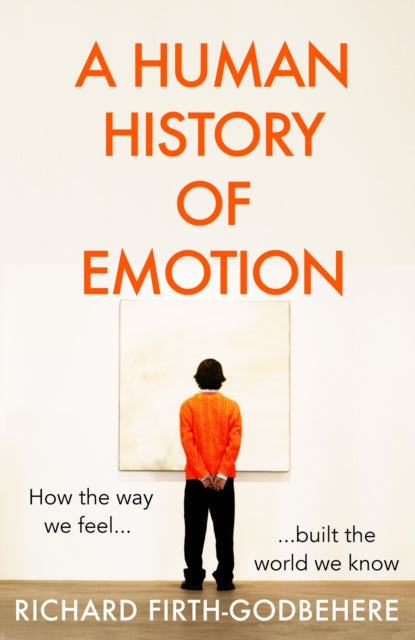
A Human History of Emotion: How the Way We Feel Built the World We Know
A Human History of Emotion: How the Way We Feel Built the World We Know
💎 Earn 70 Points (£0.70) on this item.
YOU SAVE £5.84
- Condition: Brand new
- UK Delivery times: Usually arrives within 2 - 3 working days
- UK Shipping: Fee starts at £2.39. Subject to product weight & dimension
Bulk ordering. Want 15 or more copies? Get a personalised quote and bigger discounts. Learn more about bulk orders.
Couldn't load pickup availability
- More about A Human History of Emotion: How the Way We Feel Built the World We Know
Emotions have played a significant role in shaping human history, influencing events such as the origins of philosophy, the birth of major religions, the fall of Rome, the Scientific Revolution, and wars. A Human History of Emotion explores how our understanding and experience of emotions has evolved over time, and how our beliefs about feelings have shaped us and the world we inhabit.
Format: Hardback
Length: 336 pages
Publication date: 17 February 2022
Publisher: HarperCollins Publishers
Emotions have played a significant role in shaping the course of human history and have evolved with us as a species. From the origins of philosophy to the birth of the world's major religions, the fall of Rome, the Scientific Revolution, and some of the bloodiest wars that humanity has ever experienced, emotions have been a driving force behind these events. In his book, "A Human History of Emotion," Richard Firth-Godbehere takes readers on a fascinating and wide-ranging tour of the central and often under-appreciated role emotions have played in human societies around the world and throughout history. Drawing on psychology, neuroscience, philosophy, art, and religious history, Firth-Godbehere vividly illustrates how our understanding and experience of emotions has changed over time and how our beliefs about feelings and our feelings themselves have profoundly shaped us and the world we inhabit.
One of the key themes of Firth-Godbehere's book is the idea that emotions are not just subjective experiences but are also deeply embedded in our social and cultural structures. He argues that emotions are not just random or irrational but are shaped by a complex set of social, cultural, and biological factors. For example, the way we express emotions is influenced by the social norms and values of our society, and the way we perceive and interpret emotions is influenced by our cultural background and upbringing.
Another important theme of Firth-Godbehere's book is the idea that emotions have played a critical role in shaping our beliefs and values. He argues that emotions are not just a means of expressing our feelings but are also a means of shaping our beliefs and values. For example, the way we feel about a particular issue can influence our decision-making and our behavior.
Firth-Godbehere also explores the role of emotions in the development of human societies. He argues that emotions have played a critical role in the formation of social bonds, the development of cultural traditions, and the establishment of political systems. For example, the way we feel about our family and friends can influence our social relationships and our sense of belonging.
However, Firth-Godbehere also acknowledges that emotions can be both positive and negative. He argues that emotions can be a source of joy, happiness, and fulfillment, but they can also be a source of pain, suffering, and conflict. For example, the way we feel about a particular event can influence our behavior and our decision-making, and the way we respond to a crisis can have a significant impact on our society.
In conclusion, emotions have played a significant role in shaping the course of human history and have evolved with us as a species. From the origins of philosophy to the birth of the world's major religions, the fall of Rome, the Scientific Revolution, and some of the bloodiest wars that humanity has ever experienced, emotions have been a driving force behind these events. In his book, "A Human History of Emotion," Richard Firth-Godbehere takes readers on a fascinating and wide-ranging tour of the central and often under-appreciated role emotions have played in human societies around the world and throughout history. Drawing on psychology, neuroscience, philosophy, art, and religious history, Firth-Godbehere vividly illustrates how our understanding and experience of emotions has changed over time and how our beliefs about feelings and our feelings themselves have profoundly shaped us and the world we inhabit.
Weight: 546g
Dimension: 162 x 244 x 33 (mm)
ISBN-13: 9780008393755
This item can be found in:
UK and International shipping information
UK and International shipping information
UK Delivery and returns information:
- Delivery within 2 - 3 days when ordering in the UK.
- Shipping fee for UK customers from £2.39. Fully tracked shipping service available.
- Returns policy: Return within 30 days of receipt for full refund.
International deliveries:
Shulph Ink now ships to Australia, Belgium, Canada, France, Germany, Ireland, Italy, India, Luxembourg Saudi Arabia, Singapore, Spain, Netherlands, New Zealand, United Arab Emirates, United States of America.
- Delivery times: within 5 - 10 days for international orders.
- Shipping fee: charges vary for overseas orders. Only tracked services are available for most international orders. Some countries have untracked shipping options.
- Customs charges: If ordering to addresses outside the United Kingdom, you may or may not incur additional customs and duties fees during local delivery.