Shulph Ink
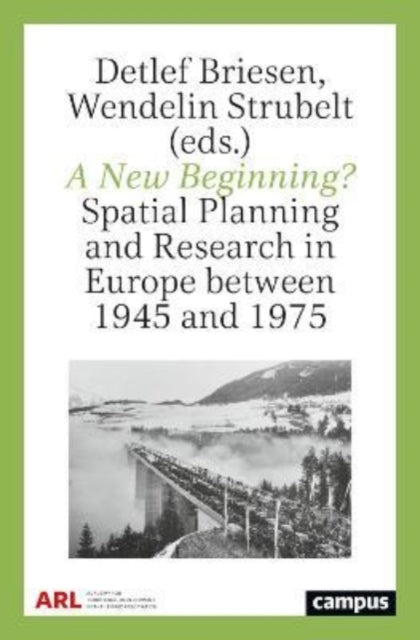
A New Beginning?: Spatial Planning and Research in Europe between 1945 and 1975
A New Beginning?: Spatial Planning and Research in Europe between 1945 and 1975
💎 Earn 209 Points (£2.09) on this item.
YOU SAVE £2.11
- Condition: Brand new
- UK Delivery times: Usually arrives within 2 - 3 working days
- UK Shipping: Fee starts at £2.39. Subject to product weight & dimension
Bulk ordering. Want 15 or more copies? Get a personalised quote and bigger discounts. Learn more about bulk orders.
Couldn't load pickup availability
- More about A New Beginning?: Spatial Planning and Research in Europe between 1945 and 1975
Spatial planning in Europe underwent a significant transformation in the postwar period, evolving from colonial settlement and conquest projections to an institutional part of the European legal and social states.
Format: Paperback / softback
Length: 470 pages
Publication date: 18 August 2022
Publisher: Campus Verlag
Spatial planning is a fundamental aspect of European society, with its roots dating back to the nineteenth century. It emerged as a response to various challenges, including colonial settlement, urban reform, and conservative or fascist visions of order. However, the legacy of the Soviet planned economy further complicated spatial planning in the postwar period. After 1945, spatial planning sought to contribute to the reconstruction of Europe and to align with the path towards modern society, mass democracy, and mass prosperity. This transformation was evident in the reform efforts that took place in Spain, Germany, the Netherlands, and Italy, coinciding with the social changes between 1945 and 1975.
Despite these efforts, spatial planning faced competition from specialized planning by ministries, economic framework planning, and the market economy. This competition led to a transformation of spatial planning, making it an institutional component of the European legal and social states.
Spatial planning plays a crucial role in shaping the physical and social landscape of Europe. It involves the strategic allocation of resources, including land, infrastructure, and services, to achieve sustainable development and improve the quality of life for its citizens. Through spatial planning, cities and regions can be designed to promote economic growth, reduce inequality, and enhance environmental sustainability.
One of the key challenges facing spatial planning in Europe is the need to balance urbanization and rural development. While cities are centers of economic activity and innovation, rural areas often face economic decline and depopulation. Spatial planning can help address this challenge by promoting the growth of rural economies, improving access to services, and preserving agricultural land and natural resources.
Another important aspect of spatial planning is the consideration of transportation and mobility. With the increasing demand for transportation and the impact of climate change on transportation systems, spatial planning can help promote sustainable transportation options, such as public transportation, cycling, and walking. This can reduce traffic congestion, improve air quality, and promote healthier lifestyles.
Spatial planning also plays a role in addressing social and cultural issues in Europe. It can help promote social cohesion, diversity, and inclusion by creating spaces that are accessible to all members of society, regardless of their age, income, or ethnicity. Spatial planning can also help preserve cultural heritage and promote cultural diversity by creating spaces that are conducive to cultural activities and events.
In conclusion, spatial planning is a critical component of European society, with its roots dating back to the nineteenth century. It has evolved to respond to various challenges and has played a significant role in shaping the physical and social landscape of Europe. While spatial planning faces competition from other planning sectors, it continues to play a vital role in promoting sustainable development, reducing inequality, and enhancing the quality of life for its citizens. As Europe continues to evolve, spatial planning will remain an important tool for shaping its future.
Dimension: 216 x 140 x 38 (mm)
ISBN-13: 9783593515090
This item can be found in:
UK and International shipping information
UK and International shipping information
UK Delivery and returns information:
- Delivery within 2 - 3 days when ordering in the UK.
- Shipping fee for UK customers from £2.39. Fully tracked shipping service available.
- Returns policy: Return within 30 days of receipt for full refund.
International deliveries:
Shulph Ink now ships to Australia, Belgium, Canada, France, Germany, Ireland, Italy, India, Luxembourg Saudi Arabia, Singapore, Spain, Netherlands, New Zealand, United Arab Emirates, United States of America.
- Delivery times: within 5 - 10 days for international orders.
- Shipping fee: charges vary for overseas orders. Only tracked services are available for most international orders. Some countries have untracked shipping options.
- Customs charges: If ordering to addresses outside the United Kingdom, you may or may not incur additional customs and duties fees during local delivery.