Dr Lisa Elena– World Agroforestry) Fuchs
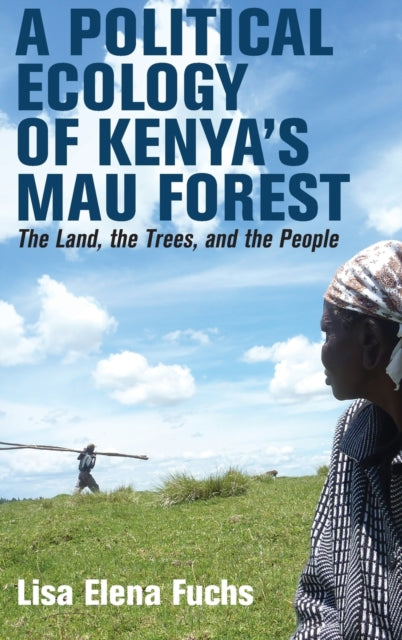
A Political Ecology of Kenya’s Mau Forest: The Land, the Trees, and the People
A Political Ecology of Kenya’s Mau Forest: The Land, the Trees, and the People
💎 Earn 537 Points (£5.37) on this item.
YOU SAVE £2.47
- Condition: Brand new
- UK Delivery times: Usually arrives within 2 - 3 working days
- UK Shipping: Fee starts at £2.39. Subject to product weight & dimension
Bulk ordering. Want 15 or more copies? Get a personalised quote and bigger discounts. Learn more about bulk orders.
Couldn't load pickup availability
- More about A Political Ecology of Kenya’s Mau Forest: The Land, the Trees, and the People
The Mau Forest in Kenya has been under severe threat since the 1990s, and Lisa Fuchs' book explores the failure of the government-led forest restoration and rehabilitation initiative to Save the Mau. Fuchs examines the structural factors and the role of individuals in the forest's destruction and of non-protection and traces the colonial legacy of post-independent environmental conservation policies and practices. She shows that the crisis is more than an environmental crisis, but also a political, economic, and socio-cultural crisis. Fuchs highlights the implementation of insufficient conservation programmes, forest allocation and benefits, and a forest management system that prioritises commercial forest production over biodiversity conservation. She also analyses the socio-cultural dynamics within and among various forest-dwelling communities, including the indigenous hunting and gathering Ogiek and in-migrant groups. The book proposes realistic alternatives to sustainable forest management in politicised environments, which are relevant in this age of anthropogenic environmental crises and conflicts.
Format: Hardback
Length: 404 pages
Publication date: 21 February 2023
Publisher: James Currey
The Mau Forest, the largest closed-canopy forest in East Africa, has faced severe threats since the 1990s. In this political ecology study, Lisa Fuchs explores the failure of the government-led forest restoration and rehabilitation initiative to Save the Mau, launched in 2009. Fuchs examines two of the most contentious issues in Kenya since colonial times: land and the environment. She sheds light on the structural factors and the role of individuals in the forest's destruction and non-protection and traces the colonial legacy of post-independent environmental conservation policies and practices. Fuchs demonstrates that the Mau crisis is more than an environmental crisis; it is also a political, economic, and socio-cultural crisis. Through a detailed empirical analysis, Fuchs shows that the Mau crisis led to the near collapse of landscapes and livelihoods in the Mau Forest ecosystem. She traces the implementation of insufficient conservation programmes, which resulted from historical path-dependency and the adoption of global environmental governance blueprints, forest allocation and benefits, and exposes a forest management system that prioritises commercial forest production over biodiversity conservation. Access and entitlements to highly fertile forest land and the amalgamation of forest rehabilitation with the reclamation of grabbed public forest are emphasised as further core contributors to the crisis. The socio-cultural dynamics within and among various forest-dwelling communities, including the indigenous Maasai, are also explored. Fuchs argues that the crisis can be addressed through a combination of policy reforms, community-based conservation initiatives, and sustainable land use practices. She calls for a more inclusive and participatory approach to conservation that recognises the rights and interests of all stakeholders and promotes sustainable development. The study provides valuable insights into the complex and interconnected nature of environmental crises and offers a roadmap for addressing them in a more effective and equitable manner.
A Timely and Important Examination of the Forest's Environmental Crises
The Mau Forest, the largest closed-canopy forest in East Africa, has faced severe threats since the 1990s. In this political ecology study, Lisa Fuchs explores the failure of the government-led forest restoration and rehabilitation initiative to Save the Mau, launched in 2009. Fuchs examines two of the most contentious issues in Kenya since colonial times: land and the environment. She sheds light on the structural factors and the role of individuals in the forest's destruction and non-protection and traces the colonial legacy of post-independent environmental conservation policies and practices. Fuchs demonstrates that the Mau crisis is more than an environmental crisis; it is also a political, economic, and socio-cultural crisis. Through a detailed empirical analysis, Fuchs shows that the Mau crisis led to the near collapse of landscapes and livelihoods in the Mau Forest ecosystem. She traces the implementation of insufficient conservation programmes, which resulted from historical path-dependency and the adoption of global environmental governance blueprints, forest allocation and benefits, and exposes a forest management system that prioritises commercial forest production over biodiversity conservation. Access and entitlements to highly fertile forest land and the amalgamation of forest rehabilitation with the reclamation of grabbed public forest are emphasised as further core contributors to the crisis. The socio-cultural dynamics within and among various forest-dwelling communities, including the indigenous Maasai, are also explored. Fuchs argues that the crisis can be addressed through a combination of policy reforms, community-based conservation initiatives, and sustainable land use practices. She calls for a more inclusive and participatory approach to conservation that recognises the rights and interests of all stakeholders and promotes sustainable development. The study provides valuable insights into the complex and interconnected nature of environmental crises and offers a roadmap for addressing them in a more effective and equitable manner.
Weight: 1g
Dimension: 234 x 156 (mm)
ISBN-13: 9781847013477
This item can be found in:
UK and International shipping information
UK and International shipping information
UK Delivery and returns information:
- Delivery within 2 - 3 days when ordering in the UK.
- Shipping fee for UK customers from £2.39. Fully tracked shipping service available.
- Returns policy: Return within 30 days of receipt for full refund.
International deliveries:
Shulph Ink now ships to Australia, Belgium, Canada, France, Germany, Ireland, Italy, India, Luxembourg Saudi Arabia, Singapore, Spain, Netherlands, New Zealand, United Arab Emirates, United States of America.
- Delivery times: within 5 - 10 days for international orders.
- Shipping fee: charges vary for overseas orders. Only tracked services are available for most international orders. Some countries have untracked shipping options.
- Customs charges: If ordering to addresses outside the United Kingdom, you may or may not incur additional customs and duties fees during local delivery.