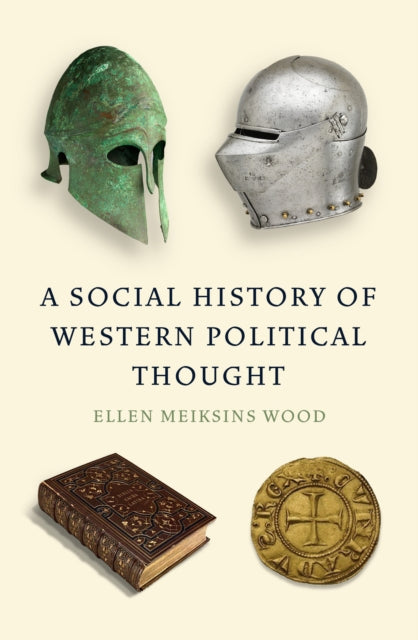
Ellen Meiksins Wood
A Social History of Western Political Thought
A Social History of Western Political Thought
💎 Earn 95 Points (£0.95) on this item.
YOU SAVE £5.82
- Condition: Brand new
- UK Delivery times: Usually arrives within 2 - 3 working days
- UK Shipping: Fee starts at £2.39. Subject to product weight & dimension
Bulk ordering. Want 15 or more copies? Get a personalised quote and bigger discounts. Learn more about bulk orders.
Couldn't load pickup availability
- More about A Social History of Western Political Thought
Ellen Meiksins Wood rewrites the history of political theory, treating canonical thinkers as engaged human beings responding to social relations and conflicts. She identifies a distinctive relation between property and state in Western history and shows how the canon was shaped by complex interactions among proprietors, labourers, and states. Western political theory owes its vigor and ambiguities to these complex relations.
Format: Paperback / softback
Length: 592 pages
Publication date: 30 August 2022
Publisher: Verso Books
In this groundbreaking work, Ellen Meiksins Wood rewrites the history of political theory, from Plato to Rousseau. Treating canonical thinkers as passionately engaged human beings, Wood examines their ideas not simply in the context of political languages but as creative responses to the social relations and conflicts of their time and place. She identifies a distinctive relation between property and state in Western history and shows how the canon, while largely the work of members or clients of dominant classes, was shaped by complex interactions among proprietors, labourers, and states. Western political theory, Wood argues, owes much of its vigour, and also many ambiguities, to these complex and often contradictory relations.
In the first volume, she traces the development of the Western tradition from classical antiquity through to the Middle Ages in the perspective of social history—a significant departure not only from the standard abstract history of ideas but also from other contextual methods. From the Ancient Greek polis of Plato, Aristotle, Aeschylus, and Sophocles, through the Roman Republic of Cicero and the Empire of St. Paul and St. Augustine, to the medieval world of Averroes, Thomas Aquinas, and William of Ockham, Wood offers a rich, dynamic exploration of thinkers and ideas that have indelibly stamped our modern world.
In the second volume, Wood addresses the formation of the modern state, the rise of capitalism, the Renaissance and Reformation, the scientific revolution, and the Age of Enlightenment, which have all been attributed to the early modern period. Nearly everything about its history remains controversial, but one thing is certain: it left a rich and provocative legacy of political ideas unmatched in Western history. The concepts of liberty, equality, property, and the state have been central to the political discourse of the West for centuries, and Wood's work provides a valuable insight into the origins and development of these ideas.
Wood's approach to political theory is interdisciplinary, drawing on a range of sources, including history, philosophy, and sociology. She argues that political theory should be understood as a living tradition, shaped by the social and historical context in which it is produced. By examining the ideas of canonical thinkers as human beings, Wood seeks to bring a fresh perspective to the study of political theory and to challenge the traditional notion that it is a purely abstract and academic discipline.
One of the key themes of Wood's work is the relationship between property and the state. She argues that the canon of Western political theory has been shaped by a distinctive relation between property and the state, which has evolved over time. In the ancient Greek polis, property was held in common and was not subject to private ownership. This led to a sense of community and equality among the citizens, as well as a limited role for the state in the regulation of property. However, as societies
capitalism and the rise of private property emerged in the medieval world, the relationship between property and the state began to change. The state became increasingly involved in the regulation of property, particularly in the context of land ownership and the distribution of wealth. This led to the development of the concept of property rights, which granted individuals the right to own and control property and to exercise their rights over it.
Wood argues that this shift in the relationship between property and the state has had a profound impact on the development of Western political theory. The canon of Western political theory, she argues, has been shaped by a complex interplay of factors, including the rise of capitalism, the development of the scientific revolution, and the rise of the bourgeoisie. The bourgeoisie, she argues, sought to protect their interests and to exercise their rights over property, which led to the development of the concept of property rights and the state's role in regulating property.
However, Wood also argues that this shift in the relationship between property and the state has led to a number of ambiguities and contradictions in Western political theory. For example, the concept of property rights has been used to justify the exploitation of labour and the accumulation of wealth by the bourgeoisie, while also being used to defend the rights of workers and the poor. The concept of the state has been used to promote social welfare and equality, but also to repress dissent and to maintain the power of the bourgeoisie.
Another key theme of Wood's work is the role of the canon in shaping the development of Western political theory. She argues that the canon of Western political theory has been shaped by a complex interplay of factors, including the rise
of patronage, the influence of religion, and the power of the state. The canon, she argues, has been largely the work of members or clients of dominant classes, but it has also been shaped by complex interactions among proprietors, labourers, and states. For example, the canon of Western political theory has been shaped by the power of the state to control the production and distribution of knowledge, as well as the influence of religion on the ideas of thinkers and ideas.
Wood's work is a valuable contribution to the study of political theory and to the broader field of social history. She offers a fresh perspective on the development of Western political theory and challenges the traditional notion that it is a purely abstract and academic discipline. By examining the ideas of canonical thinkers as human beings, Wood seeks to bring a sense of humanity and complexity to the study of political theory and to challenge the traditional notion that it is a purely abstract and academic discipline.
In conclusion, Ellen Meiksins Wood's work is a groundbreaking exploration of the history of political theory, from Plato to Rousseau. Treating canonical thinkers as passionately engaged human beings, Wood examines their ideas not simply in the context of political languages but as creative responses to the social relations and conflicts of their time and place. She identifies a distinctive relation between property and state in Western history and shows how the canon, while largely the work of members or clients of dominant classes, was shaped by complex interactions among proprietors, labourers, and states. Western political theory, Wood argues, owes much of its vigour, and also many ambiguities, to these complex and often contradictory relations.
In the first volume, she traces the development of the Western tradition from classical antiquity through to the Middle Ages in the perspective of social history—a significant departure not only from the standard abstract history of ideas but also from other contextual methods. From the Ancient Greek polis of Plato, Aristotle, Aeschylus, and Sophocles, through the Roman Republic of Cicero and the Empire of St. Paul and St. Augustine, to the medieval world of Averroes, Thomas Aquinas, and William of Ockham, Wood offers a rich, dynamic exploration of thinkers and ideas that have indelibly stamped our modern world.
In the second volume, Wood addresses the formation of the modern state, the rise of capitalism, the Renaissance and Reformation, the scientific revolution, and the Age of Enlightenment, which have all been attributed to the early modern period. Nearly everything about its history remains controversial, but one thing is certain: it left a rich and provocative legacy of political ideas unmatched in Western history. The concepts of liberty, equality, property, and the state have been central to the political discourse of the West for centuries, and Wood's work provides a valuable insight into the origins and development of these ideas.
Wood's approach to political theory is interdisciplinary, drawing on a range of sources, including history, philosophy, and sociology. She argues that political theory should be understood as a living tradition, shaped by the social and historical context in which it is produced. By examining the ideas of canonical thinkers as human beings, Wood seeks to bring a fresh perspective to the study of political theory and to challenge the traditional notion that it is a purely abstract and academic discipline.
One of the key themes of Wood's work is the relationship between property and the state. She argues that the canon of Western political theory has been shaped by a distinctive relation between property and the state, which has evolved over time. In the ancient Greek polis, property was held in common and was not subject to private ownership. This led to a sense of community and equality among the citizens, as well as a limited role for the state in the regulation of property. However, as capitalism and the rise of private property emerged in the medieval world, the relationship between property and the state began to change. The state became increasingly involved in the regulation of property, particularly in the context of land ownership and the distribution of wealth. This led to the development of the concept of property rights, which granted individuals the right to own and control property and to exercise their rights over it.
Wood argues that this shift in the relationship between property and the state has had a profound impact on the development of Western political theory. The canon of Western political theory, she argues, has been shaped by a complex interplay of factors, including the rise of capitalism, the development of the scientific revolution, and the rise of the bourgeoisie. The bourgeoisie, she argues, sought to protect their interests and to exercise their rights over property, which led to the development of the concept of property rights and the state's role in regulating property.
However, Wood also argues that this shift in the relationship between property and the state has led to a number of ambiguities and contradictions in Western political theory. For example, the concept of property rights has been used to justify the exploitation of labour and the accumulation of wealth by the bourgeoisie, while also being used to defend the rights of workers and the poor. The concept of the state has been used to promote social welfare and equality, but also to repress dissent and to maintain the power of the bourgeoisie.
Another key theme of Wood's work is the role of the canon in shaping the development of Western political theory. She argues that the canon of Western political theory has been shaped by a complex interplay of factors, including the
of patronage, the influence of religion, and the power of the state. The canon, she argues, has been largely the work of members or clients of dominant classes, but it has also been shaped by complex interactions among proprietors, labourers, and states. For example, the canon of Western political theory has been shaped by the power of the state to control the production and distribution of knowledge, as well as the influence of religion on the ideas of thinkers and ideas.
Wood's work is a valuable contribution to the study of political theory and to the broader field of social history. She offers a fresh perspective on the development of Western political theory and challenges the traditional notion that it is a purely abstract and academic discipline. By examining the ideas of canonical thinkers as human beings, Wood seeks to bring a sense of humanity and complexity to the study of political theory and to challenge the traditional notion that it is a purely abstract and academic discipline.
Weight: 518g
Dimension: 140 x 212 x 41 (mm)
ISBN-13: 9781839766091
UK and International shipping information
UK and International shipping information
UK Delivery and returns information:
- Delivery within 2 - 3 days when ordering in the UK.
- Shipping fee for UK customers from £2.39. Fully tracked shipping service available.
- Returns policy: Return within 30 days of receipt for full refund.
International deliveries:
Shulph Ink now ships to Australia, Belgium, Canada, France, Germany, Ireland, Italy, India, Luxembourg Saudi Arabia, Singapore, Spain, Netherlands, New Zealand, United Arab Emirates, United States of America.
- Delivery times: within 5 - 10 days for international orders.
- Shipping fee: charges vary for overseas orders. Only tracked services are available for most international orders. Some countries have untracked shipping options.
- Customs charges: If ordering to addresses outside the United Kingdom, you may or may not incur additional customs and duties fees during local delivery.