Kirwin Shaffer
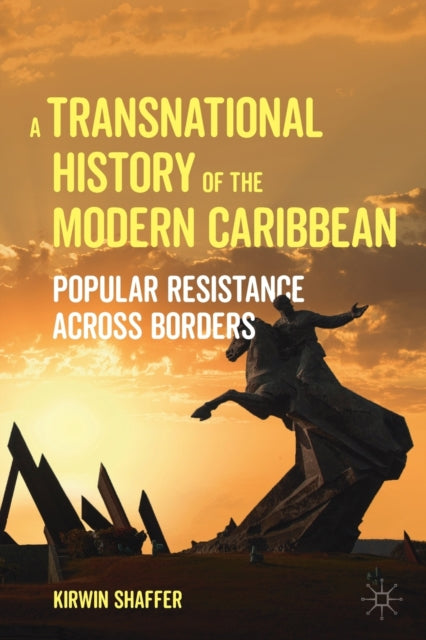
A Transnational History of the Modern Caribbean: Popular Resistance across Borders
A Transnational History of the Modern Caribbean: Popular Resistance across Borders
💎 Earn 115 Points (£1.15) on this item.
YOU SAVE £4.87
- Condition: Brand new
- UK Delivery times: Usually arrives within 2 - 3 working days
- UK Shipping: Fee starts at £2.39. Subject to product weight & dimension
Bulk ordering. Want 15 or more copies? Get a personalised quote and bigger discounts. Learn more about bulk orders.
Couldn't load pickup availability
- More about A Transnational History of the Modern Caribbean: Popular Resistance across Borders
This book explores Caribbean people's resistance against racial, political, and social oppression from the 1790s Haitian Revolution to the twenty-first century, using tactics such as violent armed uprisings, fleeing repression, and starting their own communities to maintain cultures and identities against oppressive norms. People also declared strikes and riots against economic oppression, and women and mothers mobilized for their and their children's freedoms.
Format: Paperback / softback
Length: 203 pages
Publication date: 14 June 2022
Publisher: Springer Nature Switzerland AG
This comprehensive book delves into the unwavering resistance of Caribbean people against racial, political, and social oppression, spanning from the eve of the Haitian Revolution in the 1790s to the twenty-first century. It explores the diverse range of strategies employed by individuals and communities in their fight against oppression, showcasing the transnational nature of Caribbean resistance. Some sought to escape governance, while others aimed to liberate their ethnicity, race, class, or nation. Men and women used a diverse array of tactics, from violent armed uprisings to fleeing repressive conditions and establishing their own communities. They preserved their cultures and identities through song, language, religion, and festivals, challenging oppressive norms that sought to undermine or eradicate them. People organized strikes and riots against economic injustice, and women and mothers rallied for the freedom of themselves and their children. Throughout the Caribbean, individuals confronted oppression, demonstrating their resilience and agency.
Introduction:
The Caribbean region has a rich history of resistance against oppression, dating back to the era of the Haitian Revolution. This book aims to examine the various forms of resistance that Caribbean people have employed throughout this period, highlighting the transnational nature of their struggles.
Migrating Rebels:
One of the earliest forms of resistance was the migration of rebels from one island to another. These rebels sought to escape political and social oppression and establish new communities where they could live freely. The migration of rebels inspired others to launch their own acts of defiance, illustrating the transnational nature of Caribbean resistance.
Shipments of Newspapers:
Another significant form of resistance was the shipment of newspapers from one island to another. These newspapers provided information about the political and social conditions in the Caribbean and inspired people to launch their own acts of defiance. The circulation of newspapers facilitated the spread of ideas and the building of networks of resistance.
Rumors and Acts of Resistance:
Rumors and acts of resistance also played a crucial role in shaping Caribbean resistance. People would spread rumors about oppressive policies or actions, which would then inspire others to take action. Acts of resistance, such as protests and strikes, would also be organized in response to these rumors.
Transnational Nature of Caribbean Resistance:
The transnational nature of Caribbean resistance is evident in the various strategies employed by individuals and communities. People would draw inspiration from events and movements in other parts of the world, and would use these experiences to inform their own struggles. For example, the Haitian Revolution inspired resistance movements in other parts of the Caribbean, and the struggles of African slaves in the United States influenced the resistance movements in the Caribbean.
Different Forms of Resistance:
Caribbean people employed a range of strategies to resist oppression. Some sought to be left alone, ungovernable, and masterless. Others fought to free their ethnicity or race, their class, or their nation. Men and women used a variety of tactics, from violent armed uprisings to fleeing repression and starting their own communities.
Maintaining Cultures and Identities:
Despite the oppressive conditions, Caribbean people maintained their cultures and identities. They used song, language, religion, and festivals to celebrate their heritage and resist oppressive norms. These cultural practices helped to preserve the sense of community and identity among Caribbean people.
Women and Mothers:
Women and mothers played a significant role in Caribbean resistance. They mobilized for their and their childrens freedoms, and often faced discrimination and violence in their struggle. Women and mothers also used their networks and resources to support other resistance movements.
Economic Oppression:
Caribbean people also faced economic oppression, which was often tied to colonialism and imperialism. They organized strikes and riots against economic injustice, demanding better working conditions and fair wages. These protests highlighted the economic inequalities that existed in the Caribbean and contributed to the broader struggle for social and political change.
Conclusion:
In conclusion, this book examines the unwavering resistance of Caribbean people against racial, political, and social oppression. It highlights the diverse range of strategies employed by individuals and communities, and illustrates the transnational nature of their struggles. Caribbean resistance has played a crucial role in shaping the region's history and culture, and continues to inspire people around the world.
Weight: 349g
Dimension: 235 x 155 (mm)
ISBN-13: 9783030930110
Edition number: 1st ed. 2022
UK and International shipping information
UK and International shipping information
UK Delivery and returns information:
- Delivery within 2 - 3 days when ordering in the UK.
- Shipping fee for UK customers from £2.39. Fully tracked shipping service available.
- Returns policy: Return within 30 days of receipt for full refund.
International deliveries:
Shulph Ink now ships to Australia, Belgium, Canada, France, Germany, Ireland, Italy, India, Luxembourg Saudi Arabia, Singapore, Spain, Netherlands, New Zealand, United Arab Emirates, United States of America.
- Delivery times: within 5 - 10 days for international orders.
- Shipping fee: charges vary for overseas orders. Only tracked services are available for most international orders. Some countries have untracked shipping options.
- Customs charges: If ordering to addresses outside the United Kingdom, you may or may not incur additional customs and duties fees during local delivery.