Jennifer Adese
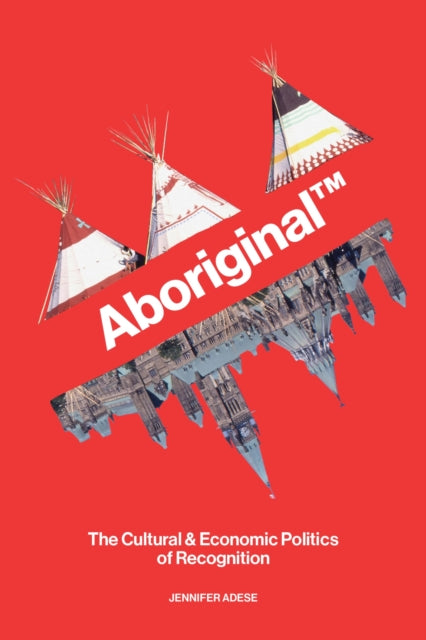
Aboriginal (TM): The Cultural and Economic Politics of Recognition
Aboriginal (TM): The Cultural and Economic Politics of Recognition
💎 Earn 128 Points (£1.28) on this item.
YOU SAVE £3.33
- Condition: Brand new
- UK Delivery times: Usually arrives within 2 - 3 working days
- UK Shipping: Fee starts at £3.89. Subject to product weight & dimension
Bulk ordering. Want 15 or more copies? Get a personalised quote and bigger discounts. Learn more about bulk orders.
Couldn't load pickup availability
- More about Aboriginal (TM): The Cultural and Economic Politics of Recognition
Aboriginal, when capitalized, became more closely aligned with Section 35(2)s interpretation of which specific groups held those rights, and was increasingly used to describe and categorize people. This has had real-world consequences for the people it defined. Aboriginal ™ argues the term was a tool used to advance Canada's cultural and economic assimilatory agenda throughout the 1980s until the mid-2010s.
Format: Paperback / softback
Length: 277 pages
Publication date: 30 October 2022
Publisher: University of Manitoba Press
Aboriginal, a term with deep historical and cultural significance, has been the subject of extensive exploration in Jennifer Adese's book. In Aboriginal, Adese delves into the origins, meanings, and usage of the term "Aboriginal" and its displacement by the word "Indigenous." The book explores the historical context in which the term "Aboriginal" emerged and the ways in which it has been used to describe and categorize Indigenous peoples throughout Canada.
The Constitution Act, 1982, played a significant role in recognizing and affirming Aboriginal rights. However, Adese argues that the term "Aboriginal" became increasingly closely aligned with Section 35(2) of the Constitution, which interpreted which specific groups held those rights. This led to the capitalization of the term "Aboriginal" and its widespread use to describe and categorize people.
Adese contends that the term "Aboriginal" was not just a legal and political vernacular but had real-world consequences for the people it defined. The book explores how the term was used as a tool to advance Canada's cultural and economic assimilatory agenda throughout the 1980s and into the mid-2010s. It also highlights how the term was exported as a nation brand, economic brand, and place brand, which often reduced the diversity and complexity of Indigenous peoples and communities.
In her multi-disciplinary research, Adese examines the discursive spaces and concrete sites where Aboriginality features prominently. These include the Constitution Act, 1982; the 2010 Vancouver Olympics; the "Aboriginal tourism industry"; and the Vancouver International Airport. By analyzing these various contexts, Adese offers insight into Indigenous-Canada relations, reconciliation efforts, and current discussions of Indigenous identity, authenticity, and agency.
One of the key themes of Aboriginal is the displacement of the term "Aboriginal" by the word "Indigenous." Adese argues that the term "Indigenous" is more inclusive and accurately reflects the diversity of Indigenous peoples and communities. She notes that the term "Indigenous" encompasses a wide range of cultural practices, languages, and traditions and recognizes the inherent rights and sovereignty of Indigenous peoples.
Adese also explores the historical and political contexts that have shaped the use of the term "Aboriginal" and "Indigenous." She examines how colonialism, racism, and discrimination have contributed to the marginalization and oppression of Indigenous peoples and how the term "Aboriginal" was used to perpetuate these systems of power. Adese argues that the recent turn toward "Indigenous" and "Indigeneity" is a positive step toward reconciliation and healing, as it recognizes the diversity and complexity of Indigenous peoples and their connections to land, culture, and community.
Aboriginal is a thought-provoking and important book that sheds light on the historical and cultural significance of the term "Aboriginal" and its displacement by the word "Indigenous." It offers a critical analysis of the ways in which the term has been used to advance cultural and economic assimilation, as well as its real-world consequences for Indigenous peoples. Through her multi-disciplinary research, Adese provides insight into Indigenous-Canada relations, reconciliation efforts, and current discussions of Indigenous identity, authenticity, and agency. This book is a valuable resource for anyone interested in understanding the complexities of Indigenous-Canadian relations and the ongoing struggle for justice and equality.
Dimension: 229 x 152 (mm)
ISBN-13: 9781772840056
UK and International shipping information
UK and International shipping information
We deliver throughout the United Kingdom and to 128 countries and territories worldwide, including the United States, Australia, Canada, Germany, Spain and France.