Shulph Ink
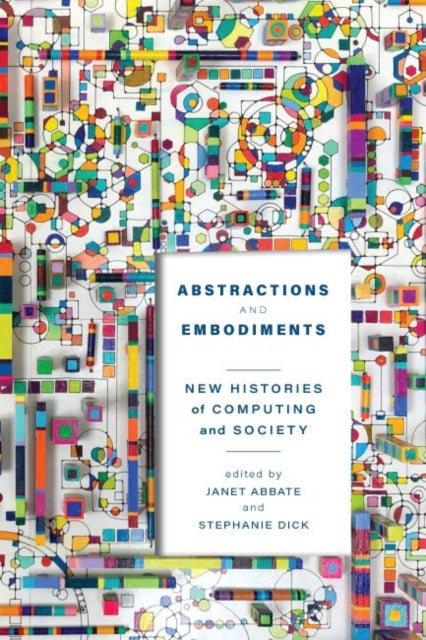
Abstractions and Embodiments: New Histories of Computing and Society
Abstractions and Embodiments: New Histories of Computing and Society
💎 Earn 146 Points (£1.46) on this item.
YOU SAVE £3.79
- Condition: Brand new
- UK Delivery times: Usually arrives within 2 - 3 working days
- UK Shipping: Fee starts at £3.89. Subject to product weight & dimension
Bulk ordering. Want 15 or more copies? Get a personalised quote and bigger discounts. Learn more about bulk orders.
Couldn't load pickup availability
- More about Abstractions and Embodiments: New Histories of Computing and Society
Cutting-edge historians explore how computers mediate social relations, framing them as a mirror for the human mind and an irreducible other. This anthology examines how social relations are enacted in and through computing, using twin frameworks of abstraction and embodiment to reimagine computing history. It highlights neglected aspects of computing as an embodied experience and makes the case that technology and the body are culturally shaped.
Format: Unspecified
Length: 472 pages
Publication date: 25 October 2022
Publisher: Johns Hopkins University Press
Computers have been a subject of intense study by historians, who have sought to understand their role in shaping social relations. These scholars have approached the topic from various angles, examining how computers have been both a mirror of the human mind and an irreducible other that defines humanness.
According to one historical definition, computers are a mirror of the human mind, reflecting our thoughts, emotions, and experiences. This perspective sees computers as a tool for self-expression and creativity, enabling individuals to communicate and collaborate in new ways. On the other hand, computers can also be seen as an irreducible other, a force that shapes and defines humanness. This perspective emphasizes the ways in which computers have influenced our social interactions, from the development of communication technologies to the creation of new forms of social organization.
Despite these differing perspectives, computers have the potential to serve both liberation and control. On the one hand, they can provide individuals with new opportunities for self-expression and social connection. For example, social media platforms have enabled people to connect with others from all over the world, share their ideas, and organize for social change. On the other hand, computers can also be used to control and surveil individuals, limiting their freedom and autonomy. For example, government surveillance programs have been criticized for their ability to monitor and control the activities of citizens.
Historians of computing have repeatedly returned to these contradictions, as they often reveal deeper structures of power and social identity. They have explored how the meanings of central concepts in computing, such as algorithms, programs, clones, and risk, reflect power relations and social identities. For example, algorithms are used to automate decision-making processes, but they can also perpetuate biases and inequalities. Programs are used to create new forms of social organization, but they can also be used to control and surveil individuals. Clones are used to replicate and reproduce information, but they can also raise questions about identity and authenticity.
In addition to these abstract considerations, historians of computing have also focused on the sensory aspects of using computers. They have examined how the design of computer interfaces, the use of sound and visual effects, and the physical experiences of computer users shape their interactions with technology. For example, the design of computer keyboards and mice has been criticized for its impact on the ergonomics of computer users, leading to health problems such as carpal tunnel syndrome.
Gender, race, and other identities have also played a significant role in shaping the opportunities and embodied experiences of computer workers and users. Historians have explored how these factors have influenced the development of computing technology, the types of jobs available in the industry, and the ways in which computer users have experienced technology. For example, women have been historically underrepresented in the computing industry, and they have faced barriers to advancement and recognition. Similarly, people of color have been marginalized in the industry, and they have faced discrimination and exclusion.
To address these issues, historians of computing have sought to reimagine computing history by questioning canonical interpretations, foregrounding new actors and contexts, and highlighting neglected aspects of computing as an embodied experience. This approach has led to a rich and diverse set of studies in new areas, such as disability, the influence of the punk movement, working mothers as technical innovators, and gaming behind the Iron Curtain.
In conclusion, computers have been a subject of intense study by historians, who have sought to understand their role in shaping social relations. These scholars have approached the topic from various angles, examining how computers have been both a mirror of the human mind and an irreducible other that defines humanness. Despite these differing perspectives, computers have the potential to serve both liberation and control, and they have raised important questions about power, social identity, and the embodied experience of technology. By reimagining computing history through the lens of abstraction and embodiment, historians of computing have contributed to our understanding of the complex and multifaceted relationship between technology and society.
Weight: 656g
Dimension: 154 x 229 x 33 (mm)
ISBN-13: 9781421444376
UK and International shipping information
UK and International shipping information
We deliver throughout the United Kingdom and to 128 countries and territories worldwide, including the United States, Australia, Canada, Germany, Spain and France.