Mical Raz
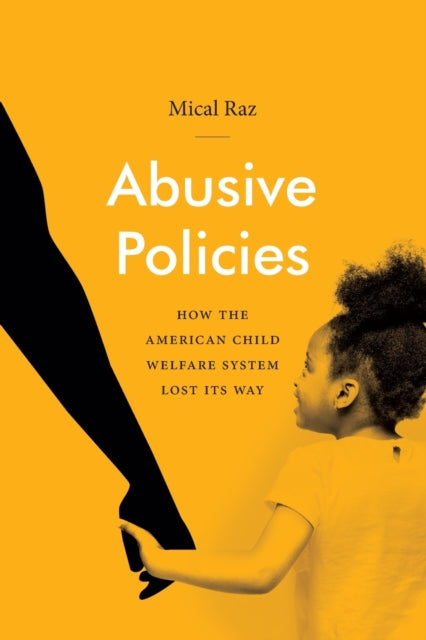
Abusive Policies: How the American Child Welfare System Lost Its Way
Abusive Policies: How the American Child Welfare System Lost Its Way
💎 Earn 137 Points (£1.37) on this item.
YOU SAVE £2.40
- Condition: Brand new
- UK Delivery times: Usually arrives within 2 - 3 working days
- UK Shipping: Fee starts at £2.39. Subject to product weight & dimension
Bulk ordering. Want 15 or more copies? Get a personalised quote and bigger discounts. Learn more about bulk orders.
Couldn't load pickup availability
- More about Abusive Policies: How the American Child Welfare System Lost Its Way
In the early 1970s, public service announcements urged parents to seek help for child abuse, leading to the proliferation of support groups and an increase in reported cases. Mical Raz examines how child abuse policy changed since the late 1960s, highlighting the rise of Parents Anonymous and the impact of biased viewpoints on perceptions of child abuse, disproportionately targeting poor African American families.
Format: Paperback / softback
Length: 180 pages
Publication date: 30 December 2020
Publisher: The University of North Carolina Press
In the early 1970s, a significant wave of public service announcements emerged, aimed at addressing a longstanding American tradition of child abuse. These messages, broadcasted repeatedly through television and radio, implored abusive parents to seek help and support. As a response, support groups for parents, such as Parents Anonymous, proliferated nationwide, offering a platform for individuals to address the escalating crisis. Simultaneously, an increasing number of abused children were reported to child welfare agencies, partly due to the expansion of mandatory reporting laws and the establishment of reporting hotlines across the nation.
In this comprehensive examination of child abuse policy history, Mical Raz delves into how these policies have evolved since the late 1960s, particularly focusing on the frequency with which African American children were removed from their homes and placed in foster care. Raz highlights the rise of Parents Anonymous and connects their activism to the sexual abuse moral panic that swept the country in the 1980s. He argues that these panics, policies, and biased viewpoints regarding race, class, and gender played a powerful role in shaping perceptions of child abuse. These perceptions often contradicted the available data and disproportionately targeted poor African American families, leading to significant harm and injustice.
The early 1970s marked a turning point in the fight against child abuse, as public awareness and activism grew. The emergence of support groups for parents and the expansion of reporting laws played a crucial role in addressing this pressing issue. However, it is essential to acknowledge that the legacy of child abuse policy and its impact on African American families continues to be a complex and ongoing concern. Efforts to address these issues require a comprehensive and intersectional approach, involving policymakers, community organizations, and individuals committed to promoting equity and justice for all children.
Weight: 304g
Dimension: 155 x 233 x 15 (mm)
ISBN-13: 9781469661216
This item can be found in:
UK and International shipping information
UK and International shipping information
UK Delivery and returns information:
- Delivery within 2 - 3 days when ordering in the UK.
- Shipping fee for UK customers from £2.39. Fully tracked shipping service available.
- Returns policy: Return within 30 days of receipt for full refund.
International deliveries:
Shulph Ink now ships to Australia, Belgium, Canada, France, Germany, Ireland, Italy, India, Luxembourg Saudi Arabia, Singapore, Spain, Netherlands, New Zealand, United Arab Emirates, United States of America.
- Delivery times: within 5 - 10 days for international orders.
- Shipping fee: charges vary for overseas orders. Only tracked services are available for most international orders. Some countries have untracked shipping options.
- Customs charges: If ordering to addresses outside the United Kingdom, you may or may not incur additional customs and duties fees during local delivery.