Michael Ignatieff
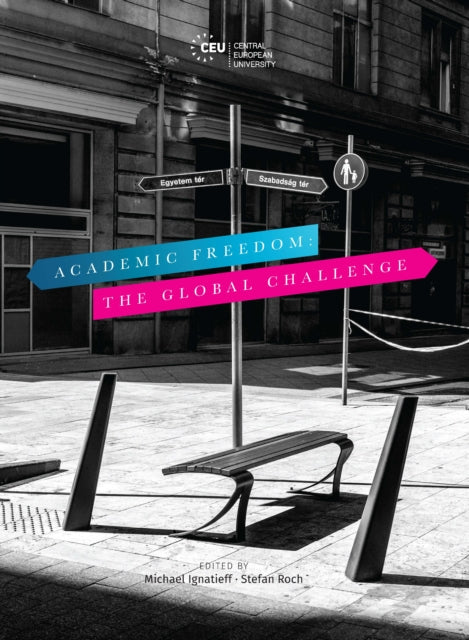
Academic Freedom: The Global Challenge
Academic Freedom: The Global Challenge
💎 Earn 179 Points (£1.79) on this item.
We can order this item for you. Delivery usually takes about 4 to 6 weeks.
This item is not held in our immediate stock. We will order it for you after checkout.
Estimated delivery: About 4 to 6 weeks
YOU SAVE £2.13
- Condition: Brand new
- UK Delivery times: Usually arrives within 2 - 3 working days
- UK Shipping: Fee starts at £3.89. Subject to product weight & dimension
Bulk ordering. Want 15 or more copies? Get a personalised quote and bigger discounts. Learn more about bulk orders.
Couldn't load pickup availability
- More about Academic Freedom: The Global Challenge
Academic freedom-the institutional autonomy of scientific, research and teaching institutions, and the freedom of individual scholars and researchers to pursue controversial research and publish controversial opinions-is a cornerstone of any free society.
Format: Paperback / softback
Length: 164 pages
Publication date: 10 January 2018
Publisher: Central European University Press
Academic freedom, a cornerstone of any free society, encompasses the institutional autonomy of scientific, research, and teaching institutions, as well as the freedom of individual scholars and researchers to pursue controversial research and publish controversial opinions. However, this freedom is currently under attack from both external and internal forces. In many parts of the world, the state is restricting academic freedom, stifling dissent and suppressing critical voices. Within academia, there are bitter disputes over whether liberal academic freedoms have devolved into a form of coercive political correctness. Populist currents of political opinion are questioning the societal cost of granting the freedom of experts and professors, raising concerns about the influence of academic institutions on public discourse.
This volume, compiled from the discussions of international experts and political figures at a gathering in 2017, provides a comprehensive overview of the state of academic freedom worldwide. The topics covered range widely, from the closure of universities in Turkey and the narrowing space for academic freedom in Hungary, China, and Russia, to the controversies about free speech on American campuses. The book offers thoughtful historical analysis of the origins of the ideal of academic freedom, eloquent testimony from those fighting to defend the academy as a free space for controversial thought, and analysis of how university autonomy and self-government are endangered by hostile political forces across the globe.
Academic freedom is essential for the advancement of knowledge, the pursuit of truth, and the development of a vibrant and diverse society. It is a fundamental human right that should be protected and preserved at all costs. However, the challenges facing academic freedom today are unprecedented, and require a collective effort from scholars, policymakers, and civil society to address.
One of the primary threats to academic freedom is government interference in the academic sphere. In many countries, governments use various means to control and restrict academic research, including censorship, surveillance, and intimidation of scholars and researchers. This interference can take many forms, from the closure of universities and the firing of professors to the suppression of academic publications and the persecution of students and faculty who engage in political activism.
Another threat to academic freedom is the rise. In many academic institutions, there is a growing trend towards commercialization and corporatization, which can lead to a prioritization of profit over academic excellence. This can manifest in various ways, such as the pressure to publish research that is commercially viable, the prioritization of research that aligns with government policies, and the suppression of research that challenges established narratives or power structures.
Academic freedom is also under threat from the rise of authoritarianism and the erosion of democratic values. In many countries, political leaders are increasingly using populist rhetoric to undermine the credibility of academic institutions and to delegitimize critical thinking and intellectual inquiry. This can lead to the suppression of academic freedom, as well as the marginalization of scholars and researchers who engage in politically sensitive research or who express dissenting opinions.
In addition to these external threats, academic freedom is also under threat from internal factors. One of the most significant internal threats to academic freedom is the rise of academic capitalism, which can lead to a prioritization of research that is funded by private interests rather than by public funding. This can lead to a bias in research, as well as the suppression of research that challenges the interests of private corporations or other powerful actors.
Academic freedom is also under threat from the rise of ideological conformity and the pressure to conform to academic norms and standards. In many academic institutions, there is a growing trend towards the promotion of a narrow range of academic perspectives, which can lead to the marginalization of dissenting voices and the suppression of innovative thinking. This can be particularly harmful in fields such as science and technology, where the pursuit of truth and the development of new knowledge requires a diversity of perspectives and the willingness to challenge established paradigms.
To address these threats to academic freedom, it is essential to promote a culture of academic freedom and to protect and promote the rights of scholars and researchers. This can include measures such as the establishment of independent academic institutions, the promotion of open access to academic publications, the protection of academic freedom through legal and policy frameworks, and the promotion of academic autonomy and self-government.
In conclusion, academic freedom is a cornerstone of any free society, and it is essential for the advancement of knowledge, the pursuit of truth, and the development of a vibrant and diverse society. However, this freedom is currently under attack from both external and internal forces. To address these threats, it is essential to promote a culture of academic freedom and to protect and promote the rights of scholars and researchers. By doing so, we can ensure that the academic community remains a vital space for critical thinking, intellectual inquiry, and the pursuit of truth, regardless of the challenges that may lie ahead.
Weight: 212g
Dimension: 145 x 193 x 10 (mm)
ISBN-13: 9789633862339
UK and International shipping information
UK and International shipping information
We deliver throughout the United Kingdom and to 128 countries and territories worldwide, including the United States, Australia, Canada, Germany, Spain and France.