Shulph Ink
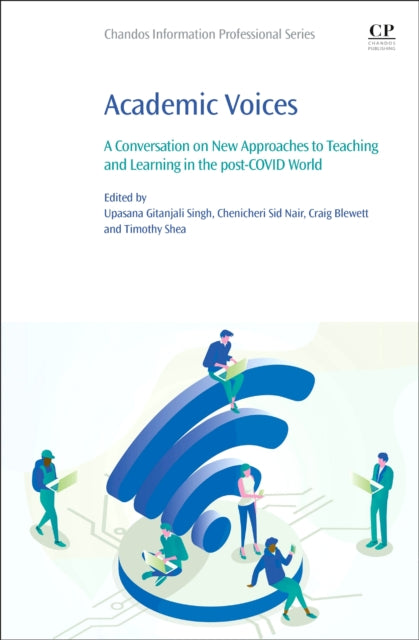
Academic Voices: A Conversation on New Approaches to Teaching and Learning in the post-COVID World
Academic Voices: A Conversation on New Approaches to Teaching and Learning in the post-COVID World
💎 Earn 170 Points (£1.70) on this item.
YOU SAVE £27.94
- Condition: Brand new
- UK Delivery times: Usually arrives within 2 - 3 working days
- UK Shipping: Fee starts at £2.39. Subject to product weight & dimension
Bulk ordering. Want 15 or more copies? Get a personalised quote and bigger discounts. Learn more about bulk orders.
Couldn't load pickup availability
- More about Academic Voices: A Conversation on New Approaches to Teaching and Learning in the post-COVID World
The book Academia's Digital Voice: A Conversation on 21st Century Higher Education discusses the challenges and opportunities of digital technologies in higher education, including quality assurance, assessment, student readiness, and the changing role of administration and faculty. It emphasizes the importance of maintaining the academic voice and the sanctity of higher education during the rapid shift to online learning.
Format: Paperback / softback
Length: 526 pages
Publication date: 05 April 2022
Publisher: Elsevier Science Publishing Co Inc
The book "Academia's Digital Voice: A Conversation on 21st Century Higher Education" is a valuable resource that delves into a critical area that requires heightened attention due to the rapid integration and immersion of digital technologies during the pandemic, particularly in the realms of quality assurance and assessment. Within its pages, various sections explore the profound transformations brought about by the pandemic, challenging the established norms of student mobility, academic preparedness, institutional technological readiness, student readiness to embrace online learning, the significance of higher education, the merits of distance learning, and the evolving roles of administration and faculty within institutions.
The unprecedented pace of international lockdowns necessitated higher education institutions (HEIs) to implement swift changes in both teaching and assessment methodologies. The quality of these adaptations and the preservation of the academic voice, which has long been a cornerstone of higher education, have become paramount concerns. While history has witnessed numerous challenges to this fundamental principle, the current, rapid transition to online education presents both the greatest threat and the greatest opportunity to date.
One of the significant challenges posed by the pandemic is the disruption of traditional modes of student mobility. The closure of borders and travel restrictions has limited the ability of students to physically relocate to different academic institutions, forcing HEIs to adapt their teaching strategies to accommodate a diverse student population remotely. This shift has necessitated the development of innovative online learning platforms, virtual classrooms, and interactive learning experiences to ensure students can access high-quality education regardless of their geographical location.
Another area of concern is the pedagogical readiness of academics to embrace digital technologies and adapt their teaching practices to the online environment. While some educators have been early adopters of technology, others may require additional training and support to effectively integrate digital tools into their teaching. The pandemic has highlighted the importance of investing in faculty development programs that empower educators to leverage technology to enhance student learning outcomes.
Institutional technological readiness is another critical factor that has come under scrutiny during the pandemic. HEIs must ensure they have the necessary infrastructure, software, and technical support to facilitate online learning and ensure the security of student data. The rapid adoption of cloud computing, video conferencing, and other digital tools has highlighted the need for institutions to invest in robust IT systems that can support the evolving needs of their students and faculty.
Student readiness to adopt online learning is another area of concern. While some students have been accustomed to digital technologies and have embraced online learning, others may require more support and guidance to navigate the virtual classroom environment. HEIs must work to engage students actively in online learning, provide them with clear instructions and support, and ensure they have access to the necessary resources to succeed.
The value of higher education has also been questioned during the pandemic. With the increasing availability of online learning options, some may argue that traditional brick-and-mortar institutions are no longer necessary. However, the book emphasizes the enduring significance of higher education, particularly in the context of the 21st century. Higher education provides students with a comprehensive education that equips them with critical thinking skills, problem-solving abilities, and a deep understanding of their chosen field. It also fosters social and cultural awareness, promotes lifelong learning, and plays a crucial role in shaping the future of society.
Distance learning, another aspect of higher education that has gained prominence during the pandemic, has its own set of challenges and opportunities. While distance learning offers students the flexibility to study from anywhere in the world, it may also create barriers to engagement and collaboration. HEIs must work to develop effective distance learning strategies that maintain the quality of education and provide students with the support they need to succeed.
The changing role of administration and faculty within institutions is another area that has been impacted by the pandemic. As HEIs adapt to the new realities of online learning, administrators must play a pivotal role in ensuring the smooth operation of online programs and providing support to faculty. Faculty, on the other hand, must adapt their teaching practices to the online environment, develop new digital skills, and engage with students in innovative ways.
In conclusion, "Academia's Digital Voice: A Conversation on 21st Century Higher Education" provides a comprehensive analysis of the challenges and opportunities posed by the rapid integration of digital technologies in higher education. The book highlights the importance of quality assurance and assessment, the preservation of the academic voice, the adaptability of teaching and assessment practices, the significance of higher education, the merits of distance learning, and the evolving roles of administration and faculty. The pandemic has accelerated the digital transformation of higher education, and it is essential for HEIs to embrace this change to ensure the continued success of their students and faculty. By investing in technology, faculty development, and effective communication strategies, HEIs can position themselves as leaders in the 21st-century education landscape.
Weight: 1000g
Dimension: 229 x 152 (mm)
ISBN-13: 9780323911856
This item can be found in:
UK and International shipping information
UK and International shipping information
UK Delivery and returns information:
- Delivery within 2 - 3 days when ordering in the UK.
- Shipping fee for UK customers from £2.39. Fully tracked shipping service available.
- Returns policy: Return within 30 days of receipt for full refund.
International deliveries:
Shulph Ink now ships to Australia, Belgium, Canada, France, Germany, Ireland, Italy, India, Luxembourg Saudi Arabia, Singapore, Spain, Netherlands, New Zealand, United Arab Emirates, United States of America.
- Delivery times: within 5 - 10 days for international orders.
- Shipping fee: charges vary for overseas orders. Only tracked services are available for most international orders. Some countries have untracked shipping options.
- Customs charges: If ordering to addresses outside the United Kingdom, you may or may not incur additional customs and duties fees during local delivery.