Kirsten E. Wood
Accommodating the Republic: Taverns in the Early United States
Accommodating the Republic: Taverns in the Early United States
💎 Earn 145 Points (£1.45) on this item.
YOU SAVE £3.79
- Condition: Brand new
- UK Delivery times: Usually arrives within 2 - 3 working days
- UK Shipping: Fee starts at £2.39. Subject to product weight & dimension
Bulk ordering. Want 15 or more copies? Get a personalised quote and bigger discounts. Learn more about bulk orders.
Couldn't load pickup availability
- More about Accommodating the Republic: Taverns in the Early United States
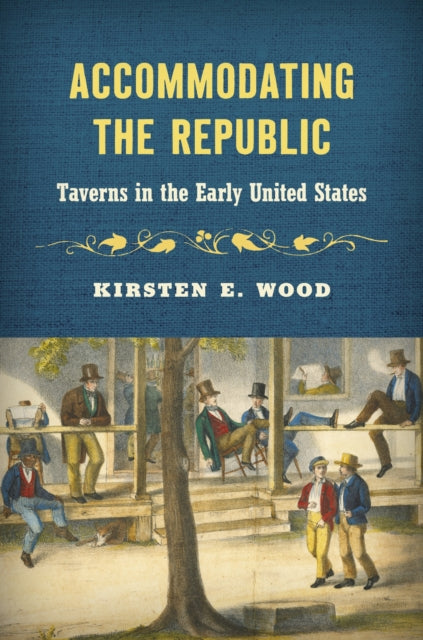
Taverns have been a part of American culture for hundreds of years, providing a place for people to drink, relax, socialize, and do business. Critics have described them as sources of individual ruin and public disorder, but Kirsten E. Wood argues that entrepreneurial, improvement-minded men integrated many village and town taverns into the nation's transportation network and used them to raise capital, promote innovative businesses, practice genteel sociability, and rally support for favored causes. White men's unrivaled freedom to use taverns for their own pursuits of happiness gave everyday significance to citizenship in the early republic, but sharing tavern spaces with other Americans intensified their struggles to define what, and for whom, taverns should be. Temperance and other reform movements increasingly divided white men along lines of party, conscience, and class, but some improvement-minded white men found common cause with middle-class white women and Black activists, who had their own stake in rethinking taverns and citizenship.
Format: Paperback / softback
Length: 352 pages
Publication date: 05 December 2023
Publisher: The University of North Carolina Press
For centuries, people have gathered in public drinking establishments, known as taverns, to partake in various activities such as drinking, relaxation, socializing, and conducting business. These establishments have long been a subject of criticism, with detractors attributing them to individual ruin and public disorder. However, Kirsten E. Wood challenges this perception by examining the role of taverns in the early nineteenth century as Americans surged westward. She argues that entrepreneurial and improvement-minded men integrated taverns into the nation's rapidly developing transportation network, utilizing their spaces and networks to raise capital, promote innovative businesses, practice genteel sociability, and rally support for favored causes.
While taverns were renowned for their high consumption of alcohol during this period, Wood emphasizes that they played a significant role in shaping the early republic. The unrivaled freedom granted to white men to use taverns for their own pursuits of happiness gave everyday significance to citizenship. However, the presence of taverns did not solely belong to white men. Sharing tavern spaces with other Americans intensified their struggles to define the purpose and identity of taverns, as well as their role in society.
At the same time, temperance and other reform movements emerged, dividing white men along lines of party, conscience, and class. These movements challenged the traditional role of taverns and sought to regulate their consumption and behavior. In these conflicts, some improvement-minded white men found common cause with middle-class white women and Black activists, who also had a stake in rethinking taverns and citizenship.
Taverns served as hubs of social and political activity, providing a place for men to gather, debate, and shape public opinion. They were often the site of political meetings, elections, and debates, where issues of the day were discussed and debated. Taverns also played a role in promoting literacy and education, as many owners provided reading materials and hosted lectures and discussions.
However, taverns were not without their challenges. They were often associated with violence, gambling, and other forms of vice, which could lead to social unrest and disorder. They were also seen as a haven for criminals and vagrants, who could prey on the vulnerable and marginalized members of society.
Despite these criticisms, taverns remained an important part of American culture and society throughout the nineteenth century. They continued to serve as gathering places for men, women, and children, providing a sense of community and belonging. They also played a significant role in shaping American identity and values, as they were often the site of cultural exchange and innovation.
In conclusion, taverns have a complex and multifaceted history that reflects the changing social, cultural, and political landscape of America. While they have been criticized for their negative effects, they also played a significant role in shaping the nation's early republic and promoting civic engagement and social progress. As Americans continue to navigate the challenges and opportunities of the twenty-first century, taverns will likely continue to play a role in shaping our collective identity and history.
Weight: 562g
Dimension: 155 x 234 x 24 (mm)
ISBN-13: 9781469675541
UK and International shipping information
UK and International shipping information
UK Delivery and returns information:
- Delivery within 2 - 3 days when ordering in the UK.
- Shipping fee for UK customers from £2.39. Fully tracked shipping service available.
- Returns policy: Return within 30 days of receipt for full refund.
International deliveries:
Shulph Ink now ships to Australia, Belgium, Canada, France, Germany, Ireland, Italy, India, Luxembourg Saudi Arabia, Singapore, Spain, Netherlands, New Zealand, United Arab Emirates, United States of America.
- Delivery times: within 5 - 10 days for international orders.
- Shipping fee: charges vary for overseas orders. Only tracked services are available for most international orders. Some countries have untracked shipping options.
- Customs charges: If ordering to addresses outside the United Kingdom, you may or may not incur additional customs and duties fees during local delivery.