Shulph Ink
Advanced Technologies in Electric Vehicles: Challenges and Future Research Developments
Advanced Technologies in Electric Vehicles: Challenges and Future Research Developments
💎 Earn 654 Points (£6.54) on this item.
YOU SAVE £11.01
- Condition: Brand new
- UK Delivery times: Usually arrives within 2 - 3 working days
- UK Shipping: Fee starts at £2.39. Subject to product weight & dimension
Bulk ordering. Want 15 or more copies? Get a personalised quote and bigger discounts. Learn more about bulk orders.
Couldn't load pickup availability
- More about Advanced Technologies in Electric Vehicles: Challenges and Future Research Developments
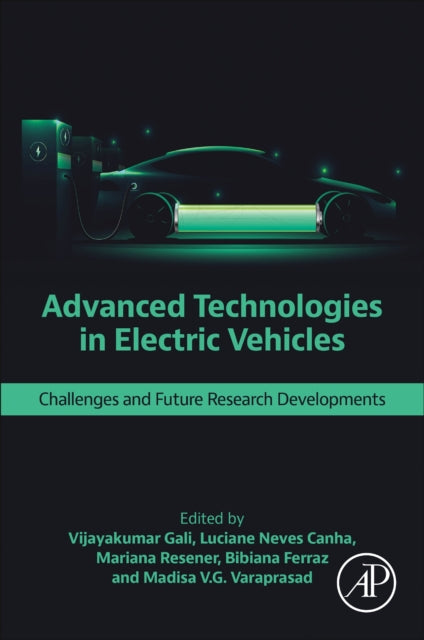
Advanced Technologies in Electric Vehicles: Challenges and Future Research Developments discusses fundamental and advanced concepts,challenges,and future perspectives surrounding EVs. It covers advances and long-term challenges such as battery life span,efficiency,and power management systems,and presents a comprehensive reference on the fundamentals,theory,and design of conventional EVs, HEVs, and FCVs.
Format: Paperback / softback
Length: 560 pages
Publication date: 29 February 2024
Publisher: Elsevier Science Publishing Co Inc
The development of advanced technologies in electric vehicles (EVs) has been a major focus of research and development in recent years. With the increasing awareness of the environmental and economic benefits of EVs, there is a growing demand for more efficient and sustainable transportation solutions. This has led to the development of new battery technologies, power management systems, and vehicle designs that are aimed at improving the performance and range of EVs.
One of the key challenges facing EVs is the limited battery life span. While battery technology has made significant progress in recent years, the lifespan of EV batteries is still relatively short, which can limit the range and usability of EVs. Researchers are working to develop new battery technologies that can increase the energy density and durability of batteries, which would enable EVs to travel longer distances and be more practical for everyday use.
Another challenge facing EVs is the efficiency of power management systems. Efficient power management systems are essential for maximizing the range and efficiency of EVs. Researchers are working to develop new power management systems that can optimize the use of energy from the battery, reduce energy waste, and improve the overall performance of EVs.
In addition to these challenges, there are also many opportunities for future research and development in the field of EVs. For example, researchers are exploring the use of renewable energy sources to power EVs, which would reduce the carbon footprint of transportation and help to mitigate climate change. Researchers are also exploring the use of autonomous driving technology to improve the safety and efficiency of EVs.
Overall, the development of advanced technologies in electric vehicles has the potential to revolutionize the transportation industry. While there are still many challenges to be overcome, the increasing investment in research and development has the potential to lead to the development of more efficient, sustainable, and affordable transportation solutions.
Investment in hybrid and electric vehicle (EV) technology research has been increasing steadily in recent years, both from governments and within companies. The role of the combustion engine in causing climate change has put the automobile industry on a path of rapid evolution towards electric vehicles, bringing experts with a range of backgrounds into the field.
The development of advanced technologies in electric vehicles (EVs) has been a major focus of research and development in recent years. With the increasing awareness of the environmental and economic benefits of EVs, there is a growing demand for more efficient and sustainable transportation solutions. This has led to the development of new battery technologies, power management systems, and vehicle designs that are aimed at improving the performance and range of EVs.
One of the key challenges facing EVs is the limited battery life span. While battery technology has made significant progress in recent years, the lifespan of EV batteries is still relatively short, which can limit the range and usability of EVs. Researchers are working to develop new battery technologies that can increase the energy density and durability of batteries, which would enable EVs to travel longer distances and be more practical for everyday use.
Another challenge facing EVs is the efficiency of power management systems. Efficient power management systems are essential for maximizing the range and efficiency of EVs. Researchers are working to develop new power management systems that can optimize the use of energy from the battery, reduce energy waste, and improve the overall performance of EVs.
In addition to these challenges, there are also many opportunities for future research and development in the field of EVs. For example, researchers are exploring the use of renewable energy sources to power EVs, which would reduce the carbon footprint of transportation and help to mitigate climate change. Researchers are also exploring the use of autonomous driving technology to improve the safety and efficiency of EVs.
Overall, the development of advanced technologies in electric vehicles has the potential to revolutionize the transportation industry. While there are still many challenges to be overcome, the increasing investment in research and development has the potential to lead to the development of more efficient, sustainable, and affordable transportation solutions.
The book covers all aspects of the EV field, including vehicle performance, configuration, control strategy, design methodology, modeling and simulation for different conventional and modern vehicles based on mathematical equations. By tackling the fundamentals, theory and design of conventional electric vehicles (EVs), hybrid electric vehicles (HEVs), and fuel cell vehicles (FCVs), this book presents a comprehensive reference.
Investment in hybrid and electric vehicle (EV) technology research has been increasing steadily in recent years, both from governments and within companies. The role of the combustion engine in causing climate change has put the automobile industry on a path of rapid evolution towards electric vehicles, bringing experts with a range of backgrounds into the field.
The development of advanced technologies in electric vehicles (EVs) has been a major focus of research and development in recent years. With the increasing awareness of the environmental and economic benefits of EVs, there is a growing demand for more efficient and sustainable transportation solutions. This has led to the development of new battery technologies, power management systems, and vehicle designs that are aimed at improving the performance and range of EVs.
One of the key challenges facing EVs is the limited battery life span. While battery technology has made significant progress in recent years, the lifespan of EV batteries is still relatively short, which can limit the range and usability of EVs. Researchers are working to develop new battery technologies that can increase the energy density and durability of batteries, which would enable EVs to travel longer distances and be more practical for everyday use.
Another challenge facing EVs is the efficiency of power management systems. Efficient power management systems are essential for maximizing the range and efficiency of EVs. Researchers are working to develop new power management systems that can optimize the use of energy from the battery, reduce energy waste, and improve the overall performance of EVs.
In addition to these challenges, there are also many opportunities for future research and development in the field of EVs. For example, researchers are exploring the use of renewable energy sources to power EVs, which would reduce the carbon footprint of transportation and help to mitigate climate change. Researchers are also exploring the use of autonomous driving technology to improve the safety and efficiency of EVs.
Overall, the development of advanced technologies in electric vehicles has the potential to revolutionize the transportation industry. While there are still many challenges to be overcome, the increasing investment in research and development has the potential to lead to the development of more efficient, sustainable, and affordable transportation solutions.
The book covers all aspects of the EV field, including vehicle performance, configuration, control strategy, design methodology, modeling and simulation for different conventional and modern vehicles based on mathematical equations. By tackling the fundamentals, theory and design of conventional electric vehicles (EVs), hybrid electric vehicles (HEVs), and fuel cell vehicles (FCVs), this book presents a comprehensive reference.
Investment in hybrid and electric vehicle (EV) technology research has been increasing steadily in recent years, both from governments and within companies. The role of the combustion engine in causing climate change has put the automobile industry on a path of rapid evolution towards electric vehicles, bringing experts with a range of backgrounds into the field.
The development of advanced technologies in electric vehicles (EVs) has been a major focus of research and development in recent years. With the increasing awareness of the environmental and economic benefits of EVs, there is a growing demand for more efficient and sustainable transportation solutions. This has led to the development of new battery technologies, power management systems, and vehicle designs that are aimed at improving the performance and range of EVs.
One of the key challenges facing EVs is the limited battery life span. While battery technology has made significant progress in recent years, the lifespan of EV batteries is still relatively short, which can limit the range and usability of EVs. Researchers are working to develop new battery technologies that can increase the energy density and durability of batteries, which would enable EVs to travel longer distances and be more practical for everyday use.
Another challenge facing EVs is the efficiency of power management systems. Efficient power management systems are essential for maximizing the range and efficiency of EVs. Researchers are working to develop new power management systems that can optimize the use of energy from the battery, reduce energy waste, and improve the overall performance of EVs.
In addition to these challenges, there are also many opportunities for future research and development in the field of EVs. For example, researchers are exploring the use of renewable energy sources to power EVs, which would reduce the carbon footprint of transportation and help to mitigate climate change. Researchers are also exploring the use of autonomous driving technology to improve the safety and efficiency of EVs.
Overall, the development of advanced technologies in electric vehicles has the potential to revolutionize the transportation industry. While there are still many challenges to be overcome, the increasing investment in research and development has the potential to lead to the development of more efficient, sustainable, and affordable transportation solutions.
Weight: 450g
Dimension: 229 x 151 (mm)
ISBN-13: 9780443189999
This item can be found in:
UK and International shipping information
UK and International shipping information
UK Delivery and returns information:
- Delivery within 2 - 3 days when ordering in the UK.
- Shipping fee for UK customers from £2.39. Fully tracked shipping service available.
- Returns policy: Return within 30 days of receipt for full refund.
International deliveries:
Shulph Ink now ships to Australia, Belgium, Canada, France, Germany, Ireland, Italy, India, Luxembourg Saudi Arabia, Singapore, Spain, Netherlands, New Zealand, United Arab Emirates, United States of America.
- Delivery times: within 5 - 10 days for international orders.
- Shipping fee: charges vary for overseas orders. Only tracked services are available for most international orders. Some countries have untracked shipping options.
- Customs charges: If ordering to addresses outside the United Kingdom, you may or may not incur additional customs and duties fees during local delivery.