Shulph Ink
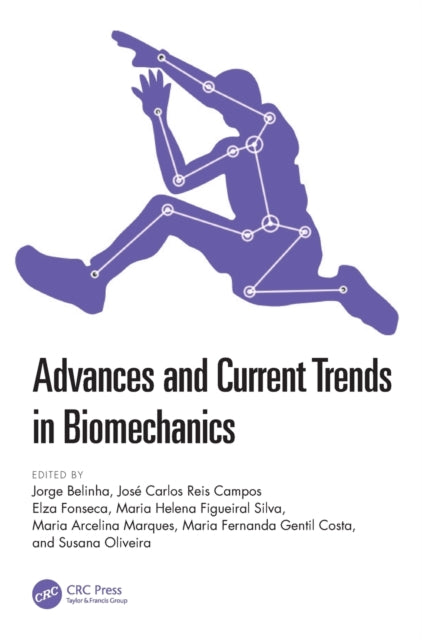
Advances and Current Trends in Biomechanics: Proceedings of the 9th Portuguese Congress on Biomechanics, CNB2021, 19 - 20 February 2021, Porto, Portugal
Advances and Current Trends in Biomechanics: Proceedings of the 9th Portuguese Congress on Biomechanics, CNB2021, 19 - 20 February 2021, Porto, Portugal
💎 Earn 689 Points (£6.89) on this item.
We can order this item for you. Delivery usually takes about 4 to 6 weeks.
This item is not held in our immediate stock. We will order it for you after checkout.
Estimated delivery: About 4 to 6 weeks
YOU SAVE £8.18
- Condition: Brand new
- UK Delivery times: Usually arrives within 2 - 3 working days
- UK Shipping: Fee starts at £2.39. Subject to product weight & dimension
Bulk ordering. Want 15 or more copies? Get a personalised quote and bigger discounts. Learn more about bulk orders.
Couldn't load pickup availability
- More about Advances and Current Trends in Biomechanics: Proceedings of the 9th Portuguese Congress on Biomechanics, CNB2021, 19 - 20 February 2021, Porto, Portugal
This volume presents a collection of peer-reviewed papers on biomechanics, reflecting the enthusiasm and activity of the Portuguese biomechanical community.
Format: Hardback
Length: 450 pages
Publication date: 11 November 2021
Publisher: Taylor & Francis Ltd
This comprehensive volume presents a diverse collection of peer-reviewed papers covering various aspects of biomechanics. The topics explored include biofabrication, biomaterials, cardiovascular biomechanics, biofluids, and hemodynamics, as well as biomechanics of injury/impact, rehabilitation, sports biomechanics, skull and spine biomechanics, musculoskeletal system biomechanics, orofacial biomechanics, orthopaedic biomechanics, experimental and numerical biomechanics, tissue engineering, and biomedical devices. The book showcases the vibrant and dynamic nature of the Portuguese biomechanical community, as well as the interdisciplinary nature of the field. Organized by the Portuguese Biomechanical Society (SPB), the 9th National Biomechanics Congress (CNB 2021) took place in Porto, Portugal, from February 19 to 20, 2021. This congress serves as a platform for researchers and experts to exchange ideas, share advancements, and foster collaborations in the field of biomechanics.
The contributions presented in this volume reflect the enthusiasm and dedication of the Portuguese biomechanical community. The papers cover a wide range of topics, reflecting the multidisciplinary nature of biomechanics. From the development of biofabrication techniques to the study of biomaterials and their interactions with biological systems, the research presented here contributes to our understanding of the complex mechanics underlying human movement, health, and disease.
Cardiovascular biomechanics, in particular, plays a crucial role in understanding the functioning of the heart and blood vessels. The papers in this section explore the dynamics of blood flow, the stresses and strains experienced by cardiac tissues, and the mechanisms of heart failure. By understanding these complex processes, researchers can develop new treatments and therapies for cardiovascular diseases.
Biofluids and hemodynamics are also important areas of research in biomechanics. The papers in this section examine the flow of blood and other fluids within the body, the forces exerted on blood vessels, and the effects of fluid dynamics on tissue function. This knowledge is essential for developing new medical devices, such as blood pressure monitors and dialysis machines, as well as for understanding the pathophysiology of diseases related to fluid circulation.
Injury/impact biomechanics is another critical area of study, as it helps to understand the mechanisms of injury and the effects of trauma on the human body. The papers in this section explore the biomechanics of different types of injuries, from sports-related injuries to car accidents, and the mechanisms of tissue damage and repair. By understanding these processes, researchers can develop new protective equipment and rehabilitation strategies to improve patient outcomes.
Rehabilitation biomechanics is another important area of research, as it focuses on improving patient recovery and mobility after injury or illness. The papers in this section explore the use of biomechanical principles to design rehabilitation exercises and devices, as well as the effects of rehabilitation on muscle strength, mobility, and function. By understanding these processes, healthcare professionals can develop personalized rehabilitation programs to help patients regain their independence and quality of life.
Sports biomechanics is a growing field that examines the mechanics of human movement and performance in sports. The papers in this section explore the biomechanics of different sports, from football to tennis, and the factors that affect athletic performance. By understanding these processes, sports coaches and athletes can develop training programs and equipment to optimize performance and prevent injuries.
Skull and spine biomechanics is another important area of research, as it helps to understand the mechanisms of head and neck injuries. The papers in this section explore the biomechanics of different types of head and neck injuries, from whiplash to spinal cord injuries, and the effects of these injuries on brain function and mobility. By understanding these processes, researchers can develop new treatments and therapies to improve patient outcomes.
Musculoskeletal system biomechanics is a fundamental aspect of biomechanics, as it examines the mechanics of the bones, muscles, and joints. The papers in this section explore the biomechanics of different types of musculoskeletal injuries, from fractures to osteoarthritis, and the effects of these injuries on muscle strength, mobility, and function. By understanding these processes, healthcare professionals can develop new treatments and therapies to improve patient outcomes.
Orofacial biomechanics is a growing field that examines the mechanics of the face and mouth. The papers in this section explore the biomechanics of facial expressions, speech, and chewing, as well as the effects of these processes on facial aesthetics and oral health. By understanding these processes, dentists and orthodontists can develop new treatments and therapies to improve patient outcomes.
Orthopaedic biomechanics is a branch of biomechanics that focuses on the mechanics of the musculoskeletal system in the context of orthopedics. The papers in this section explore the biomechanics of different types of orthopaedic injuries, from fractures to joint replacements, and the effects of these injuries on bone strength and mobility. By understanding these processes, orthopaedic surgeons can develop new surgical techniques and rehabilitation programs to improve patient outcomes.
Experimental and numerical biomechanics are two important subfields of biomechanics that use experimental and computational methods to study biological systems. The papers in this section explore the use of experimental techniques, such as motion capture and strain gauge measurements, to study biological systems, as well as the use of computational methods, such as finite element analysis and computer simulations, to simulate biological systems. By combining experimental and computational methods, researchers can gain a deeper understanding of biological systems and develop new theories and models.
Tissue engineering and biomedical devices are two emerging fields that intersect with biomechanics. The papers in this section explore the use of biomechanical principles to design new biomedical devices, such as prosthetic limbs and medical implants, as well as the use of tissue engineering techniques to develop new tissues for transplantation. By combining biomechanics and tissue engineering, researchers can develop new treatments and therapies to improve patient outcomes.
In conclusion, this comprehensive volume presents a diverse collection of peer-reviewed papers on various areas of biomechanics. The contributions presented here reflect the enthusiasm and dedication of the Portuguese biomechanical community, as well as the interdisciplinary nature of the field. The 9th National Biomechanics Congress (CNB 2021) serves as a platform for researchers and experts to exchange ideas, share advancements, and foster collaborations in the field of biomechanics. By understanding the complex mechanics underlying human movement, health, and disease, we can develop new treatments and therapies to improve patient outcomes and enhance our quality of life.
Weight: 943g
Dimension: 246 x 174 (mm)
ISBN-13: 9781032108063
This item can be found in:
UK and International shipping information
UK and International shipping information
UK Delivery and returns information:
- Delivery within 2 - 3 days when ordering in the UK.
- Shipping fee for UK customers from £2.39. Fully tracked shipping service available.
- Returns policy: Return within 30 days of receipt for full refund.
International deliveries:
Shulph Ink now ships to Australia, Belgium, Canada, France, Germany, Ireland, Italy, India, Luxembourg Saudi Arabia, Singapore, Spain, Netherlands, New Zealand, United Arab Emirates, United States of America.
- Delivery times: within 5 - 10 days for international orders.
- Shipping fee: charges vary for overseas orders. Only tracked services are available for most international orders. Some countries have untracked shipping options.
- Customs charges: If ordering to addresses outside the United Kingdom, you may or may not incur additional customs and duties fees during local delivery.