Shulph Ink
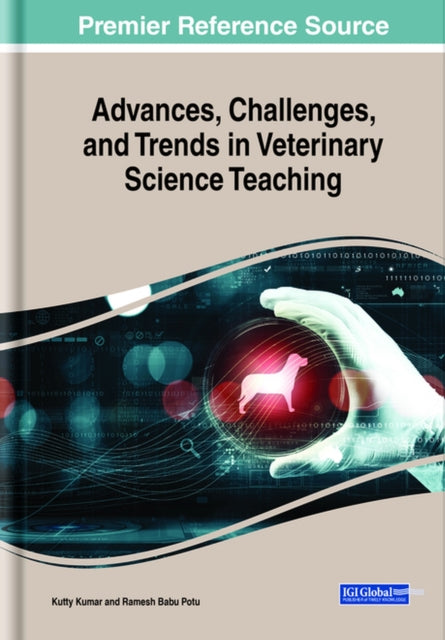
Advances, Challenges, and Trends in Veterinary Science Teaching
Advances, Challenges, and Trends in Veterinary Science Teaching
💎 Earn 1663 Points (£16.63) on this item.
YOU SAVE £3.36
- Condition: Brand new
- UK Delivery times: Usually arrives within 2 - 3 working days
- UK Shipping: Fee starts at £2.39. Subject to product weight & dimension
Bulk ordering. Want 15 or more copies? Get a personalised quote and bigger discounts. Learn more about bulk orders.
Couldn't load pickup availability
- More about Advances, Challenges, and Trends in Veterinary Science Teaching
Information and communication technology plays a crucial role in veterinary science, livestock production, physio-chemical changes, and the use of animal products. It helps to improve efficiency, accuracy, and communication in these fields.
Format: Hardback
Length: 300 pages
Publication date: 01 December 2023
Publisher: IGI Global
Information and communication technology (ICT) has revolutionized the field of veterinary science, livestock production, physio-chemical changes, and methods for using animal products. ICT has enabled veterinarians to provide more accurate and timely diagnoses, improve treatment outcomes, and enhance animal welfare.
In veterinary science, ICT has played a crucial role in improving animal health and welfare. It has enabled veterinarians to access a vast amount of information and knowledge quickly and easily, which has helped them make informed decisions about animal care. For example, veterinarians can use ICT to monitor animal health and behavior, identify potential health problems, and develop treatment plans.
ICT has also been used in livestock production to improve efficiency and productivity. It has enabled farmers to monitor their livestock's health and behavior, identify potential problems, and develop management strategies to improve animal welfare and productivity. For example, farmers can use ICT to track the movement of their livestock, monitor feed intake, and optimize breeding programs.
In addition to its use in veterinary science and livestock production, ICT has also been used in physio-chemical changes and methods for using animal products. ICT has enabled researchers to analyze data and develop new methods for using animal products more efficiently and sustainably. For example, researchers can use ICT to develop new animal feed additives, improve meat processing techniques, and develop new methods for using animal waste.
Overall, ICT has had a significant impact on the field of veterinary science, livestock production, physio-chemical changes, and methods for using animal products. It has enabled veterinarians, farmers, and researchers to improve animal health and welfare, increase efficiency and productivity, and develop new methods for using animal products more efficiently and sustainably. As ICT continues to evolve, it is likely to play an even more significant role in these fields in the future.
Information and communication technology (ICT) has brought about a transformative shift in the realm of veterinary science, livestock production, physio-chemical changes, and methods for utilizing animal products. By leveraging the power of technology, veterinarians, farmers, and researchers have gained unprecedented access to vast amounts of information and knowledge, enabling them to make informed decisions and optimize animal health and welfare.
In veterinary science, ICT has played a pivotal role in improving animal health and welfare. It has facilitated the rapid acquisition of comprehensive medical records, enabling veterinarians to provide accurate and timely diagnoses. Moreover, ICT has enabled the development of advanced imaging technologies, such as X-rays, ultrasounds, and MRI scans, which have allowed veterinarians to visualize internal structures and detect potential health problems with greater precision.
ICT has also revolutionized the treatment of animals. With the use of telemedicine, veterinarians can now provide remote consultations and advice to farmers and livestock owners, reducing the need for physical travel and minimizing the risk of disease transmission. Telemedicine has also enabled veterinarians to monitor the health and behavior of animals in real-time, allowing for early intervention and prevention of diseases.
In livestock production, ICT has played a significant role in improving efficiency and productivity. It has enabled farmers to monitor their livestock's health and behavior, identify potential problems, and develop management strategies to optimize animal welfare and productivity. For instance, farmers can use ICT to track the movement of their livestock, monitor feed intake, and optimize breeding programs.
ICT has also been instrumental in the development of new animal feed additives and improved meat processing techniques. By analyzing data and using advanced algorithms, researchers can develop new products that enhance animal nutrition and reduce the environmental impact of livestock production. For example, ICT has enabled the development of sustainable feed additives that reduce the need for antibiotics and promote animal health.
In addition to its applications in veterinary science and livestock production, ICT has also had a profound impact on physio-chemical changes and methods for utilizing animal products. ICT has enabled researchers to analyze data and develop new methods for using animal products more efficiently and sustainably. For instance, researchers can use ICT to develop new animal feed additives that improve animal nutrition and reduce the environmental impact of livestock production.
Furthermore, ICT has facilitated the development of new methods for using animal products, such as the use of animal-derived materials in the production of pharmaceuticals, cosmetics, and other consumer products. By leveraging the unique properties of animal-derived materials, researchers can develop products that are more effective, safer, and more sustainable than traditional alternatives.
In conclusion, ICT has had a profound impact on the field of veterinary science, livestock production, physio-chemical changes, and methods for utilizing animal products. By leveraging the power of technology, veterinarians, farmers, and researchers have gained unprecedented access to information and knowledge, enabling them to optimize animal health and welfare, increase efficiency and productivity, and develop new methods for using animal products more efficiently and sustainably. As ICT continues to evolve, it is likely to play an even more significant role in these fields in the future.
Dimension: 254 x 178 (mm)
ISBN-13: 9781668472514
This item can be found in:
UK and International shipping information
UK and International shipping information
UK Delivery and returns information:
- Delivery within 2 - 3 days when ordering in the UK.
- Shipping fee for UK customers from £2.39. Fully tracked shipping service available.
- Returns policy: Return within 30 days of receipt for full refund.
International deliveries:
Shulph Ink now ships to Australia, Belgium, Canada, France, Germany, Ireland, Italy, India, Luxembourg Saudi Arabia, Singapore, Spain, Netherlands, New Zealand, United Arab Emirates, United States of America.
- Delivery times: within 5 - 10 days for international orders.
- Shipping fee: charges vary for overseas orders. Only tracked services are available for most international orders. Some countries have untracked shipping options.
- Customs charges: If ordering to addresses outside the United Kingdom, you may or may not incur additional customs and duties fees during local delivery.