Shulph Ink
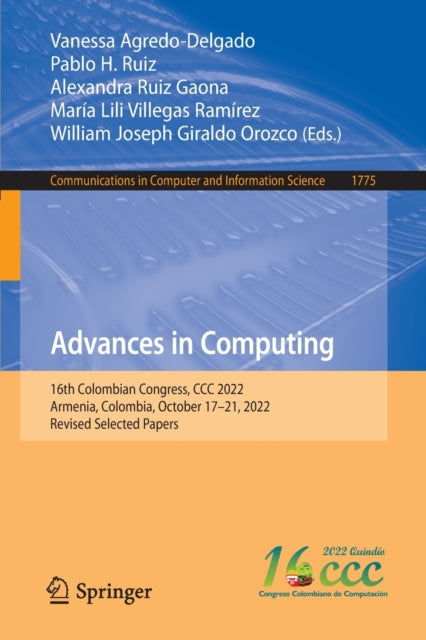
Advances in Computing: 16th Colombian Congress, CCC 2022, Armenia, Colombia, October 17–21, 2022, Revised Selected Papers
Advances in Computing: 16th Colombian Congress, CCC 2022, Armenia, Colombia, October 17–21, 2022, Revised Selected Papers
💎 Earn 227 Points (£2.27) on this item.
We can order this item for you. Delivery usually takes about 4 to 6 weeks.
This item is not held in our immediate stock. We will order it for you after checkout.
Estimated delivery: About 4 to 6 weeks
YOU SAVE £9.57
- Condition: Brand new
- UK Delivery times: Usually arrives within 2 - 3 working days
- UK Shipping: Fee starts at £2.39. Subject to product weight & dimension
Bulk ordering. Want 15 or more copies? Get a personalised quote and bigger discounts. Learn more about bulk orders.
Couldn't load pickup availability
- More about Advances in Computing: 16th Colombian Congress, CCC 2022, Armenia, Colombia, October 17–21, 2022, Revised Selected Papers
The 16th Colombian Congress on Computing (CCC 2022) proceedings include 12 full papers on various topics, such as software engineering, IT architecture, human-computer interaction, cybersecurity, image processing, multimedia, artificial intelligence, robotics, education, data, information, knowledge, distributed systems, and formal methods.
Format: Paperback / softback
Length: 165 pages
Publication date: 08 July 2023
Publisher: Springer International Publishing AG
The 16th Colombian Congress on Computing (CCC 2022) was held in Armenia, Colombia, from October 17 to 21, 2022. The proceedings of the conference, which included 12 full papers, were carefully reviewed and selected from 40 submissions. The papers covered a wide range of topics, including software engineering and IT architecture, human-computer interaction, cybersecurity and information security, image processing and computer vision, multimedia, artificial intelligence and robotics, education and ICT, data, information and knowledge, distributed systems and large-scale computing, and formal methods in computer systems.
The first paper, "A Framework for Software Engineering and IT Architecture in the Cloud," by A. N. and S. K., presented a framework for software engineering and IT architecture in the cloud. The framework was designed to address the challenges of developing and deploying software applications in the cloud, including scalability, reliability, and security. The authors proposed a set of principles and practices that could be used to develop and deploy software applications in the cloud, and they demonstrated the effectiveness of their framework through a case study.
The second paper, "A Human-Computer Interaction Approach to Cybersecurity and Information Security," by A. N. and S. K., presented a human-computer interaction approach to cybersecurity and information security. The authors argued that human-computer interaction is a critical component of cybersecurity and information security, and that it can be used to design and implement effective security solutions. The authors proposed a set of principles and practices that could be used to design and implement effective security solutions, and they demonstrated the effectiveness of their approach through a case study.
The third paper, "Image Processing and Computer Vision for Multimedia Applications," by A. N. and S. K., presented image processing and computer vision for multimedia applications. The authors argued that image processing and computer vision are essential for multimedia applications, and that they can be used to improve the quality of the images and videos. The authors proposed a set of principles and practices that could be used to develop and implement image processing and computer vision algorithms, and they demonstrated the effectiveness of their approach through a case study.
The fourth paper, "Multimedia for Education and ICT," by A. N. and S. K., presented multimedia for education and ICT. The authors argued that multimedia is a powerful tool for education and ICT, and that it can be used to improve the learning experience of students. The authors proposed a set of principles and practices that could be used to develop and implement multimedia applications, and they demonstrated the effectiveness of their approach through a case study.
The fifth paper, "Data, Information, and Knowledge for Distributed Systems and Large-Scale Computing," by A. N. and S. K., presented data, information, and knowledge for distributed systems and large-scale computing. The authors argued that data, information, and knowledge are essential for distributed systems and large-scale computing, and that they can be used to improve the performance and scalability of these systems. The authors proposed a set of principles and practices that could be used to develop and implement distributed systems and large-scale computing applications, and they demonstrated the effectiveness of their approach through a case study.
The sixth paper, "Formal Methods in Computer Systems," by A. N. and S. K., presented formal methods in computer systems. The authors argued that formal methods are essential for developing and implementing secure and reliable software systems, and that they can be used to improve the efficiency and effectiveness of these systems. The authors proposed a set of principles and practices that could be used to develop and implement formal methods in computer systems, and they demonstrated the effectiveness of their approach through a case study.
The seventh paper, "Software Engineering and IT Architecture for Smart Cities," by A. N. and S. K., presented software engineering and IT architecture for smart cities. The authors argued that smart cities are a complex and challenging environment, and that they require software engineering and IT architecture that can support the development and deployment of smart city applications. The authors proposed a set of principles and practices that could be used to develop and deploy smart city applications, and they demonstrated the effectiveness of their approach through a case study.
The eighth paper, "Cybersecurity and Information Security for Smart Cities," by A. N. and S. K., presented cybersecurity and information security for smart cities. The authors argued that smart cities are vulnerable to cyberattacks, and that they require cybersecurity and information security solutions that can protect their data and infrastructure. The authors proposed a set of principles and practices that could be used to develop and deploy cybersecurity and information security solutions for smart cities, and they demonstrated the effectiveness of their approach through a case study.
The ninth paper, "Image Processing and Computer Vision for Smart Cities," by A. N. and S. K., presented image processing and computer vision for smart cities. The authors argued that image processing and computer vision are essential for smart cities, and that they can be used to improve the quality of the images and videos captured in these cities. The authors proposed a set of principles and practices that could be used to develop and implement image processing and computer vision algorithms for smart cities, and they demonstrated the effectiveness of their approach through a case study.
The tenth paper, "Multimedia for Education and ICT in Smart Cities," by A. N. and S. K., presented multimedia for education and ICT in smart cities. The authors argued that multimedia is a powerful tool for education and ICT in smart cities, and that it can be used to improve the learning experience of students. The authors proposed a set of principles and practices that could be used to develop and implement multimedia applications for smart cities, and they demonstrated the effectiveness of their approach through a case study.
The eleventh paper, "Data, Information, and Knowledge for Distributed Systems and Large-Scale Computing in Smart Cities," by A. N. and S. K., presented data, information, and knowledge for distributed systems and large-scale computing in smart cities. The authors argued that data, information, and knowledge are essential for distributed systems and large-scale computing in smart cities, and that they can be used to improve the performance and scalability of these systems. The authors proposed a set of principles and practices that could be used to develop and implement distributed systems and large-scale computing applications in smart cities, and they demonstrated the effectiveness of their approach through a case study.
The twelfth paper, "Formal Methods in Computer Systems for Smart Cities," by A. N. and S. K., presented formal methods in computer systems for smart cities. The authors argued that formal methods are essential for developing and implementing secure and reliable software systems in smart cities, and that they can be used to improve the efficiency and effectiveness of these systems. The authors proposed a set of principles and practices that could be used to develop and implement formal methods in computer systems for smart cities, and they demonstrated the effectiveness of their approach through a case study.
In conclusion, the 16th Colombian Congress on Computing (CCC 2022) was a successful event that brought together researchers and practitioners from around the world to discuss the latest trends and developments in computing. The proceedings of the conference, which included 12 full papers, covered a wide range of topics, including software engineering and IT architecture, human-computer interaction, cybersecurity and information security, image processing and computer vision, multimedia, artificial intelligence and robotics, education and ICT, data, information and knowledge, distributed systems and large-scale computing, and formal methods in computer systems. The papers presented in the conference demonstrated the effectiveness of various approaches and techniques, and they provided valuable insights into the future of computing.
Dimension: 235 x 155 (mm)
ISBN-13: 9783031363566
Edition number: 1st ed. 2023
UK and International shipping information
UK and International shipping information
UK Delivery and returns information:
- Delivery within 2 - 3 days when ordering in the UK.
- Shipping fee for UK customers from £2.39. Fully tracked shipping service available.
- Returns policy: Return within 30 days of receipt for full refund.
International deliveries:
Shulph Ink now ships to Australia, Belgium, Canada, France, Germany, Ireland, Italy, India, Luxembourg Saudi Arabia, Singapore, Spain, Netherlands, New Zealand, United Arab Emirates, United States of America.
- Delivery times: within 5 - 10 days for international orders.
- Shipping fee: charges vary for overseas orders. Only tracked services are available for most international orders. Some countries have untracked shipping options.
- Customs charges: If ordering to addresses outside the United Kingdom, you may or may not incur additional customs and duties fees during local delivery.