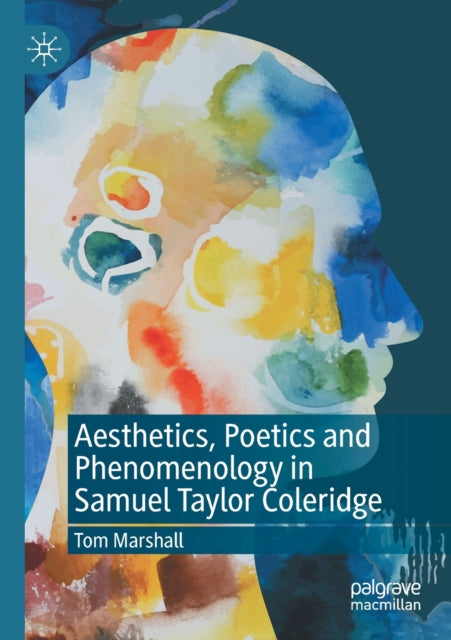
Tom Marshall
Aesthetics, Poetics and Phenomenology in Samuel Taylor Coleridge
Aesthetics, Poetics and Phenomenology in Samuel Taylor Coleridge
💎 Earn 185 Points (£1.85) on this item.
We can order this item for you. Delivery usually takes about 4 to 6 weeks.
This item is not held in our immediate stock. We will order it for you after checkout.
Estimated delivery: About 4 to 6 weeks
YOU SAVE £7.83
- Condition: Brand new
- UK Delivery times: Usually arrives within 2 - 3 working days
- UK Shipping: Fee starts at £2.39. Subject to product weight & dimension
Bulk ordering. Want 15 or more copies? Get a personalised quote and bigger discounts. Learn more about bulk orders.
Couldn't load pickup availability
- More about Aesthetics, Poetics and Phenomenology in Samuel Taylor Coleridge
This book re-evaluates the philosophical status of Samuel Taylor Coleridge by comparing his work to Edmund Husserl's phenomenological theory, examining his accounts of imagination, perception, poetic creativity, and literary criticism, and applying his philosophy to an interpretation of his poetic output.
Format: Paperback / softback
Length: 211 pages
Publication date: 24 November 2021
Publisher: Springer Nature Switzerland AG
This book is a groundbreaking exploration of Samuel Taylor Coleridge's philosophical significance, offering a comprehensive comparison between his work and the phenomenological theory of Edmund Husserl. By delving into Coleridge's accounts of imagination, perception, poetic creativity, and literary criticism, the author skillfully weaves together a systematic and coherent framework that sheds light on the diverse aspects of Coleridge's philosophical writings. Furthermore, the book extends the principles of Coleridge's philosophy to an insightful interpretation of his own poetic output, providing a fresh and insightful perspective on his artistic endeavors. This work is a must-read for anyone interested in delving into the complex and profound world of Coleridge's philosophy and poetry.
Introduction:
Samuel Taylor Coleridge, a renowned English poet and philosopher, has long been recognized for his profound contributions to both fields. However, his philosophical status has often been subject to debate and re-evaluation. In this book, we aim to provide a fresh perspective on Coleridge's philosophical significance by examining his work in the context of phenomenological theory.
Comparison with Edmund Husserl:
Edmund Husserl, a German philosopher known for his groundbreaking work in phenomenology, developed a philosophical framework that emphasizes the study of consciousness and its relationship to the world. Coleridge's philosophy, particularly his accounts of imagination, perception, poetic creativity, and literary criticism, align closely with the principles of phenomenology.
Imagination and Perception:
Coleridge's exploration of imagination and perception is a central theme in his philosophical writings. According to him, imagination is not merely a mental faculty but a vital aspect of human experience that allows us to connect with the world on a deeper level. Perception, on the other hand, is the process by which we interpret the sensory data we receive from the external world. Coleridge argues that perception is not merely passive but involves a creative process of interpretation that shapes our understanding of the world.
Poetic Creativity:
Coleridge's poetic creativity is another area where his philosophy is evident. He believed that poetry is not merely a form of artistic expression but a means of accessing the deeper dimensions of human experience. Poetry, according to Coleridge, allows us to tap into the unconscious and explore the depths of our subjective consciousness.
Literary Criticism:
Coleridge's literary criticism is also influenced by his philosophical beliefs. He believed that literature has the power to shape our moral and ethical values and to provide us with a deeper understanding of human nature. Coleridge's literary criticism, therefore, aimed to explore the themes and symbols in literature and to interpret their philosophical implications.
Conclusion:
In conclusion, this book offers a comprehensive comparison between Samuel Taylor Coleridge's work and the phenomenological theory of Edmund Husserl. By examining Coleridge's accounts of imagination, perception, poetic creativity, and literary criticism, we gain a deeper understanding of his philosophical significance and the ways in which his ideas continue to resonate in contemporary thought. This book is a valuable resource for scholars, students, and anyone interested in exploring the rich tapestry of Coleridge's philosophical and poetic legacy.
Weight: 300g
Dimension: 210 x 148 (mm)
ISBN-13: 9783030527327
Edition number: 1st ed. 2020
This item can be found in:
UK and International shipping information
UK and International shipping information
UK Delivery and returns information:
- Delivery within 2 - 3 days when ordering in the UK.
- Shipping fee for UK customers from £2.39. Fully tracked shipping service available.
- Returns policy: Return within 30 days of receipt for full refund.
International deliveries:
Shulph Ink now ships to Australia, Belgium, Canada, France, Germany, Ireland, Italy, India, Luxembourg Saudi Arabia, Singapore, Spain, Netherlands, New Zealand, United Arab Emirates, United States of America.
- Delivery times: within 5 - 10 days for international orders.
- Shipping fee: charges vary for overseas orders. Only tracked services are available for most international orders. Some countries have untracked shipping options.
- Customs charges: If ordering to addresses outside the United Kingdom, you may or may not incur additional customs and duties fees during local delivery.