Shulph Ink
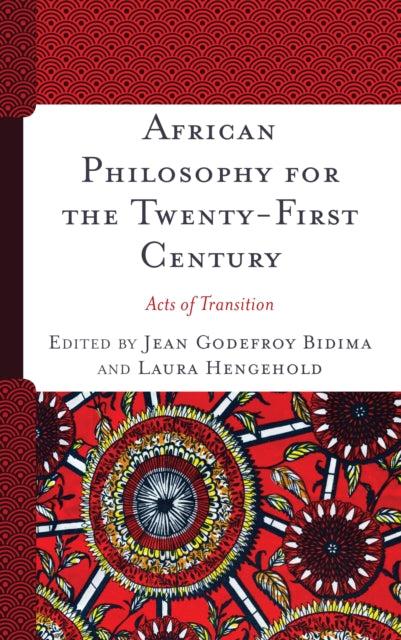
African Philosophy for the Twenty-First Century: Acts of Transition
African Philosophy for the Twenty-First Century: Acts of Transition
💎 Earn 477 Points (£4.77) on this item.
We can order this item for you. Delivery usually takes about 4 to 6 weeks.
This item is not held in our immediate stock. We will order it for you after checkout.
Estimated delivery: About 4 to 6 weeks
- Condition: Brand new
- UK Delivery times: Usually arrives within 2 - 3 working days
- UK Shipping: Fee starts at £2.39. Subject to product weight & dimension
Bulk ordering. Want 15 or more copies? Get a personalised quote and bigger discounts. Learn more about bulk orders.
Couldn't load pickup availability
- More about African Philosophy for the Twenty-First Century: Acts of Transition
The twenty-first century in Africa has brought new challenges and opportunities for philosophical discourse. This volume explores how African philosophies express "transitional acts" to address historical problems, combining confrontation and creation, prudence and anticipation.
Format: Hardback
Length: 226 pages
Publication date: 26 November 2021
Publisher: Rowman & Littlefield
In the early 21st century, Africa faced a multitude of complex challenges that shaped and influenced philosophical discourse. These challenges encompassed economic and political liberation, population displacement, and urbanization, all of which were interconnected with issues such as endemic diseases, famine, the restructuring of traditional families, gender roles, and the transmission of culture from one generation to the next. Furthermore, the introduction of financial speculation, cutting-edge technologies, and unequal access to digital and older cultural forms had significant implications for Africans and Africanists engaged in philosophical inquiry.
This volume seeks to explore the ways in which African philosophies engage in "transitional acts," those acts by which thought interacts with history as it is being made and by which it ensures its own renewal. A transitional act combines both the audacity of confrontation and the novelty of creation, exhibiting prudence in the face of risks and anticipation in the face of the unexpected. Influential and emerging thinkers from both sides of the Atlantic examine this dual activity in the realms of criticism and imagination, public spaces in Africa, and the relationship between historical politics and historical poetics.
The challenges of the early 21st century in Africa were multifaceted and deeply interconnected. Economic and political liberation efforts aimed to address the historical injustices and inequalities that had plagued the continent for centuries. However, these efforts were often met with resistance and challenges, including resistance from entrenched power structures, corruption, and economic instability. Population displacement, driven by factors such as conflict, drought, and disease, resulted in the movement of millions of people, creating new social and cultural dynamics in host communities. Urbanization, on the other hand, accelerated at a rapid pace, leading to the growth of cities and the emergence of new social classes and identities.
These challenges were further compounded by issues such as endemic diseases, famine, and the restructuring of traditional family structures. Endemic diseases, such as HIV/AIDS, malaria, and tuberculosis, continued to devastate communities, while famine and food insecurity were widespread, particularly in regions affected by conflict and drought. The restructuring of traditional family structures, often driven by factors such as gender equality, education, and economic opportunities, challenged long-held cultural norms and values. Gender roles and the position of women were particularly contentious issues, with women facing discrimination, violence, and limited access to resources and opportunities.
In addition to these challenges, the transmission of culture from past to future generations was also a significant concern. Traditional cultural practices, languages, and knowledge systems were often at risk of being lost or marginalized as societies transitioned to modern lifestyles and technologies. This loss of cultural heritage could have profound implications for social and economic development, as well as for the preservation of cultural identity and heritage.
To address these challenges, African philosophies have developed innovative and creative responses. Philosophers have explored the role of culture in shaping historical processes, the relationship between tradition and modernity, and the potential for cultural renewal and adaptation. They have also examined the ethical and political dimensions of economic and social development, advocating for policies that prioritize social justice, human rights, and environmental sustainability.
One of the key features of African philosophies is their emphasis on the interconnectedness of different aspects of human experience. Philosophers have recognized that economic and political liberation, population displacement, and urbanization are not separate issues but are interconnected and interdependent. They have argued that addressing these challenges requires a holistic and integrated approach that takes into account the social, economic, and environmental dimensions of human existence.
Another important aspect of African philosophies is their recognition of the role of imagination and creativity in shaping historical processes. Philosophers have emphasized the importance of critical thinking and the ability to propose provisional solutions to historical problems. They have recognized that traditional approaches to problem-solving may be limited by the constraints of existing power structures and social norms, and that new ideas and perspectives are needed to address these challenges.
In conclusion, the early 21st century in Africa was marked by a multitude of complex challenges that shaped and influenced philosophical discourse. These challenges encompassed economic and political liberation, population displacement, and urbanization, all of which were interconnected with issues such as endemic diseases, famine, the restructuring of traditional families, gender roles, and the transmission of culture from one generation to the next. African philosophies have responded to these challenges by engaging in transitional acts that combine the audacity of confrontation and the novelty of creation, exhibiting prudence in the face of risks and anticipation in the face of the unexpected. Through their exploration of the role of culture, the relationship between tradition and modernity, and the potential for cultural renewal and adaptation, African philosophies have contributed to shaping a more inclusive and sustainable future for the continent.
Weight: 522g
Dimension: 229 x 157 x 23 (mm)
ISBN-13: 9781538154168
UK and International shipping information
UK and International shipping information
UK Delivery and returns information:
- Delivery within 2 - 3 days when ordering in the UK.
- Shipping fee for UK customers from £2.39. Fully tracked shipping service available.
- Returns policy: Return within 30 days of receipt for full refund.
International deliveries:
Shulph Ink now ships to Australia, Belgium, Canada, France, Germany, Ireland, Italy, India, Luxembourg Saudi Arabia, Singapore, Spain, Netherlands, New Zealand, United Arab Emirates, United States of America.
- Delivery times: within 5 - 10 days for international orders.
- Shipping fee: charges vary for overseas orders. Only tracked services are available for most international orders. Some countries have untracked shipping options.
- Customs charges: If ordering to addresses outside the United Kingdom, you may or may not incur additional customs and duties fees during local delivery.