Shulph Ink
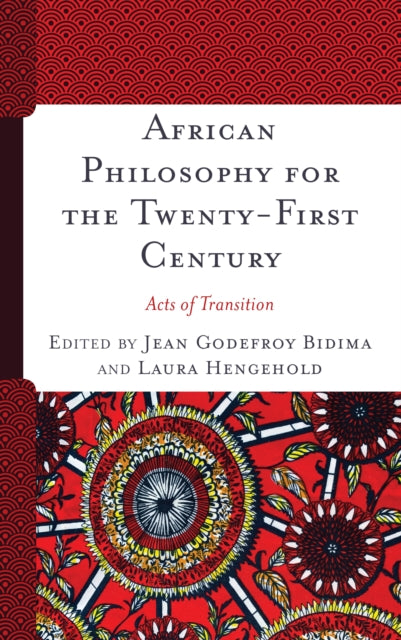
African Philosophy for the Twenty-First Century: Acts of Transition
African Philosophy for the Twenty-First Century: Acts of Transition
💎 Earn 169 Points (£1.69) on this item.
We can order this item for you. Delivery usually takes about 4 to 6 weeks.
This item is not held in our immediate stock. We will order it for you after checkout.
Estimated delivery: About 4 to 6 weeks
- Condition: Brand new
- UK Delivery times: Usually arrives within 2 - 3 working days
- UK Shipping: Fee starts at £2.39. Subject to product weight & dimension
Bulk ordering. Want 15 or more copies? Get a personalised quote and bigger discounts. Learn more about bulk orders.
Couldn't load pickup availability
- More about African Philosophy for the Twenty-First Century: Acts of Transition
The twenty-first century in Africa has brought new challenges and opportunities for philosophical discourse. This volume explores how African philosophies express "transitional acts" to address historical problems, combining confrontation and creation, prudence and anticipation.
Format: Paperback / softback
Length: 226 pages
Publication date: 15 August 2023
Publisher: Rowman & Littlefield
In the early 21st century, Africa faced a multitude of complex challenges that shaped and influenced philosophical discourse. These challenges encompassed economic and political liberation, population displacement, and urbanization, all of which were interconnected with issues such as endemic diseases, famine, the restructuring of traditional families, gender roles, and the transmission of culture from one generation to the next. Furthermore, the introduction of financial speculation, cutting-edge technologies, and unequal access to digital and older cultural forms had significant implications for Africans and Africanists engaged in philosophical inquiry.
This volume seeks to explore the ways in which African philosophies engage in "transitional acts," those acts by which thought interacts with history as it is being made and by which it ensures its own renewal. A transitional act combines both the audacity of confrontation and the novelty of creation, exhibiting prudence in the face of risks and anticipation in the face of the unexpected. Influential and emerging thinkers from both sides of the Atlantic examine this dual activity in the realms of criticism and imagination, public spaces in Africa, and the relationship between historical politics and historical poetics.
The challenges of the early 21st century in Africa were multifaceted and deeply interconnected. Economic and political liberation efforts aimed to address the historical legacies of colonialism, exploitation, and inequality, while also striving to promote sustainable development and social justice. Population displacement, driven by factors such as conflict, drought, and disease, posed significant challenges to social cohesion, infrastructure, and human well-being. Urbanization, on the other hand, accelerated the growth of cities, but also brought about issues such as overcrowding, poverty, and environmental degradation.
These challenges were further compounded by issues related to health, education, and cultural heritage. Endemic diseases, such as HIV/AIDS, malaria, and tuberculosis, continued to devastate communities, while inadequate healthcare systems and limited access to education perpetuated poverty and inequality. Moreover, the rapid changes in technology and global interconnectedness had profound effects on African cultures, leading to the erosion of traditional practices, values, and languages.
In response to these challenges, African philosophies have emerged as a powerful tool for understanding and addressing historical problems. African philosophers have explored a range of topics, including the nature of human existence, the role of culture in shaping society, and the relationship between history and the present. They have also engaged in critical analysis of Western philosophical traditions, challenging the Eurocentric biases and assumptions that have shaped philosophical discourse for centuries.
One of the key features of African philosophies is their emphasis on the interconnectedness of all things. African philosophers recognize that human beings are not separate from their environment, but rather part of a larger ecosystem that is interconnected with the natural world. They argue that understanding and respecting the interconnectedness of all things is essential for promoting sustainable development, social justice, and human well-being.
Another important aspect of African philosophies is their recognition of the role of culture in shaping society. African cultures are rich in tradition, knowledge, and wisdom, and African philosophers argue that these cultural assets should be valued and protected. They advocate for the preservation of cultural heritage, the promotion of cultural diversity, and the integration of cultural values into contemporary society.
In addition to these philosophical themes, African philosophies have also addressed issues related to gender roles, the position of women, and the transmission of culture from past to future generations. African women have historically been marginalized and oppressed, but African philosophies have challenged these gender stereotypes and advocated for gender equality and the empowerment of women. They have also explored the role of women in shaping cultural practices, traditions, and values, and have highlighted the importance of promoting gender diversity and inclusivity in society.
Furthermore, African philosophies have played a crucial role in addressing historical problems related to the transmission of culture from past to future generations. African cultures are rich in oral traditions, folklore, and mythology, and African philosophers have argued that these cultural forms should be preserved and passed down to future generations. They advocate for the development of cultural education programs, the preservation of cultural institutions, and the promotion of cultural exchange and dialogue between different communities.
In conclusion, the challenges of the early 21st century in Africa were multifaceted and deeply interconnected. African philosophies have emerged as a powerful tool for understanding and addressing these challenges. By emphasizing the interconnectedness of all things, recognizing the role of culture in shaping society, and addressing issues related to gender roles, the position of women, and the transmission of culture, African philosophies have contributed to the development of a more inclusive and sustainable society. As Africa continues to evolve and face new challenges, it is important to continue to engage with African philosophies and to draw on their wisdom and insights to build a better future for all.
Weight: 350g
Dimension: 152 x 229 x 17 (mm)
ISBN-13: 9781538154182
UK and International shipping information
UK and International shipping information
UK Delivery and returns information:
- Delivery within 2 - 3 days when ordering in the UK.
- Shipping fee for UK customers from £2.39. Fully tracked shipping service available.
- Returns policy: Return within 30 days of receipt for full refund.
International deliveries:
Shulph Ink now ships to Australia, Belgium, Canada, France, Germany, Ireland, Italy, India, Luxembourg Saudi Arabia, Singapore, Spain, Netherlands, New Zealand, United Arab Emirates, United States of America.
- Delivery times: within 5 - 10 days for international orders.
- Shipping fee: charges vary for overseas orders. Only tracked services are available for most international orders. Some countries have untracked shipping options.
- Customs charges: If ordering to addresses outside the United Kingdom, you may or may not incur additional customs and duties fees during local delivery.