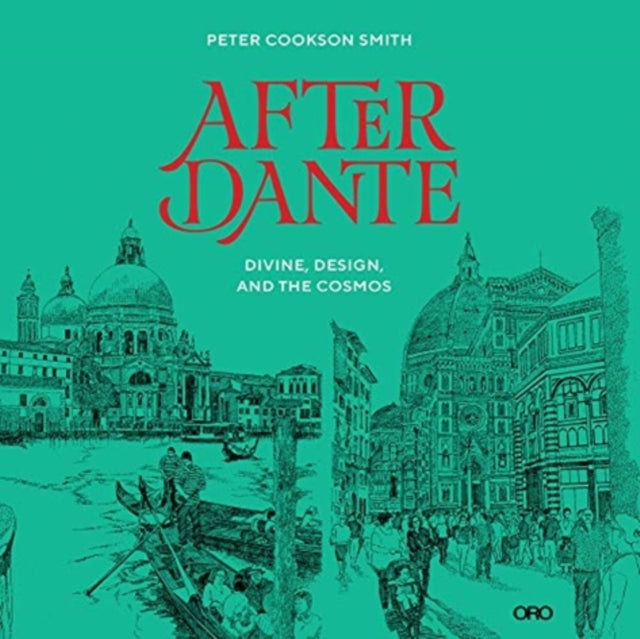
Peter Cookson Smith
After Dante: Divine, Design, and the Cosmos
After Dante: Divine, Design, and the Cosmos
💎 Earn 61 Points (£0.61) on this item.
YOU SAVE £10.66
- Condition: Brand new
- UK Delivery times: Usually arrives within 2 - 3 working days
- UK Shipping: Fee starts at £2.39. Subject to product weight & dimension
Bulk ordering. Want 15 or more copies? Get a personalised quote and bigger discounts. Learn more about bulk orders.
Couldn't load pickup availability
- More about After Dante: Divine, Design, and the Cosmos
This book explores the impact of Dantes Divine Comedy on the humanist of the late Medieval and Renaissance period, highlighting the tension between science, religion, and design. It encourages inspiration and motivation to embrace a consistent artistry and sense of exploration in the face of an ever-expanding knowledge-based frontier.
\n Format: Paperback / softback
\n Length: 272 pages
\n Publication date: 12 April 2021
\n Publisher: Oro Editions
\n
This captivating book delves into the profound philosophical, artistic, and scientific forces that shaped the humanist movement during the late Medieval and Renaissance periods, characterized by an abundant exchange of ideas and remarkable discoveries. At the heart of this intellectual ferment lies the enduring influence of Dante's Divine Comedy, a masterpiece that continues to resonate through the ages with its powerful message. What has also remained a constant tension is the interplay between science, religion, and design, as these disciplines often appear to contradict each other. The book embarks on an insightful exploration of how we can draw inspiration and motivation to embrace a consistent artistry and a relentless sense of exploration in the face of an ever-expanding knowledge-based frontier.
The late Medieval and Renaissance periods witnessed a remarkable flourishing of humanist thought, driven by a vibrant exchange of ideas and a thirst for knowledge. Among the many influences that shaped this movement, Dante's Divine Comedy stands out as a seminal work that left an indelible mark on the intellectual landscape. The Divine Comedy, a masterpiece of literature and philosophy, combines elements of poetry, theology, and philosophy to explore the depths of human existence, morality, and the nature of the divine.
One of the most significant themes in the Divine Comedy is the concept of sin and redemption. Dante's journey through the nine circles of Hell and Purgatory serves as a metaphor for the human condition, where sin leads to suffering and redemption offers the path to salvation. Through his vivid descriptions of the torments and punishments experienced by sinners in Hell and the purifying experiences of those who seek redemption in Purgatory, Dante offers a profound exploration of the human soul and the forces that guide it.
The Divine Comedy also sheds light on the role of religion in shaping human behavior and society. Dante's vision of a unified Christian world, where all believers are united in their devotion to God, offers a vision of harmony and unity that contrasts with the divisions and conflicts of his own time. The book emphasizes the importance of religious faith and the need for individuals to seek spiritual guidance in order to navigate the challenges of life.
In addition to its theological and philosophical themes, the Divine Comedy also explores the artistic and cultural aspects of the late Medieval and Renaissance periods. Dante's use of imagery, symbolism, and metaphor to convey his ideas and emotions adds depth and richness to the work, making it a masterpiece of literary and artistic expression. The book also serves as a valuable source of information about the social, political, and economic conditions of Dante's time, providing a window into the lives of ordinary people and the institutions that governed their lives.
The influence of Dante's Divine Comedy extends far beyond the late Medieval and Renaissance periods. The book has been studied and interpreted by countless scholars and artists throughout history, inspiring countless works of literature, art, and music. Its themes of sin, redemption, religion, and the human soul continue to resonate with people today, making it a timeless masterpiece that continues to inspire and challenge us.
However, the tension between science, religion, and design that characterized the late Medieval and Renaissance periods also persisted in the centuries that followed. The perceived contradictions between these disciplines led to ongoing debates and discussions, as individuals sought to reconcile the seemingly opposing aspects of their lives. The book explores how we can navigate this perpetual tension and find a harmonious balance between the different aspects of our lives.
One approach to achieving this balance is through the cultivation of a consistent artistry and sense of exploration. The book argues that the pursuit of knowledge and the exploration of new ideas can be a source of inspiration and motivation, rather than a source of conflict. By embracing a consistent artistry and a relentless sense of exploration, we can find a way to integrate the different aspects of our lives and create a more fulfilling and meaningful existence.
The book also emphasizes the importance of humility and openness in the face of knowledge. It suggests that we should approach new ideas with a willingness to learn and a willingness to be wrong. By recognizing that our understanding of the world is constantly evolving and that there is always more to discover, we can cultivate a sense of curiosity and a desire to explore.
Furthermore, the book explores the role of education in shaping our understanding of the world and our place in it. It argues that education should be focused on developing critical thinking skills, empathy, and a sense of social responsibility. By educating individuals to think critically and to understand the complex social and political issues that shape our world, we can create a more informed and engaged citizenry that is capable of navigating the challenges of the 21st century.
In conclusion, this captivating book delves into the profound philosophical, artistic, and scientific forces that shaped the humanist movement during the late Medieval and Renaissance periods. Through its exploration of Dante's Divine Comedy and the ongoing tension between science, religion, and design, the book offers valuable insights into how we can navigate the challenges of our time and find a harmonious balance between the different aspects of our lives. By embracing a consistent artistry and a relentless sense of exploration, we can cultivate a more fulfilling and meaningful existence and contribute to the betterment of our world.
\n Weight: 962g\n
Dimension: 229 x 230 x 19 (mm)\n
ISBN-13: 9781951541538\n \n
This item can be found in:
UK and International shipping information
UK and International shipping information
UK Delivery and returns information:
- Delivery within 2 - 3 days when ordering in the UK.
- Shipping fee for UK customers from £2.39. Fully tracked shipping service available.
- Returns policy: Return within 30 days of receipt for full refund.
International deliveries:
Shulph Ink now ships to Australia, Belgium, Canada, France, Germany, Ireland, Italy, India, Luxembourg Saudi Arabia, Singapore, Spain, Netherlands, New Zealand, United Arab Emirates, United States of America.
- Delivery times: within 5 - 10 days for international orders.
- Shipping fee: charges vary for overseas orders. Only tracked services are available for most international orders. Some countries have untracked shipping options.
- Customs charges: If ordering to addresses outside the United Kingdom, you may or may not incur additional customs and duties fees during local delivery.