Saint Augustine
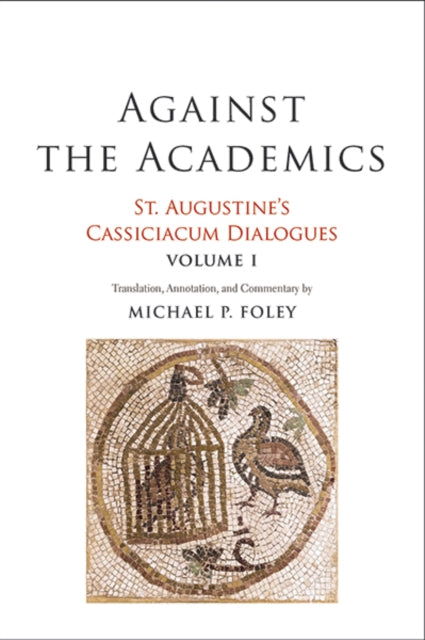
Against the Academics: St. Augustine's Cassiciacum Dialogues, Volume 1
Against the Academics: St. Augustine's Cassiciacum Dialogues, Volume 1
💎 Earn 66 Points (£0.66) on this item.
YOU SAVE £0.67
- Condition: Brand new
- UK Delivery times: Usually arrives within 2 - 3 working days
- UK Shipping: Fee starts at £2.39. Subject to product weight & dimension
Bulk ordering. Want 15 or more copies? Get a personalised quote and bigger discounts. Learn more about bulk orders.
Couldn't load pickup availability
- More about Against the Academics: St. Augustine's Cassiciacum Dialogues, Volume 1
St. Augustine's "Cassiciacum dialogues" is a fresh and engaging translation of his inaugural work as a Christian convert, exploring the history and teachings of Academic skepticism and serving as a launching point for a knowledge of God and the soul.
Format: Paperback / softback
Length: 352 pages
Publication date: 06 August 2019
Publisher: Yale University Press
St. Augustine of Hippo's "Cassiciacum dialogues," the first four works written after his conversion to Christianity, are a remarkable exploration of the history and teachings of Academic skepticism. In this first dialogue, expertly translated by Michael Foley, Augustine and his interlocutors delve into the origins and development of this philosophical movement, which Augustine both sympathizes with and critiques. This dialogue serves as an excellent introduction to the broader themes of the Cassiciacum tetralogy, which revolves around the knowledge of God and the soul.
The translation is lively, engaging, and accurate, making it accessible to contemporary readers. Foley's presentation of the dialogue is insightful and thought-provoking, offering valuable insights into Augustine's philosophical ideas and his perspective on skepticism.
One of the key themes in the dialogue is the distinction between natural and supernatural knowledge. Augustine argues that while natural knowledge can be obtained through the senses and reason, supernatural knowledge comes from God and the soul. He criticizes Academic skepticism for its reliance on human reason alone and its neglect of the spiritual dimension of knowledge.
Augustine also explores the nature of the soul and its relationship to God. He argues that the soul is not merely a physical entity but a spiritual being that is capable of knowing and loving God. He discusses the importance of grace and the role of the Holy Spirit in the conversion and growth of the soul.
The dialogue also touches on the role of philosophy in the search for truth. Augustine argues that philosophy can be a valuable tool for understanding the world and the nature of reality, but it must be guided by the teachings of the Bible and the Church. He criticizes the rationalism of Academic skepticism and its tendency to prioritize human reason over the authority of Scripture.
Overall, St. Augustine's "Cassiciacum dialogues" provide a fascinating insight into the early Christian thought and the development of Academic skepticism. Foley's translation is a valuable contribution to the study of Augustine's philosophy and his understanding of the soul and its relationship to God.
The first four works written by St. Augustine of Hippo after his conversion to Christianity are the remarkable "Cassiciacum dialogues." In this first dialogue, expertly translated by Michael Foley, Augustine and his interlocutors explore the history and teachings of Academic skepticism, which Augustine is both sympathetic to and critical of. The dialogue serves as a fitting launching point for a knowledge of God and the soul, the overall subject of the Cassiciacum tetralogy.
St. Augustine of Hippo's "Cassiciacum dialogues," the first four works written after his conversion to Christianity, are a remarkable exploration of the history and teachings of Academic skepticism. In this first dialogue, expertly translated by Michael Foley, Augustine and his interlocutors delve into the origins and development of this philosophical movement, which Augustine both sympathizes with and critiques. This dialogue serves as an excellent introduction to the broader themes of the Cassiciacum tetralogy, which revolves around the knowledge of God and the soul.
The translation is lively, engaging, and accurate, making it accessible to contemporary readers. Foley's presentation of the dialogue is insightful and thought-provoking, offering valuable insights into Augustine's philosophical ideas and his perspective on skepticism.
One of the key themes in the dialogue is the distinction between natural and supernatural knowledge. Augustine argues that while natural knowledge can be obtained through the senses and reason, supernatural knowledge comes from God and the soul. He criticizes Academic skepticism for its reliance on human reason alone and its neglect of the spiritual dimension of knowledge.
Augustine also explores the nature of the soul and its relationship to God. He argues that the soul is not merely a physical entity but a spiritual being that is capable of knowing and loving God. He discusses the importance of grace and the role of the Holy Spirit in the conversion and growth of the soul.
The dialogue also touches on the role of philosophy in the search for truth. Augustine argues that philosophy can be a valuable tool for understanding the world and the nature of reality, but it must be guided by the teachings of the Bible and the Church. He criticizes the rationalism of Academic skepticism and its tendency to prioritize human reason over the authority of Scripture.
Overall, St. Augustine's "Cassiciacum dialogues" provide a fascinating insight into the early Christian thought and the development of Academic skepticism. Foley's translation is a valuable contribution to the study of Augustine's philosophy and his understanding of the soul and its relationship to God.
The first four works written by St. Augustine of Hippo after his conversion to Christianity are the remarkable "Cassiciacum dialogues." In this first dialogue, expertly translated by Michael Foley, Augustine and his interlocutors explore the history and teachings of Academic skepticism, which Augustine is both sympathetic to and critical of. The dialogue serves as a fitting launching point for a knowledge of God and the soul, the overall subject of the Cassiciacum tetralogy.
St. Augustine of Hippo's "Cassiciacum dialogues," the first four works written after his conversion to Christianity, are a remarkable exploration of the history and teachings of Academic skepticism. In this first dialogue, expertly translated by Michael Foley, Augustine and his interlocutors delve into the origins and development of this philosophical movement, which Augustine both sympathizes with and critiques. This dialogue serves as an excellent introduction to the broader themes of the Cassiciacum tetralogy, which revolves around the knowledge of God and the soul.
The translation is lively, engaging, and accurate, making it accessible to contemporary readers. Foley's presentation of the dialogue is insightful and thought-provoking, offering valuable insights into Augustine's philosophical ideas and his perspective on skepticism.
One of the key themes in the dialogue is the distinction between natural and supernatural knowledge. Augustine argues that while natural knowledge can be obtained through the senses and reason, supernatural knowledge comes from God and the soul. He criticizes Academic skepticism for its reliance on human reason alone and its neglect of the spiritual dimension of knowledge.
Augustine also explores the nature of the soul and its relationship to God. He argues that the soul is not merely a physical entity but a spiritual being that is capable of knowing and loving God. He discusses the importance of grace and the role of the Holy Spirit in the conversion and growth of the soul.
The dialogue also touches on the role of philosophy in the search for truth. Augustine argues that philosophy can be a valuable tool for understanding the world and the nature of reality, but it must be guided by the teachings of the Bible and the Church. He criticizes the rationalism of Academic skepticism and its tendency to prioritize human reason over the authority of Scripture.
Overall, St. Augustine's "Cassiciacum dialogues" provide a fascinating insight into the early Christian thought and the development of Academic skepticism. Foley's translation is a valuable contribution to the study of Augustine's philosophy and his understanding of the soul and its relationship to God.
Weight: 424g
Dimension: 209 x 140 x 25 (mm)
ISBN-13: 9780300238556
This item can be found in:
UK and International shipping information
UK and International shipping information
UK Delivery and returns information:
- Delivery within 2 - 3 days when ordering in the UK.
- Shipping fee for UK customers from £2.39. Fully tracked shipping service available.
- Returns policy: Return within 30 days of receipt for full refund.
International deliveries:
Shulph Ink now ships to Australia, Belgium, Canada, France, Germany, Ireland, Italy, India, Luxembourg Saudi Arabia, Singapore, Spain, Netherlands, New Zealand, United Arab Emirates, United States of America.
- Delivery times: within 5 - 10 days for international orders.
- Shipping fee: charges vary for overseas orders. Only tracked services are available for most international orders. Some countries have untracked shipping options.
- Customs charges: If ordering to addresses outside the United Kingdom, you may or may not incur additional customs and duties fees during local delivery.