Shulph Ink
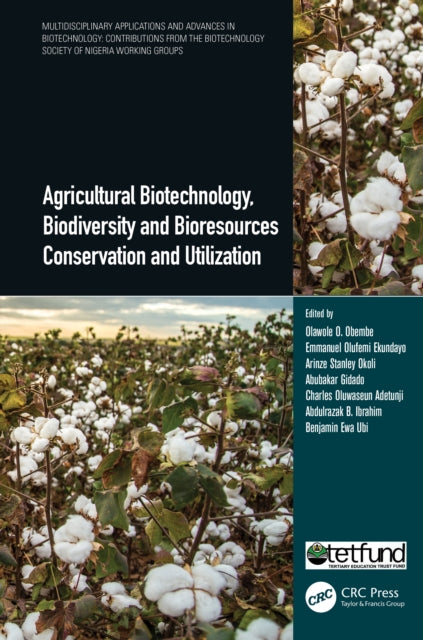
Agricultural Biotechnology, Biodiversity and Bioresources Conservation and Utilization
Agricultural Biotechnology, Biodiversity and Bioresources Conservation and Utilization
💎 Earn 887 Points (£8.87) on this item.
We can order this item for you. Delivery usually takes about 4 to 6 weeks.
This item is not held in our immediate stock. We will order it for you after checkout.
Estimated delivery: About 4 to 6 weeks
YOU SAVE £10.53
- Condition: Brand new
- UK Delivery times: Usually arrives within 2 - 3 working days
- UK Shipping: Fee starts at £2.39. Subject to product weight & dimension
Bulk ordering. Want 15 or more copies? Get a personalised quote and bigger discounts. Learn more about bulk orders.
Couldn't load pickup availability
- More about Agricultural Biotechnology, Biodiversity and Bioresources Conservation and Utilization
Biotechnologies offer promising solutions to address global food and nutrition insecurity, harness indigenous bio-resources for climate change adaptation, and enhance plant genetic resources conservation and utilization.
Format: Hardback
Length: 490 pages
Publication date: 11 May 2022
Publisher: Taylor & Francis Ltd
Biotechnologies have recently made significant strides in addressing the global issue of food and nutrition insecurity. By leveraging plant and animal genetics, breeding, and genomics, researchers are exploring innovative solutions to enhance crop yields, improve animal health, and develop more resilient crops. This essay aims to provide a comprehensive overview of these advancements, highlighting their potential to mitigate food insecurity and adapt to climate change.
Harnessing Indigenous Bio-Resources for Food and Nutrition Security:
Indigenous bio-resources hold immense potential for food and nutrition security. These resources include traditional knowledge, local species, and genetic diversity that have been cultivated by communities for centuries. By recognizing and valuing these bio-resources, researchers can develop sustainable and culturally appropriate solutions to address food insecurity.
One approach is to incorporate indigenous knowledge into modern breeding programs. This involves collaborating with local communities to identify valuable traits in local crops and animals and incorporating these traits into modern varieties. This not only enhances crop productivity but also promotes biodiversity conservation and cultural heritage preservation.
Another strategy is to develop new crop varieties that are more resilient to climate change. Climate change is posing significant challenges to agriculture, including increased temperatures, changing rainfall patterns, and increased frequency of extreme weather events. By developing crop varieties that can withstand these challenges, farmers can maintain crop yields and reduce the risk of food insecurity.
Genomics has played a crucial role in advancing our understanding of plant and animal genetics. By analyzing the genetic makeup of plants and animals, researchers can identify genetic markers that are associated with desirable traits such as disease resistance, drought tolerance, and high yield. This information can be used to develop genetically modified organisms (GMOs) that possess these traits.
GMOs have been controversial, with some critics arguing that they pose risks to human health and the environment. However, when used responsibly and under strict regulation, GMOs can offer significant benefits. For example, GMOs can increase crop yields, improve disease resistance, and reduce the need for pesticides. They can also be used to develop crops that are more tolerant to climate change, such as drought-resistant varieties.
Biotechniques that Could Enhance Plant Genetic Resources Conservation and Utilization:
Conservation of plant genetic resources is essential for ensuring long-term food security. Various biotechniques have been developed to enhance the conservation and utilization of plant genetic resources.
One approach is the development of new technologies for plant tissue culture. Plant tissue culture allows researchers to grow plants in a controlled environment, which can increase the number of plants that can be produced and conserve genetic resources. This technique can also be used to develop new plant varieties that are resistant to pests and diseases.
Another technique is the use of molecular markers to identify and characterize plant genetic resources. Molecular markers can be used to identify specific traits that are valuable for agriculture, such as disease resistance or drought tolerance. This information can be used to develop new crop varieties that possess these traits and to conserve genetic resources that contain these markers.
Genomics has also played a significant role in the conservation and utilization of plant genetic resources. By analyzing the genetic makeup of plant populations, researchers can identify genetic variations that are associated with desirable traits. This information can be used to develop new crop varieties that are more resilient to climate change and to conserve genetic resources that contain these variations.
Current Biotechnological Approaches to Exploit Genetic Resources:
Several biotechnological approaches have been developed to exploit genetic resources for food and nutrition security.
One approach is the development of synthetic hexaploid wheat (SHW). SHW is a genetically modified wheat that has six sets of chromosomes, which makes it more resistant to pests and diseases. This technology has the potential to improve crop yields and reduce the need for pesticides in agriculture.
Another approach is the development of new crop varieties that are more tolerant to climate change. Climate change is posing significant challenges to agriculture, including increased temperatures, changing rainfall patterns, and increased frequency of extreme weather events. By developing crop varieties that can withstand these challenges, farmers can maintain crop yields and reduce the risk of food insecurity.
Conclusion:
Biotechnologies have the potential to transform the way we produce food and address global food and nutrition insecurity. By harnessing indigenous bio-resources, developing resilient crop varieties, and exploiting genetic resources through genomics, researchers can develop sustainable and culturally appropriate solutions to address food insecurity and adapt to climate change. However, it is important to ensure that these technologies are developed and implemented responsibly and under strict regulation to minimize any potential risks to human health and the environment.
Dimension: 234 x 156 (mm)
ISBN-13: 9780367766955
This item can be found in:
UK and International shipping information
UK and International shipping information
UK Delivery and returns information:
- Delivery within 2 - 3 days when ordering in the UK.
- Shipping fee for UK customers from £2.39. Fully tracked shipping service available.
- Returns policy: Return within 30 days of receipt for full refund.
International deliveries:
Shulph Ink now ships to Australia, Belgium, Canada, France, Germany, Ireland, Italy, India, Luxembourg Saudi Arabia, Singapore, Spain, Netherlands, New Zealand, United Arab Emirates, United States of America.
- Delivery times: within 5 - 10 days for international orders.
- Shipping fee: charges vary for overseas orders. Only tracked services are available for most international orders. Some countries have untracked shipping options.
- Customs charges: If ordering to addresses outside the United Kingdom, you may or may not incur additional customs and duties fees during local delivery.