Dinah Hannaford
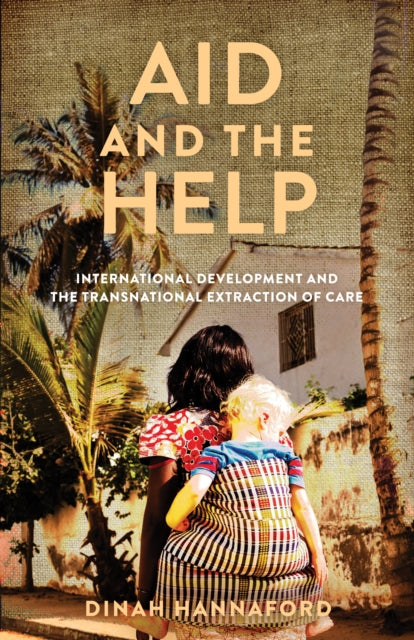
Aid and the Help: International Development and the Transnational Extraction of Care
Aid and the Help: International Development and the Transnational Extraction of Care
💎 Earn 90 Points (£0.90) on this item.
YOU SAVE £3.83
- Condition: Brand new
- UK Delivery times: Usually arrives within 2 - 3 working days
- UK Shipping: Fee starts at £3.89. Subject to product weight & dimension
Bulk ordering. Want 15 or more copies? Get a personalised quote and bigger discounts. Learn more about bulk orders.
Couldn't load pickup availability
- More about Aid and the Help: International Development and the Transnational Extraction of Care
Hiring domestic workers is a common practice for expat aid workers in the developing world, but these relationships are often overlooked in analyses of the development paradigm. Aid and the Help: An Ethnographic Analysis of the Intersection of Development Work and Domestic Work explores this issue by examining the reproductive labor cheaply purchased by aid workers and assessing how the development industry can be an extractive industry.
Format: Paperback / softback
Length: 228 pages
Publication date: 25 April 2023
Publisher: Stanford University Press
Hiring domestic workers is an integral aspect of the expat development lifestyle, whether one works for the United Nations, governmental aid agencies, or non-governmental organizations (NGOs) like Oxfam, Save the Children, or World Vision. In the developing world, expatriate aid workers rely on maids, nannies, security guards, gardeners, and chauffeurs to assist them in their daily lives. While nearly every expat aid worker employs local individuals within the intimate sphere of their homes, these relationships are often overlooked in analyses of the development paradigm and its practices.
To address this significant gap, Aid and the Help offers an ethnographic exploration of the intersection between development work and domestic work. By examining the reproductive labor cheaply purchased by aid workers posted overseas, the book sheds light on the various ways in which the ostensibly giving industry of development can also operate as an extractive industry.
The book begins by providing a historical overview of the global aid industry, highlighting its growth and expansion over the past several decades. It then delves into the specific context of domestic work, examining the ways in which it has become increasingly outsourced to low-wage countries, particularly in Asia and the Middle East.
The authors argue that the outsourcing of domestic work to developing countries is not only detrimental to the well-being of domestic workers but also has broader implications for the development agenda. They argue that the exploitation of domestic workers perpetuates inequality and poverty, as they are often paid low wages and subjected to poor working conditions. Moreover, the outsourcing of domestic work undermines the local economy, as it takes away jobs from local workers and contributes to the growth of informal economies.
The book also explores the impact of domestic work on the lives of aid workers themselves. It highlights the emotional and psychological toll that the constant presence of domestic workers can take on aid workers, as they are often required to maintain close relationships with their employees, even when these relationships are fraught with tension and conflict.
To address these issues, the book proposes a range of policy recommendations aimed at promoting the rights and well-being of domestic workers. These recommendations include increasing the minimum wage for domestic workers, providing access to social protection programs, and implementing labor laws that protect domestic workers from exploitation and abuse.
Aid and the Help is a valuable contribution to the literature on development and domestic work, offering a nuanced and empathetic analysis of the complex relationship between these two fields. The book provides a critical perspective on the global aid industry, challenging the notion that it is solely a vehicle for promoting development and humanitarianism. Instead, it argues that the aid industry can also be an extractive industry, perpetuating inequality and poverty and undermining the local economy.
The book's ethnographic approach is particularly effective in shedding light on the experiences of domestic workers and aid workers themselves. Through their stories and anecdotes, the authors bring to life the challenges and struggles faced by these individuals, highlighting the need for greater recognition and support for their rights.
In conclusion, Aid and the Help is a must-read for anyone interested in understanding the intersection of development work and domestic work. The book offers a critical analysis of the global aid industry, challenging the dominant narratives and promoting a more equitable and sustainable approach to development. By examining the reproductive labor cheaply purchased by aid workers posted overseas, the book opens the opportunity to assess the multiple ways that the ostensibly giving industry of development can be an extractive industry as well.
Dimension: 216 x 140 (mm)
ISBN-13: 9781503635500
UK and International shipping information
UK and International shipping information
We deliver throughout the United Kingdom and to 128 countries and territories worldwide, including the United States, Australia, Canada, Germany, Spain and France.