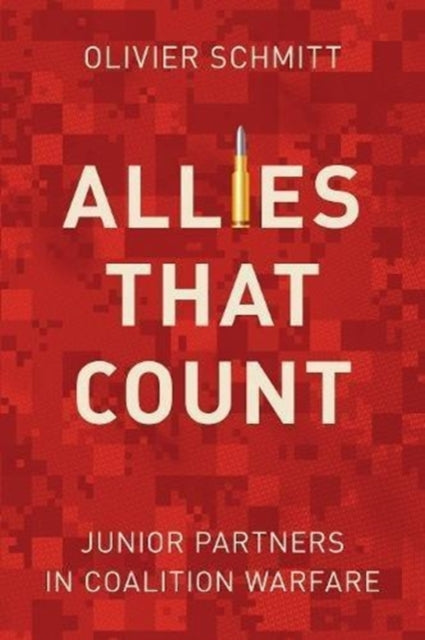
Olivier Schmitt
Allies That Count: Junior Partners in Coalition Warfare
Allies That Count: Junior Partners in Coalition Warfare
💎 Earn 136 Points (£1.36) on this item.
We can order this item for you. Delivery usually takes about 4 to 6 weeks.
This item is not held in our immediate stock. We will order it for you after checkout.
Estimated delivery: About 4 to 6 weeks
YOU SAVE £4.64
- Condition: Brand new
- UK Delivery times: Usually arrives within 2 - 3 working days
- UK Shipping: Fee starts at £3.89. Subject to product weight & dimension
Bulk ordering. Want 15 or more copies? Get a personalised quote and bigger discounts. Learn more about bulk orders.
Couldn't load pickup availability
- More about Allies That Count: Junior Partners in Coalition Warfare
Format: Paperback / softback
Length: 262 pages
Publication date: 01 March 2018
Publisher: Georgetown University Press
Coalition warfare is a complex and multifaceted strategy that involves the coordination and collaboration of multiple military forces from different countries. In order to be effective, a coalition must have a clear objective, a shared vision, and a common set of goals. One of the key factors that determine the utility of a junior partner in a coalition is their political and military capabilities. Junior partners can bring valuable resources, expertise, and capabilities to the table, which can enhance the overall effectiveness of the coalition. However, there are also several factors that can make an ally more trouble than its worth. In this essay, we will explore the qualities that make an ally useful in coalition warfare and when an ally is more trouble than its worth.
Political and Military Capabilities:
One of the most important qualities that make an ally useful in coalition warfare is their political and military capabilities. Junior partners can bring valuable resources, expertise, and capabilities to the table, which can enhance the overall effectiveness of the coalition. For example, a country with a strong military force or a significant economic power can provide support to the coalition by providing troops, equipment, and financial resources. Additionally, junior partners can bring valuable political expertise and experience to the table, which can help to navigate complex political landscapes and build consensus among the coalition members.
However, there are also several factors that can make an ally more trouble than its worth. For example, a country with a weak military force or a limited economic power may not be able to provide the necessary support to the coalition. Additionally, a country with a conflicting political agenda or a history of aggression may be a source of tension and instability within the coalition.
Coalition Management:
Another important factor that determines the utility of a junior partner in a coalition is the management of the coalition. Effective coalition management requires a clear chain of command, effective communication, and a shared understanding of the objectives and goals of the coalition. If the coalition is not managed effectively, it can lead to confusion, miscommunication, and a lack of coordination, which can undermine the overall effectiveness of the coalition.
Coalition management is particularly important in situations where the coalition is composed of multiple countries with different political and military capabilities. In such situations, it is important to establish clear roles and responsibilities for each country and to ensure that each country is contributing to the overall objectives of the coalition. Additionally, it is important to establish a mechanism for dispute resolution and conflict management, which can help to prevent conflicts from escalating and causing damage to the coalition.
Coalition Objectives:
The objectives of the coalition also play a significant role in determining the utility of a junior partner. If the coalition is focused on achieving a specific objective, such as defeating a terrorist organization or promoting stability in a region, it is important to ensure that the junior partner is aligned with the coalition's objectives. If the junior partner has a different agenda or is not committed to the coalition's objectives, it can create tension and instability within the coalition.
Coalition objectives are also important in determining the duration and scope of the coalition. If the coalition is focused on achieving a short-term objective, such as defeating a specific terrorist organization, it may be appropriate to have a limited number of countries involved in the coalition. However, if the coalition is focused on achieving a long-term objective, such as promoting stability in a region, it may be appropriate to have a larger number of countries involved in the coalition.
When an Ally is More Trouble than its Worth:
While junior partners can bring valuable resources, expertise, and capabilities to the table, there are also several situations where an ally is more trouble than its worth. One of the most common situations where an ally is more trouble than its worth is when the ally has a conflicting political agenda or a history of aggression. In such situations, the ally may be more interested in pursuing its own interests than in supporting the coalition's objectives. Additionally, the ally may be a source of tension and instability within the coalition, which can undermine the overall effectiveness of the coalition.
Another situation where an ally is more trouble than its worth is when the ally is not committed to the coalition's objectives. In such situations, the ally may be reluctant to provide the necessary support to the coalition or may be unwilling to participate in the coalition's operations. This can create a situation where the coalition is under-resourced and under-manned, which can make it difficult to achieve the coalition's objectives.
Conclusion:
Coalition warfare is a complex and multifaceted strategy that requires the coordination and collaboration of multiple military forces from different countries. In order to be effective, a coalition must have a clear objective, a shared vision, and a common set of goals. One of the key factors that determine the utility of a junior partner in a coalition is their political and military capabilities. Junior partners can bring valuable resources, expertise, and capabilities to the table, which can enhance the overall effectiveness of the coalition. However, there are also several factors that can make an ally more trouble than its worth. In this essay, we have explored the qualities that make an ally useful in coalition warfare and when an ally is more trouble than its worth. Effective coalition management, clear coalition objectives, and a shared understanding of the objectives and goals of the coalition are all important factors that can help to ensure the utility of a junior partner in a coalition. However, it is also important to be aware of the potential risks and challenges associated with working with junior partners and to take steps
Coalition warfare is a complex and multifaceted strategy that involves the coordination and collaboration of multiple military forces from different countries. In order to be effective, a coalition must have a clear objective, a shared vision, and a common set of goals. One of the key factors that determine the utility of a junior partner in a coalition is their political and military capabilities. Junior partners can bring valuable resources, expertise, and capabilities to the table, which can enhance the overall effectiveness of the coalition. However, there are also several factors that can make an ally more trouble than its worth. In this essay, we will explore the qualities that make an ally useful in coalition warfare and when an ally is more trouble than its worth.
Political and Military Capabilities:
One of the most important qualities that make an ally useful in coalition warfare is their political and military capabilities. Junior partners can bring valuable resources, expertise, and capabilities to the table, which can enhance the overall effectiveness of the coalition. For example, a country with a strong military force or a significant economic power can provide support to the coalition by providing troops, equipment, and financial resources. Additionally, junior partners can bring valuable political expertise and experience to the table, which can help to navigate complex political landscapes and build consensus among the coalition members.
However, there are also several factors that can make an ally more trouble than its worth. For example, a country with a weak military force or a limited economic power may not be able to provide the necessary support to the coalition. Additionally, a country with a conflicting political agenda or a history of aggression may be a source of tension and instability within the coalition.
Coalition Management:
Another important factor that determines the utility of a junior partner in a coalition is the management of the coalition. Effective coalition management requires a clear chain of command, effective communication, and a shared understanding of the objectives and goals of the coalition. If the coalition is not managed effectively, it can lead to confusion, miscommunication, and a lack of coordination, which can undermine the overall effectiveness of the coalition.
Coalition management is particularly important in situations where the coalition is composed of multiple countries with different political and military capabilities. In such situations, it is important to establish clear roles and responsibilities for each country and to ensure that each country is contributing to the overall objectives of the coalition. Additionally, it is important to establish a mechanism for dispute resolution and conflict management, which can help to prevent conflicts from escalating and causing damage to the coalition.
Coalition Objectives:
The objectives of the coalition also play a significant role in determining the utility of a junior partner. If the coalition is focused on achieving a specific objective, such as defeating a terrorist organization or promoting stability in a region, it is important to ensure that the junior partner is aligned with the coalition's objectives. If the junior partner has a different agenda or is not committed to the coalition's objectives, it can create tension and instability within the coalition.
Coalition objectives are also important in determining the duration and scope of the coalition. If the coalition is focused on achieving a short-term objective, such as defeating a specific terrorist organization, it may be appropriate to have a limited number of countries involved in the coalition. However, if the coalition is focused on achieving a long-term objective, such as promoting stability in a region, it may be appropriate to have a larger number of countries involved in the coalition.
When an Ally is More Trouble than its Worth:
While junior partners can bring valuable resources, expertise, and capabilities to the table, there are also several situations where an ally is more trouble than its worth. One of the most common situations where an ally is more trouble than its worth is when the ally has a conflicting political agenda or a history of aggression. In such situations, the ally may be more interested in pursuing its own interests than in supporting the coalition's objectives. Additionally, the ally may be a source of tension and instability within the coalition, which can undermine the overall effectiveness of the coalition.
Another situation where an ally is more trouble than its worth is when the ally is not committed to the coalition's objectives. In such situations, the ally may be reluctant to provide the necessary support to the coalition or may be unwilling to participate in the coalition's operations. This can create a situation where the coalition is under-resourced and under-manned, which can make it difficult to achieve the coalition's objectives.
Conclusion:
Coalition warfare is a complex and multifaceted strategy that requires the coordination and collaboration of multiple military forces from different countries. In order to be effective, a coalition must have a clear objective, a shared vision, and a common set of goals. One of the key factors that determine the utility of a junior partner in a coalition is their political and military capabilities. Junior partners can bring valuable resources, expertise, and capabilities to the table, which can enhance the overall effectiveness of the coalition. However, there are also several factors that can make an ally more trouble than its worth. In this essay, we have explored the qualities that make an ally useful in coalition warfare and when an ally is more trouble than its worth. Effective coalition management, clear coalition objectives, and a shared understanding of the objectives and goals of the coalition are all important factors that can help to ensure the utility of a junior partner in a coalition. However, it is also important to be aware of the potential risks and challenges associated with working with junior partners and to take steps
Weight: 374g
Dimension: 152 x 227 x 22 (mm)
ISBN-13: 9781626165472
UK and International shipping information
UK and International shipping information
We deliver throughout the United Kingdom and to 128 countries and territories worldwide, including the United States, Australia, Canada, Germany, Spain and France.