Johanna KristinBirnir,Nil SedaSatana
Alternatives in Mobilization: Ethnicity, Religion, and Political Conflict
Alternatives in Mobilization: Ethnicity, Religion, and Political Conflict
💎 Earn 113 Points (£1.13) on this item.
We can order this item for you. Delivery usually takes about 4 to 6 weeks.
This item is not held in our immediate stock. We will order it for you after checkout.
Estimated delivery: About 4 to 6 weeks
YOU SAVE £1.34
- Condition: Brand new
- UK Delivery times: Usually arrives within 2 - 3 working days
- UK Shipping: Fee starts at £2.39. Subject to product weight & dimension
Bulk ordering. Want 15 or more copies? Get a personalised quote and bigger discounts. Learn more about bulk orders.
Couldn't load pickup availability
- More about Alternatives in Mobilization: Ethnicity, Religion, and Political Conflict
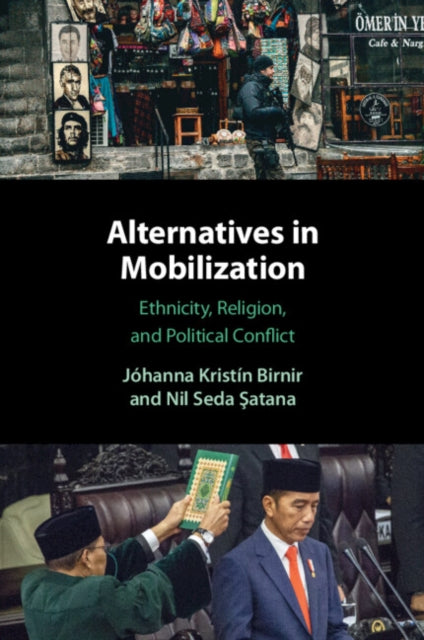
Identity cleavage, whether ethnic or religious, is mobilized in political contestation by variation in relative group size and intersection of cleavages. This theory is tested cross-nationally and helps illustrate a more accurate picture of the ethnic and religious tapestry of the world.
Format: Paperback / softback
Length: 316 pages
Publication date: 13 July 2023
Publisher: Cambridge University Press
In contrast to the common assumption that the most intense conflicts arise when identities are completely divided, the majority of identity disputes worldwide occur between ethnic groups that share a common religion. Alternatives in Mobilization, a groundbreaking work in political demography, seeks to unravel this paradoxical phenomenon. Building upon the existing literature on the topic, the book proposes that the relative size of groups and the intersection of cleavages play a crucial role in determining the mobilization of identity across transgressive and contained political contexts.
To test this theory, the book conducts cross-national examinations of identity mobilization in civil wars and across violent conflicts in Pakistan, Uganda, Nepal, and Turkey, as well as peaceful electoral politics in Indonesia. By analyzing these diverse cases, the book offers a comprehensive and nuanced understanding of the factors that influence identity-based conflicts and their outcomes.
One of the key insights of Alternatives in Mobilization is that variation in relative group size and the intersection of cleavages can significantly influence the mobilization of identity. In contexts where identities are more fragmented, smaller groups may be more likely to mobilize collectively, as they face greater challenges in asserting their rights and interests. On the other hand, in contexts where identities are more interconnected, larger groups may be more likely to mobilize, as they can leverage their collective power and resources to achieve their goals.
The book also highlights the importance of understanding the role of religion in identity-based conflicts. While religion is often seen as a source of division and conflict, the book argues that it can also serve as a source of cohesion and solidarity. Religious identities can provide a shared moral framework and a sense of belonging that can help individuals and groups mobilize in support of their shared values and interests.
However, the mobilization of identity is not always straightforward, and there are many factors that can influence its direction and intensity. These include political institutions, social networks, economic conditions, and historical legacies of conflict. The book explores how these factors interact with each other to shape the dynamics of identity-based conflicts and their outcomes.
In conclusion, Alternatives in Mobilization provides a valuable contribution to our understanding of identity-based conflicts and their dynamics. By challenging the conventional wisdom that the greatest contention occurs where identities are fully segmented, the book offers a more nuanced and accurate picture of the ethnic and religious tapestry of the world. It sheds light on the factors that influence identity mobilization and highlights the importance of understanding the role of religion in these processes. The book's findings have important implications for policymakers, peacebuilders, and scholars alike, as they seek to address the complex challenges posed by identity-based conflicts.
ISBN-13: 9781108412261
UK and International shipping information
UK and International shipping information
UK Delivery and returns information:
- Delivery within 2 - 3 days when ordering in the UK.
- Shipping fee for UK customers from £2.39. Fully tracked shipping service available.
- Returns policy: Return within 30 days of receipt for full refund.
International deliveries:
Shulph Ink now ships to Australia, Belgium, Canada, France, Germany, Ireland, Italy, India, Luxembourg Saudi Arabia, Singapore, Spain, Netherlands, New Zealand, United Arab Emirates, United States of America.
- Delivery times: within 5 - 10 days for international orders.
- Shipping fee: charges vary for overseas orders. Only tracked services are available for most international orders. Some countries have untracked shipping options.
- Customs charges: If ordering to addresses outside the United Kingdom, you may or may not incur additional customs and duties fees during local delivery.