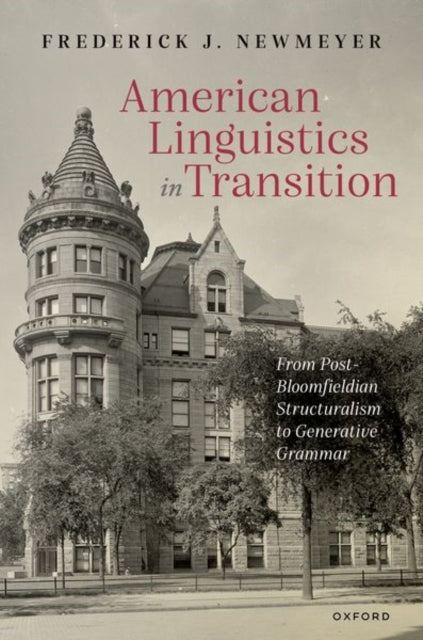
Frederick J.Newmeyer
American Linguistics in Transition: From Post-Bloomfieldian Structuralism to Generative Grammar
American Linguistics in Transition: From Post-Bloomfieldian Structuralism to Generative Grammar
💎 Earn 677 Points (£6.77) on this item.
We can order this item for you. Delivery usually takes about 4 to 6 weeks.
This item is not held in our immediate stock. We will order it for you after checkout.
Estimated delivery: About 4 to 6 weeks
- Condition: Brand new
- UK Delivery times: Usually arrives within 2 - 3 working days
- UK Shipping: Fee starts at £2.39. Subject to product weight & dimension
Bulk ordering. Want 15 or more copies? Get a personalised quote and bigger discounts. Learn more about bulk orders.
Couldn't load pickup availability
- More about American Linguistics in Transition: From Post-Bloomfieldian Structuralism to Generative Grammar
This volume explores the transition from structural linguistics to early generative grammar in the United States, focusing on the rise of structuralism in the 1930s, the interplay between American and European structuralism, and the publication of Joos's Readings in Linguistics in 1957. Later chapters explore the beginnings of generative grammar, the reaction to it from structural linguists, the spread of generativism, and the resistance to it from leading structuralists.
Format: Hardback
Length: 432 pages
Publication date: 30 June 2022
Publisher: Oxford University Press
This volume is dedicated to a significant chapter in the history of linguistics in the United States, spanning from the 1930s to the 1980s, with a primary focus on the transition from (post-Bloomfieldian) structural linguistics to early generative grammar. The book's first three chapters delve into the emergence of structuralism in the 1930s, exploring the interplay between American and European structuralism, as well as the publication of Joos's Readings in Linguistics in 1957. Subsequent chapters examine the origins of generative grammar and the reactions from structural linguists to it, including how generativists disseminated their ideas and the response to generativism in Europe. Additionally, the book explores the resistance to the new theory by prominent structuralists, which persisted into the 1980s. The final chapter dispels the notion that generative grammarians were organizationally dominant in the field in the United States during the 1970s and 1980s.
Introduction:
The period from the 1930s to the 1980s witnessed a transformative shift in the field of linguistics in the United States, marked by a significant transition from structural linguistics to early generative grammar. This chapter explores the historical context, theoretical developments, and influential figures that shaped this transition.
The Rise of Structuralism:
In the 1930s, structuralism gained prominence in linguistics, with influential figures such as Noam Chomsky and Morris Halle advocating for a rigorous scientific approach to language analysis. Structuralism focused on the structure of language, emphasizing the relationship between form and function and the underlying principles that govern language.
The Interplay between American and European Structuralism:
Structuralism in the United States and Europe exhibited distinct characteristics. In the United States, structuralism was influenced by the work of Charles Bally and Albert Sechehaye, who emphasized the importance of phonetics and phonology in language analysis. In contrast, European structuralism was more influenced by the work of Ferdinand de Saussure and his followers, who focused on the structural aspects of language, such as syntax and semantics.
The Publication of Joos's Readings in Linguistics:
One of the pivotal events in the transition from structuralism to generative grammar was the publication of Joos's Readings in Linguistics in 1957. This collection of essays by prominent structuralists, including Noam Chomsky, Morris Halle, and George Lakoff, challenged the traditional structuralist approach and proposed a new theory of language generation.
The Beginnings of Generative Grammar:
Generative grammar, developed by Noam Chomsky and his followers, emerged as a response to the limitations of structuralism. Generative grammar sought to describe the underlying mechanisms that govern language production and comprehension. It proposed that language is a cognitive system that generates sentences based on a set of grammatical rules and parameters.
The Reaction to Generative Grammar:
Structural linguists initially reacted to generative grammar with skepticism and resistance. They argued that the new theory was overly complex and abstract, and that it did not adequately account for the complexities of natural language. Some structuralists even claimed that generative grammar was a form of linguistic imperialism, seeking to impose a European perspective on American linguistics.
How Generativists Made Their Ideas More Widely Known:
Generativists faced significant challenges in disseminating their ideas, but they were able to gain traction through a combination of academic publications, conferences, and popular books. Chomsky's influential book, The Structure of Language, published in 1959, helped to popularize generative grammar and shed light on its theoretical principles.
The Response to Generativism in Europe:
Generative grammar also received a mixed response in Europe. While some linguists embraced the new theory, others were critical of its emphasis on formalism and its lack of empirical evidence. In France, for example, the linguist Jean-Jacques Rousseau famously criticized generative grammar as "linguistic atomism."
The Resistance to the New Theory by Leading Structuralists:
The resistance to generative grammar by leading structuralists continued into the 1980s. Some structuralists argued that the new theory was too restrictive and that it did not adequately account for the variability and complexity of natural language. Others claimed that generative grammar was a form of linguistic relativism, which undermined the universality of language.
Conclusion:
In conclusion, the period from the 1930s to the 1980s was a critical juncture in the history of linguistics in the United States, marked by a transition from structural linguistics to early generative grammar. This transition was driven by a range of factors, including the rise.
The Rise of Structuralism:
In the 1930s, structuralism gained prominence in linguistics, with influential figures such as Noam Chomsky and Morris Halle advocating for a rigorous scientific approach to language analysis. Structuralism focused on the structure of language, emphasizing the relationship between form and function and the underlying principles that govern language.
The Interplay between American and European Structuralism:
Structuralism in the United States and Europe exhibited distinct characteristics. In the United States, structuralism was influenced by the work of Charles Bally and Albert Sechehaye, who emphasized the importance of phonetics and phonology in language analysis. In contrast, European structuralism was more influenced by the work of Ferdinand de Saussure and his followers, who focused on the structural aspects of language, such as syntax and semantics.
The Publication of Joos's Readings in Linguistics:
One of the pivotal events in the transition from structuralism to generative grammar was the publication of Joos's Readings in Linguistics in 1957. This collection of essays by prominent structuralists, including Noam Chomsky, Morris Halle, and George Lakoff, challenged the traditional structuralist approach and proposed a new theory of language generation.
The Beginnings of Generative Grammar:
Generative grammar, developed by Noam Chomsky and his followers, emerged as a response to the limitations of structuralism. Generative grammar sought to describe the underlying mechanisms that govern language production and comprehension. It proposed that language is a cognitive system that generates sentences based on a set of grammatical rules and parameters.
The Reaction to Generative Grammar:
Structural linguists initially reacted to generative grammar with skepticism and resistance. They argued that the new theory was overly complex and abstract, and that it did not adequately account for the complexities of natural language. Some structuralists even claimed that generative grammar was a form of linguistic imperialism, seeking to impose a European perspective on American linguistics.
How Generativists Made Their Ideas More Widely Known:
Generativists faced significant challenges in disseminating their ideas, but they were able to gain traction through a combination of academic publications, conferences, and popular books. Chomsky's influential book, The Structure of Language, published in 1959, helped to popularize generative grammar and shed light on its theoretical principles.
The Response to Generativism in Europe:
Generative grammar also received a mixed response in Europe. While some linguists embraced the new theory, others were critical of its emphasis on formalism and its lack of empirical evidence. In France, for example, the linguist Jean-Jacques Rousseau famously criticized generative grammar as "linguistic atomism."
The Resistance to the New Theory by Leading Structuralists:
The resistance to generative grammar by leading structuralists continued into the 1980s. Some structuralists argued that the new theory was too restrictive and that it did not adequately account for the variability and complexity of natural language. Others claimed that generative grammar was a form of linguistic relativism, which undermined the universality of language.
Conclusion:
In conclusion, the period from the 1930s to the 1980s was a critical juncture in the history of linguistics in the United States, marked by a transition from structural linguistics to early generative grammar. This transition was driven by a range of factors, including the emergence of new theoretical perspectives, the need to address the complexities of natural language, and the influence of external factors such as cultural and political developments. While generative grammar faced significant challenges and resistance, it ultimately played a pivotal role in shaping the field of linguistics in the United States and beyond.
Weight: 796g
Dimension: 240 x 165 x 32 (mm)
ISBN-13: 9780192843760
This item can be found in:
UK and International shipping information
UK and International shipping information
UK Delivery and returns information:
- Delivery within 2 - 3 days when ordering in the UK.
- Shipping fee for UK customers from £2.39. Fully tracked shipping service available.
- Returns policy: Return within 30 days of receipt for full refund.
International deliveries:
Shulph Ink now ships to Australia, Belgium, Canada, France, Germany, Ireland, Italy, India, Luxembourg Saudi Arabia, Singapore, Spain, Netherlands, New Zealand, United Arab Emirates, United States of America.
- Delivery times: within 5 - 10 days for international orders.
- Shipping fee: charges vary for overseas orders. Only tracked services are available for most international orders. Some countries have untracked shipping options.
- Customs charges: If ordering to addresses outside the United Kingdom, you may or may not incur additional customs and duties fees during local delivery.