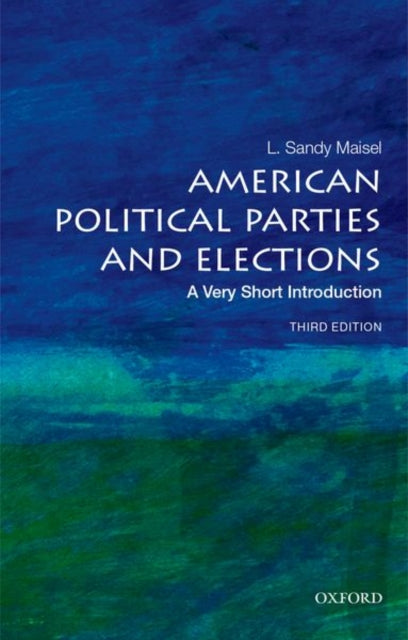
L. SandyMaisel
American Political Parties and Elections: A Very Short Introduction
American Political Parties and Elections: A Very Short Introduction
💎 Earn 35 Points (£0.35) on this item.
YOU SAVE £2.92
- Condition: Brand new
- UK Delivery times: Usually arrives within 2 - 3 working days
- UK Shipping: Fee starts at £2.39. Subject to product weight & dimension
Bulk ordering. Want 15 or more copies? Get a personalised quote and bigger discounts. Learn more about bulk orders.
Couldn't load pickup availability
- More about American Political Parties and Elections: A Very Short Introduction
The electoral process in the United States is complex, with low participation due to lack of competition, campaign contributions, and unregulated groups. This Very Short Introduction examines these issues and highlights the flaws in the system, including changes in electoral coalitions and polarization. It also examines turnout questions, access to the ballot, and the role of social media in campaign strategy.
Format: Paperback / softback
Length: 208 pages
Publication date: 24 November 2022
Publisher: Oxford University Press Inc
Few Americans and even fewer citizens of other nations understand the electoral process in the United States. Still fewer understand the role played by political parties in the electoral process or the ironies within the system. Participation in elections in the United States is much lower than in the vast majority of mature democracies. Perhaps this is because of the lack of competition in a country where only two parties have a true chance of winning, despite the fact that a large number of citizens claim allegiance to neither and think badly of both. Or perhaps it is because in the U.S. campaign contributions disproportionately favor incumbents in most legislative elections, or that largely unregulated groups such as the now notorious 527 organizations have as much impact on the outcome of a campaign as do the parties or the candidates' campaigns. For instance, in two of the last six presidential elections, the winner of the popular vote lost the election in the Electoral College; in two others, a change of fewer than 100,000 votes in selected states would have led to the same result. These factors offer a very clear picture of the problems that underlie our much trumpeted electoral system.
The third edition of this Very Short Introduction analyzes these issues and more. Accounting for changes in electoral coalitions and the extent to which the American electorate is polarized in the wake of Donald Trump, L. Sandy Maisel explains how the system actually works while shining a light on some of its flaws. He also looks closely at turnout questions; efforts both to ease access to the ballot in some states and to restrict access in others; and the role of social media in campaign strategy.
Few Americans and even fewer citizens of other nations understand the electoral process in the United States. Still fewer understand the role played by political parties in the electoral process or the ironies within the system. Participation in elections in the United States is much lower than in the vast majority of mature democracies. Perhaps this is because of the lack of competition in a country where only two parties have a true chance of winning, despite the fact that a large number of citizens claim allegiance to neither and think badly of both. Or perhaps it is because in the U.S. campaign contributions disproportionately favor incumbents in most legislative elections, or that largely unregulated groups such as the now notorious 527 organizations have as much impact on the outcome of a campaign as do the parties or the candidates' campaigns. For instance, in two of the last six presidential elections, the winner of the popular vote lost the election in the Electoral College; in two others, a change of fewer than 100,000 votes in selected states would have led to the same result. These factors offer a very clear picture of the problems that underlie our much trumpeted electoral system.
The third edition of this Very Short Introduction analyzes these issues and more. Accounting for changes in electoral coalitions and the extent to which the American electorate is polarized in the wake of Donald Trump, L. Sandy Maisel explains how the system actually works while shining a light on some of its flaws. He also looks closely at turnout questions; efforts both to ease access to the ballot in some states and to restrict access in others; and the role of social media in campaign strategy.
Dimension: 175 x 111 (mm)
ISBN-13: 9780197605110
Edition number: 3 Revised edition
UK and International shipping information
UK and International shipping information
UK Delivery and returns information:
- Delivery within 2 - 3 days when ordering in the UK.
- Shipping fee for UK customers from £2.39. Fully tracked shipping service available.
- Returns policy: Return within 30 days of receipt for full refund.
International deliveries:
Shulph Ink now ships to Australia, Belgium, Canada, France, Germany, Ireland, Italy, India, Luxembourg Saudi Arabia, Singapore, Spain, Netherlands, New Zealand, United Arab Emirates, United States of America.
- Delivery times: within 5 - 10 days for international orders.
- Shipping fee: charges vary for overseas orders. Only tracked services are available for most international orders. Some countries have untracked shipping options.
- Customs charges: If ordering to addresses outside the United Kingdom, you may or may not incur additional customs and duties fees during local delivery.