Shulph Ink
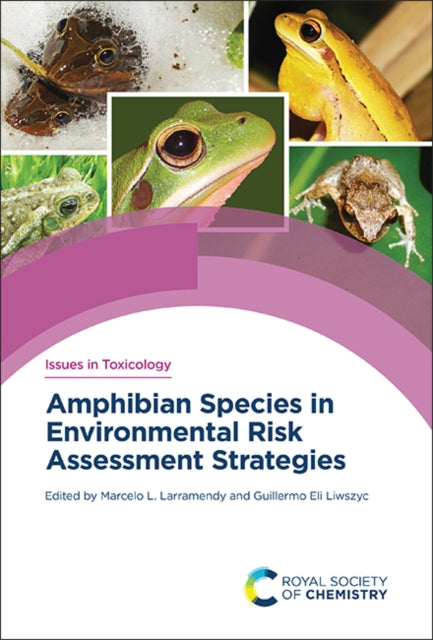
Amphibian Species in Environmental Risk Assessment Strategies
Amphibian Species in Environmental Risk Assessment Strategies
💎 Earn 741 Points (£7.41) on this item.
We can order this item for you. Delivery usually takes about 4 to 6 weeks.
This item is not held in our immediate stock. We will order it for you after checkout.
Estimated delivery: About 4 to 6 weeks
YOU SAVE £10.78
- Condition: Brand new
- UK Delivery times: Usually arrives within 2 - 3 working days
- UK Shipping: Fee starts at £2.39. Subject to product weight & dimension
Bulk ordering. Want 15 or more copies? Get a personalised quote and bigger discounts. Learn more about bulk orders.
Couldn't load pickup availability
- More about Amphibian Species in Environmental Risk Assessment Strategies
The expansion of human settlements and environmental changes have increased the interest in toxicology and risk assessment of amphibian species. This book focuses on environmental risk assessment in premetamorphic stages and adults of amphibians, an area of rapidly growing interest. It is an ideal companion for toxicologists, ecologists, conservation biologists, biological invasion, biocontrol, and habitat management.
Format: Hardback
Length: 274 pages
Publication date: 18 December 2023
Publisher: Royal Society of Chemistry
Amphibian toxicology and risk assessment have gained significant attention due to the expansion of human settlements and the environmental changes associated with human activities and pollutants. This book specifically addresses the environmental risk assessment of premetamorphic stages and adults of amphibians, a field that is rapidly evolving in scientific research. While the understanding of amphibian ecotoxicology is still incomplete, it presents a promising area for addressing environmental risks. This book serves as an invaluable companion for toxicologists and ecologists engaged in investigating risk assessment in amphibian environments, as well as those involved in conservation biology, biological invasion, biocontrol, and habitat management.
The study of amphibian toxicology and risk assessment has emerged as a crucial area of research in response to the growing impact of human activities on ecosystems. As human settlements expand, they encroach on natural habitats, leading to disturbances and environmental changes that can have detrimental effects on amphibian populations. These effects can include habitat loss, pollution, climate change, and the introduction of invasive species.
Amphibians are particularly vulnerable to these environmental stressors due to their unique life cycle characteristics and sensitivity to environmental conditions. They undergo a metamorphic transition from aquatic larvae to terrestrial adults, which exposes them to different environmental stresses and challenges. During this transition, amphibians may encounter toxic substances in their habitat, which can have severe consequences for their health and survival.
To address these challenges, toxicologists and risk assessors have turned their attention to amphibians. They aim to understand the toxicological effects of various environmental stressors on amphibian populations and to develop methods for assessing and managing environmental risks to these species. This book focuses specifically on the environmental risk assessment of premetamorphic stages and adults of amphibians.
Premetamorphic stages, also known as larvae, are the most vulnerable stage of an amphibian's life cycle. They are exposed to a wide range of environmental stressors, including water pollution, pesticides, and other chemicals. These substances can have toxic effects on amphibian development, leading to abnormalities, deformities, and even death. Risk assessors use a variety of methods to evaluate the potential risks posed by these stressors to premetamorphic stages and adults of amphibians.
One of the most commonly used methods is chemical analysis. Toxicologists use analytical techniques such as gas chromatography-mass spectrometry (GC-MS) to detect and quantify the presence of toxic substances in environmental samples. This information can then be used to assess the potential risks to amphibians and to develop mitigation strategies to reduce these risks.
Another method used in risk assessment is ecological modeling. Ecological models simulate the interactions between environmental stressors and amphibian populations over time. These models can help predict the effects of environmental changes on amphibian populations and identify areas where conservation efforts are most needed.
In addition to these methods, risk assessors also use field studies and monitoring programs to collect data on amphibian populations and their responses to environmental stressors. This data can be used to validate ecological models and to identify areas where conservation efforts are most effective.
Amphibian ecotoxicology is a rapidly evolving field of research, and there is still much to be learned about the toxicological effects of various environmental stressors on these species. However, the growing interest in amphibian toxicology and risk assessment has the potential to address some of the most pressing environmental concerns of our time. By understanding the toxicological effects of environmental stressors on amphibians, we can develop effective mitigation strategies to protect these species and their habitats.
In conclusion, amphibian toxicology and risk assessment have become increasingly important due to the expansion of human settlements and the environmental changes associated with human activities and pollutants. This book focuses specifically on the environmental risk assessment of premetamorphic stages and adults of amphibians, a field that is rapidly evolving in scientific research. By understanding the toxicological effects of environmental stressors on amphibians, we can develop effective mitigation strategies to protect these species and their habitats. This book serves as an invaluable companion for toxicologists, ecologists, conservation biologists, biological invasion specialists, biocontrol professionals, and habitat managers.
Weight: 589g
Dimension: 234 x 156 (mm)
ISBN-13: 9781837671526
This item can be found in:
UK and International shipping information
UK and International shipping information
UK Delivery and returns information:
- Delivery within 2 - 3 days when ordering in the UK.
- Shipping fee for UK customers from £2.39. Fully tracked shipping service available.
- Returns policy: Return within 30 days of receipt for full refund.
International deliveries:
Shulph Ink now ships to Australia, Belgium, Canada, France, Germany, Ireland, Italy, India, Luxembourg Saudi Arabia, Singapore, Spain, Netherlands, New Zealand, United Arab Emirates, United States of America.
- Delivery times: within 5 - 10 days for international orders.
- Shipping fee: charges vary for overseas orders. Only tracked services are available for most international orders. Some countries have untracked shipping options.
- Customs charges: If ordering to addresses outside the United Kingdom, you may or may not incur additional customs and duties fees during local delivery.