Professor HowardJackson,Dr EtienneZe Amvela
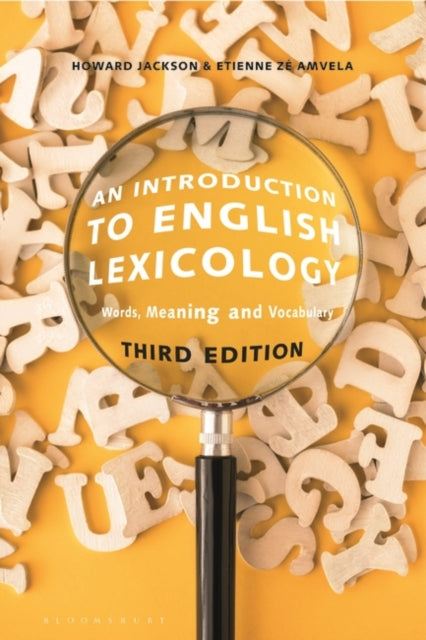
An Introduction to English Lexicology: Words, Meaning and Vocabulary
An Introduction to English Lexicology: Words, Meaning and Vocabulary
💎 Earn 225 Points (£2.25) on this item.
YOU SAVE £39.87
- Condition: Brand new
- UK Delivery times: Usually arrives within 2 - 3 working days
- UK Shipping: Fee starts at £2.39. Subject to product weight & dimension
Bulk ordering. Want 15 or more copies? Get a personalised quote and bigger discounts. Learn more about bulk orders.
Couldn't load pickup availability
- More about An Introduction to English Lexicology: Words, Meaning and Vocabulary
This book provides an overview of the key concepts in the lexicology of modern English, explaining the sources of words, how they have developed over time, and how they are used. It is updated throughout to keep pace with recent developments and features exercises, a glossary, and suggestions for further reading.
Format: Hardback
Length: 272 pages
Publication date: 18 November 2021
Publisher: Bloomsbury Publishing PLC
Words are the building blocks of language that convey meaning and facilitate communication. They have a rich history and have evolved over time through various processes. In this book, we will explore the origins and evolution of words, their usage, and the various aspects of lexicology.
Where do words come from? The origins of words can be traced back to ancient times when humans first began to communicate. Words were formed through the combination of sounds, gestures, and visual symbols. Over time, these forms of communication evolved into spoken languages, and with them, the development of written languages.
The English language, in particular, has a rich and complex history. It is believed to have originated from a group of Germanic tribes that invaded Britain in the 5th century AD. Over time, these tribes interacted with other cultures, including the Romans, who brought their language and influence to England. This interaction led to the development of the English language as we know it today.
The English language has undergone numerous changes and adaptations over the centuries. It has been influenced by various languages, including Latin, Greek, and French, as well as other cultures and languages. This has led to the development of new words and the evolution of existing words.
One of the key aspects of lexicology is the study of word formation. Word formation involves the process by which new words are created. There are several different types of word formation, including compounding, blending, and derivation. Compounding involves the combination of two or more words to create a new word, while blending involves the mixing of sounds to create a new word. Derivation involves the creation of a new word from an existing word or root word.
Another important aspect of lexicology is the study of word usage. Word usage refers to the way in which words are used in different contexts and to convey different meanings. Word usage can vary greatly depending on the language, culture, and context in which it is used.
Lexicology also involves the study of dictionaries and other reference materials. Dictionaries are essential tools for language learners and researchers. They provide information about the meanings, pronunciation, and usage of words. Dictionaries also include examples of words in use and information about word origins and etymology.
In addition to dictionaries, there are other reference materials that are useful for lexicology research. These include encyclopedias, glossaries, and thesauri. Encyclopedias provide information about a wide range of topics, while glossaries and thesauri provide information about specific areas of language, such as vocabulary, grammar, and pronunciation.
One of the challenges of lexicology is the vastness of the English language. The English language has a vast vocabulary, with millions of words in use. This can make it difficult for language learners and researchers to keep up with the latest developments in the field.
To address this challenge, lexicology has developed a range of electronic resources and tools. These include online dictionaries, lexical databases, and language learning tools. Online dictionaries provide access to a wide range of dictionaries and reference materials, while lexical databases provide information about word usage and word formation. Language learning tools, such as vocabulary quizzes, grammar, and pronunciation, can help language learners to improve their language skills.
In conclusion, words are the building blocks of language that convey meaning and facilitate communication. They have a rich history and have evolved over time through various processes. In this book, we will explore the origins
The origins.
The origins of words can be traced back to ancient times when humans first began to communicate. Words were formed through the combination of sounds, gestures, and visual symbols. Over time, these forms of communication evolved into spoken languages, and with them, the development of written languages.
The English language, in particular, has a rich and complex history. It is believed to have originated from a group of Germanic tribes that invaded Britain in the 5th century AD. Over time, these tribes interacted with other cultures, including the Romans, who brought their language and influence to England. This interaction led to the development of the English language as we know it today.
The English language has undergone numerous changes and adaptations over the centuries. It has been influenced by various languages, including Latin, Greek, and French, as well as other cultures and languages. This has led to the development of new words and the evolution of existing words.
One of the key aspects of lexicology is the study of word formation. Word formation involves the process by which new words are created. There are several different types of word formation, including compounding, blending, and derivation. Compounding involves the combination of two or more words to create a new word, while blending involves the mixing of sounds to create a new word. Derivation involves the creation of a new word from an existing word or root word.
Another important aspect of lexicology is the study of word usage. Word usage refers to the way in which words are used in different contexts and to convey different meanings. Word usage can vary greatly depending on the language, culture, and context in which it is used.
Lexicology also involves the study of dictionaries. Dictionaries are essential tools for language learners and researchers. They provide information about the meanings, pronunciation, and usage of words. Dictionaries also include examples of words in use and information about word origins and etymology.
In addition to dictionaries, there are other reference materials that are useful for lexicology research. These include encyclopedias, glossaries, and thesauri. Encyclopedias provide information about a wide range of topics, while glossaries and thesauri provide information about specific areas of language, such as vocabulary, grammar, and pronunciation.
One of the challenges of lexicology is the vastness of the English language. The English language has a vast vocabulary, with millions of words in use. This can make it difficult for language learners and researchers to keep up with the latest developments in the field.
To address this challenge, lexicology has developed a range of electronic resources and tools. These include online dictionaries, lexical databases, and language learning tools. Online dictionaries provide access to a wide range of dictionaries and reference materials, while lexical databases provide information about word usage and word formation. Language learning tools, such as vocabulary, grammar, and pronunciation, can help language learners to improve their language skills.
In conclusion, words are the building blocks of language that convey meaning and facilitate communication. They have a rich history and have evolved over time through various processes. In this book, we will explore the origins.
Weight: 562g
Dimension: 164 x 240 x 24 (mm)
ISBN-13: 9781350133372
Edition number: 3 ed
This item can be found in:
UK and International shipping information
UK and International shipping information
UK Delivery and returns information:
- Delivery within 2 - 3 days when ordering in the UK.
- Shipping fee for UK customers from £2.39. Fully tracked shipping service available.
- Returns policy: Return within 30 days of receipt for full refund.
International deliveries:
Shulph Ink now ships to Australia, Belgium, Canada, France, Germany, Ireland, Italy, India, Luxembourg Saudi Arabia, Singapore, Spain, Netherlands, New Zealand, United Arab Emirates, United States of America.
- Delivery times: within 5 - 10 days for international orders.
- Shipping fee: charges vary for overseas orders. Only tracked services are available for most international orders. Some countries have untracked shipping options.
- Customs charges: If ordering to addresses outside the United Kingdom, you may or may not incur additional customs and duties fees during local delivery.