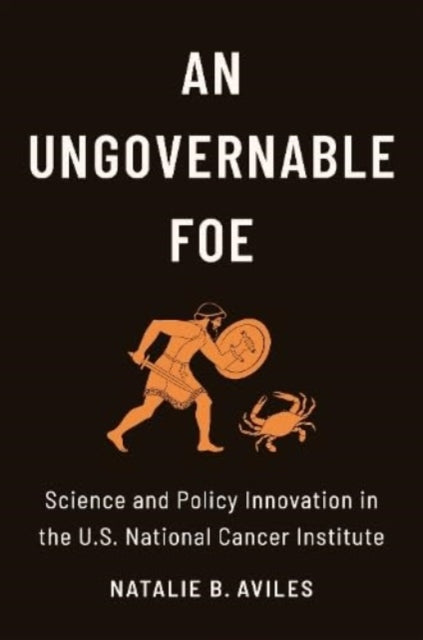
Natalie B. Aviles
An Ungovernable Foe: Science and Policy Innovation in the U.S. National Cancer Institute
An Ungovernable Foe: Science and Policy Innovation in the U.S. National Cancer Institute
💎 Earn 505 Points (£5.05) on this item.
YOU SAVE £23.85
- Condition: Brand new
- UK Delivery times: Usually arrives within 2 - 3 working days
- UK Shipping: Fee starts at £2.39. Subject to product weight & dimension
Bulk ordering. Want 15 or more copies? Get a personalised quote and bigger discounts. Learn more about bulk orders.
Couldn't load pickup availability
- More about An Ungovernable Foe: Science and Policy Innovation in the U.S. National Cancer Institute
The U.S. National Cancer Institute (NCI) has developed expertise in virus research and vaccine development, transforming generations of researchers into innovative public servants who balance scientific and bureaucratic missions. Natalie B. Aviles' book "An Ungovernable Foe" examines seventy years of federally funded scientific breakthroughs in the NCI's laboratories, highlighting how bureaucratic organizations nurture innovation.
Format: Hardback
Length: 360 pages
Publication date: 23 January 2024
Publisher: Columbia University Press
Winner,2024 Choice Outstanding Academic Title In American politics, medical innovation is often considered the domain of the private sector. Yet some of the most significant scientific and health breakthroughs of the past century have emerged from government research institutes. The U.S. National Cancer Institute (NCI) is tasked with both understanding and eradicating cancer—and its researchers have developed a surprising expertise in virus research and vaccine development. An Ungovernable Foe examines seventy years of federally funded scientific breakthroughs in the laboratories of the NCI to shed new light on how bureaucratic organizations nurture innovation. Natalie B. Aviles analyzes research and policy efforts around the search for a viral cause of leukemia in the 1960s, the discovery of HIV and the development of AIDS drugs in the 1980s, and the invention of the HPV vaccine in the 1990s. She argues that the NCI transformed generations of researchers into innovative public servants who have learned to balance their scientific and bureaucratic missions. These "scientist-bureaucrats" are simultaneously committed to conducting cutting-edge research and stewarding the nation's investment in cancer research, and as a result, they have developed an unparalleled expertise. Aviles demonstrates how the interplay of science, politics, and administration shaped the NCI into a mission-oriented agency that enabled significant breakthroughs in cancer research—and in the process, she shows how organizational cultures indelibly stamp scientific work.
Winner, 2024 Choice Outstanding Academic Title
In American politics, medical innovation is often considered the domain of the private sector. Yet some of the most significant scientific and health breakthroughs of the past century have emerged from government research institutes. The U.S. National Cancer Institute (NCI) is tasked with both understanding and eradicating cancer—and its researchers have developed a surprising expertise in virus research and vaccine development.
An Ungovernable Foe examines seventy years of federally funded scientific breakthroughs in the laboratories of the NCI to shed new light on how bureaucratic organizations nurture innovation. Natalie B. Aviles analyzes research and policy efforts around the search for a viral cause of leukemia in the 1960s, the discovery of HIV and the development of AIDS drugs in the 1980s, and the invention of the HPV vaccine in the 1990s. She argues that the NCI transformed generations of researchers into innovative public servants who have learned to balance their scientific and bureaucratic missions. These "scientist-bureaucrats" are simultaneously committed to conducting cutting-edge research and stewarding the nation's investment in cancer research, and as a result, they have developed an unparalleled expertise. Aviles demonstrates how the interplay of science, politics, and administration shaped the NCI into a mission-oriented agency that enabled significant breakthroughs in cancer research—and in the process, she shows how organizational cultures indelibly stamp scientific work.
Dimension: 235 x 156 (mm)
ISBN-13: 9780231196680
This item can be found in:
UK and International shipping information
UK and International shipping information
UK Delivery and returns information:
- Delivery within 2 - 3 days when ordering in the UK.
- Shipping fee for UK customers from £2.39. Fully tracked shipping service available.
- Returns policy: Return within 30 days of receipt for full refund.
International deliveries:
Shulph Ink now ships to Australia, Belgium, Canada, France, Germany, Ireland, Italy, India, Luxembourg Saudi Arabia, Singapore, Spain, Netherlands, New Zealand, United Arab Emirates, United States of America.
- Delivery times: within 5 - 10 days for international orders.
- Shipping fee: charges vary for overseas orders. Only tracked services are available for most international orders. Some countries have untracked shipping options.
- Customs charges: If ordering to addresses outside the United Kingdom, you may or may not incur additional customs and duties fees during local delivery.