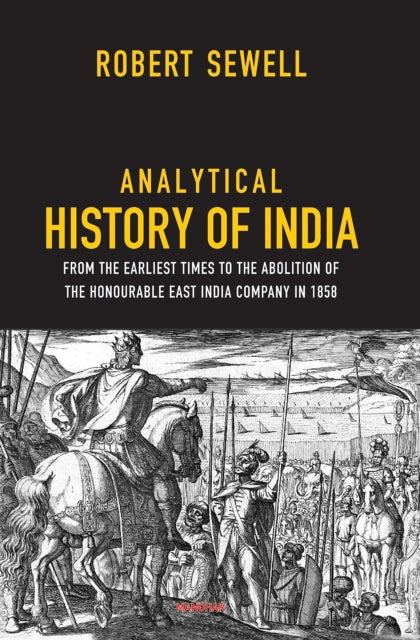
Robert Sewell
Analytical History of India: From the Earliest Times to the Abolition of the Honourable East India Company in 1858
Analytical History of India: From the Earliest Times to the Abolition of the Honourable East India Company in 1858
💎 Earn 371 Points (£3.71) on this item.
- Condition: Brand new
- UK Delivery times: Usually arrives within 2 - 3 working days
- UK Shipping: Fee starts at £2.39. Subject to product weight & dimension
Bulk ordering. Want 15 or more copies? Get a personalised quote and bigger discounts. Learn more about bulk orders.
Couldn't load pickup availability
- More about Analytical History of India: From the Earliest Times to the Abolition of the Honourable East India Company in 1858
Analytical History of India is a comprehensive history of the Indian subcontinent, covering ancient, medieval, and modern periods.
Format: Hardback
Length: 362 pages
Publication date: 10 September 2023
Publisher: Manohar Publishers and Distributors
Analytical History of India is a comprehensive and engaging account of the Indian subcontinent's rich and diverse history, spanning from ancient times to the modern era. It begins with the Vedic and Epic ages, followed by the Mauryan history and the ancient history of northern regions and the Deccan. The book then delves into the medieval age, covering the Sultanate and Mughal rule, which left a lasting impact on Indian society and culture.
One of the key strengths of Analytical History of India is its ability to provide a balanced and nuanced view of the historical events and developments. The author carefully examines the various factors that contributed to the growth and decline of different empires and societies, including political, social, economic, and cultural factors. This approach allows readers to gain a deeper understanding of the complexities of Indian history and to appreciate the diversity of the region's cultures and traditions.
Another notable feature of Analytical History of India is its use of primary sources. The author has extensively researched the original texts and documents related to the historical events, which provides a firsthand account of the events and allows readers to gain a deeper insight into the minds of the people involved. This approach helps to dispel myths and misconceptions and to provide a more accurate and reliable account of the past.
The book is divided into several chapters, each covering a different period of Indian history. Each chapter is well-organized and easy to read, and includes a wealth of information and analysis. The author's writing style is clear and concise, making it accessible to a wide range of readers.
One of the most significant periods covered in Analytical History of India is the medieval age. This period saw the rise of several powerful empires, including the Sultanate and Mughal rule. The author provides a detailed account of the political, social, and economic developments during this period, including the establishment of the Delhi Sultanate, the Mughal Empire, and the Mughal Empire's decline.
The author also highlights the cultural and religious aspects of the medieval age. He discusses the development of Hinduism, Islam, and Buddhism, and their impact on Indian society and culture. He also explores the role of women in Indian society during this period, and the challenges they faced.
Another important aspect of Analytical History of India is its analysis of the colonial period. The author provides a detailed account of the British colonial rule in India, including the policies and practices that were implemented. He also discusses the impact of colonialism on Indian society and culture, and the efforts of Indian nationalists to resist colonial rule.
One of the challenges faced by the author in writing Analytical History of India is the vast amount of information available. The book covers a wide range of historical events and developments, and it can be difficult to keep track of all the details. However, the author has done an excellent job of organizing the information and presenting it in a clear and concise manner.
In addition to its historical content, Analytical History of India also provides valuable insights into the current political and social situation in India. The author discusses the challenges that India faces today, including poverty, inequality, and corruption. He also provides suggestions for how India can address these challenges and achieve its goals.
Overall, Analytical History of India is a must-read for anyone interested in the history of the Indian subcontinent. It provides a comprehensive and nuanced view of the historical events and developments, and it is written in a clear and concise manner that is accessible to a wide range of readers. Whether you are a student, a historian, or just someone who is curious about the past, this book will provide you with valuable insights and a deeper understanding of the Indian subcontinent's rich and diverse history.
Analytical History of India
Analytical History of India is a concise history written for the general reader interested in the history of the Indian subcontinent. It stretches from ancient India, from Vedic and Epic ages to the Mauryan history; the ancient history of northern regions, and Deccan. It also covers the entire medieval age of the Sultanate and Mughal rule.
One of the key strengths of Analytical History of India is its ability to provide a balanced and nuanced view of the historical events and developments. The author carefully examines the various factors that contributed to the growth and decline of different empires and societies, including political, social, economic, and cultural factors. This approach allows readers to gain a deeper understanding of the complexities of Indian history and to appreciate the diversity of the region's cultures and traditions.
Another notable feature of Analytical History of India is its use of primary sources. The author has extensively researched the original texts and documents related to the historical events, which provides a firsthand account of the events and allows readers to gain a deeper insight into the minds of the people involved. This approach helps to dispel myths and misconceptions and to provide a more accurate and reliable account of the past.
The book is divided into several chapters, each covering a different period of Indian history. Each chapter is well-organized and easy to read, and includes a wealth of information and analysis. The author's writing style is clear and concise, making it accessible to a wide range of readers.
One of the most significant periods covered in Analytical History of India is the medieval age. This period saw the rise of several powerful empires, including the Sultanate and Mughal rule. The author provides a detailed account of the political, social, and economic developments during this period, including the establishment of the Delhi Sultanate, the Mughal Empire, and the Mughal Empire's decline.
The author also highlights the cultural and religious aspects of the medieval age. He discusses the development of Hinduism, Islam, and Buddhism, and their impact on Indian society and culture. He also explores the role of women in Indian society during this period, and the challenges they faced.
Another important aspect of Analytical History of India is its analysis of the colonial period. The author provides a detailed account of the British colonial rule in India, including the policies and practices that were implemented. He also discusses the impact of colonialism on Indian society and culture, and the efforts of Indian nationalists to resist colonial rule.
One of the challenges faced by the author in writing Analytical History of India is the vast amount of information available. The book covers a wide range of historical events and developments, and it can be difficult to keep track of all the details. However, the author has done an excellent job of organizing the information and presenting it in a clear and concise manner.
In addition to its historical content, Analytical History of India also provides valuable insights into the current political and social situation in India. The author discusses the challenges that India faces today, including poverty, inequality, and corruption. He also provides suggestions for how India can address these challenges and achieve its goals.
Overall, Analytical History of India is a must-read for anyone interested in the history of the Indian subcontinent. It provides a comprehensive and nuanced view of the historical events and developments, and it is written in a clear and concise manner that is accessible to a wide range of readers. Whether you are a student, a historian, or just someone who is curious about the past, this book will provide you with valuable insights and a deeper understanding of the Indian subcontinent's rich and diverse history.
Dimension: 240 x 160 (mm)
ISBN-13: 9788119139422
This item can be found in:
UK and International shipping information
UK and International shipping information
UK Delivery and returns information:
- Delivery within 2 - 3 days when ordering in the UK.
- Shipping fee for UK customers from £2.39. Fully tracked shipping service available.
- Returns policy: Return within 30 days of receipt for full refund.
International deliveries:
Shulph Ink now ships to Australia, Belgium, Canada, France, Germany, Ireland, Italy, India, Luxembourg Saudi Arabia, Singapore, Spain, Netherlands, New Zealand, United Arab Emirates, United States of America.
- Delivery times: within 5 - 10 days for international orders.
- Shipping fee: charges vary for overseas orders. Only tracked services are available for most international orders. Some countries have untracked shipping options.
- Customs charges: If ordering to addresses outside the United Kingdom, you may or may not incur additional customs and duties fees during local delivery.