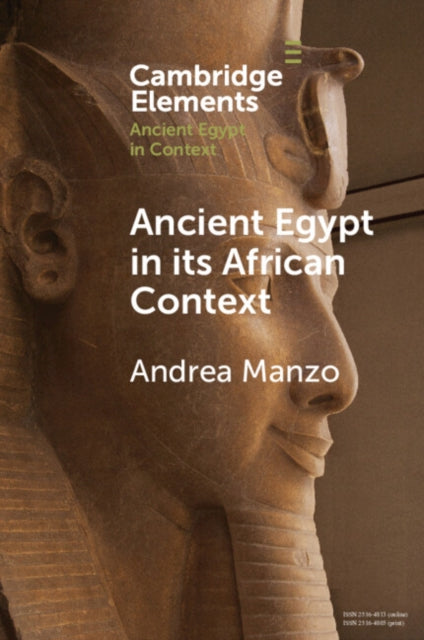
AndreaManzo
Ancient Egypt in its African Context: Economic Networks, Social and Cultural Interactions
Ancient Egypt in its African Context: Economic Networks, Social and Cultural Interactions
💎 Earn 84 Points (£0.84) on this item.
YOU SAVE £1.01
- Condition: Brand new
- UK Delivery times: Usually arrives within 2 - 3 working days
- UK Shipping: Fee starts at £2.39. Subject to product weight & dimension
Bulk ordering. Want 15 or more copies? Get a personalised quote and bigger discounts. Learn more about bulk orders.
Couldn't load pickup availability
- More about Ancient Egypt in its African Context: Economic Networks, Social and Cultural Interactions
The relations between Egypt and its African neighbors have a long and complex history, involving trade, migration, cultural exchange, and political alliances. Research on this topic has relied on a variety of sources, including archaeological evidence, historical documents, and oral traditions. The interactions between Egypt and Africa have had a significant impact on the lives of individuals and groups, shaping cultural dynamics and identity building. Future research on this issue should focus on methods, strategies, themes, and specific topics, as well as regions and sites that promise to provide valuable insights into the study of these relations.
Format: Paperback / softback
Length: 75 pages
Publication date: 07 April 2022
Publisher: Cambridge University Press
This Element aims to explore the intricate relationships between Egypt and its African neighbors, spanning a vast historical and cultural landscape. In the following paragraphs, we will delve into the rich tapestry of these connections, shedding light on their evolution and impact on individuals and communities.
The study of Egypt's relations with its African neighbors has a long and rich history, dating back to ancient times. Researchers have relied on a diverse range of sources to unravel the complexities of this relationship, including archaeological evidence, historical texts, oral traditions, and contemporary studies. These sources provide valuable insights into the political, economic, social, and cultural interactions between Egypt and its African counterparts.
Archaeological evidence, in particular, has played a crucial role in understanding the historical connections between Egypt and Africa. Excavations in Egypt and other parts of Africa have revealed evidence of trade networks, cultural exchanges, and political alliances that have existed for thousands of years. For instance, the ancient Egyptian civilization was heavily influenced by the Nubian culture, particularly in terms of art, architecture, and religion. Similarly, the Nile River, which flows through Egypt and into Africa, has been a vital trade route for centuries, facilitating the exchange of goods, ideas, and cultural practices.
Historical texts, such as the Egyptian-Greek correspondence and the works of ancient historians like Herodotus and Diodorus Siculus, also provide valuable insights into the relations between Egypt and Africa. These texts describe the political and military conflicts, as well as the cultural exchanges, that occurred between Egypt and its neighboring regions. They also shed light on the role of Egypt as a regional power and its influence on the development of African civilizations.
Oral traditions, particularly those of the African communities living in Egypt, also contribute to our understanding of the relations between Egypt and Africa. These traditions provide a firsthand account of the experiences and perspectives of individuals who have lived through the historical interactions between Egypt and Africa. They offer valuable insights into the cultural practices, beliefs, and values of these communities, as well as their interactions with the Egyptian state and society.
Contemporary studies, including social science research and historical analysis, have also played a significant role in understanding the relations between Egypt and Africa. These studies explore the impact of globalization, colonialism, and post-colonialism on the relationship between Egypt and its African neighbors. They also examine the various factors that contribute to the development of cultural identities and the formation of regional alliances.
In the following paragraphs, we will summarize the relations between Egypt and its African neighbors from the late Prehistory to Late Antique times. We will explore the different kinds of interactions that occurred between these regions, as well as their effects on the lives of individuals and groups. We will also examine the related cultural dynamics, such as selection, adoption, entanglement, and identity building, that shaped these relationships.
From the late Prehistory to Late Antique times, Egypt and its African neighbors had a complex and multifaceted relationship. The ancient Egyptians established trade networks with various African regions, including the Nubian, Sudanese, and Ethiopian kingdoms. These trade networks facilitated the exchange of goods, including gold, ivory, and spices, as well as ideas and cultural practices. The Egyptians also had political alliances with some African kingdoms, such as the Kingdom of Kush in Sudan, which helped to protect their interests in the region.
However, the relationship between Egypt and its African neighbors was not always harmonious. There were periods of conflict and rivalry, particularly during the late Prehistory and Early Dynastic periods. For instance, the Egyptians were often at war with the Nubian kingdoms, which competed for control of the Nile River and its fertile lands. These conflicts resulted in the displacement of many African communities and the establishment of Egyptian dominance in the region.
In the Late Antique period, the relationship between Egypt and its African neighbors became more complex and multifaceted. The Roman Empire, which conquered Egypt in 30 BCE, established a strong presence in the region and influenced the cultural and political dynamics of the region. The Romans introduced new technologies, such as irrigation systems and roads, which facilitated trade and communication between Egypt and its African neighbors. They also established administrative structures and military bases, which helped to maintain order and stability in the region.
Despite the Roman influence, the relationship between Egypt and its African neighbors remained diverse and complex. There were periods of cooperation and collaboration, as well as periods of conflict and rivalry. For instance, the Egyptians and the Romans had a long-standing rivalry for control of the Mediterranean Sea, which resulted in several naval battles and the establishment of Roman colonies in Egypt.
In conclusion, the relations between Egypt and its African neighbors have a rich and complex history, spanning thousands of years. From the late Prehistory to Late Antique times, these regions had a diverse range of interactions, including trade, political alliances, and cultural exchanges. These interactions had a significant impact on the lives of individuals and groups, shaping their cultural identities and contributing to the development of regional alliances. While the relationship between Egypt and its African neighbors has been shaped by a variety of factors, including historical, political, and cultural dynamics, it remains an important area of research and exploration. By continuing to study these relationships, we can gain a deeper understanding of the complex and multifaceted nature of human interaction and the impact of cultural exchange on the development of civilizations.
ISBN-13: 9781009074544
Edition number: New ed
UK and International shipping information
UK and International shipping information
UK Delivery and returns information:
- Delivery within 2 - 3 days when ordering in the UK.
- Shipping fee for UK customers from £2.39. Fully tracked shipping service available.
- Returns policy: Return within 30 days of receipt for full refund.
International deliveries:
Shulph Ink now ships to Australia, Belgium, Canada, France, Germany, Ireland, Italy, India, Luxembourg Saudi Arabia, Singapore, Spain, Netherlands, New Zealand, United Arab Emirates, United States of America.
- Delivery times: within 5 - 10 days for international orders.
- Shipping fee: charges vary for overseas orders. Only tracked services are available for most international orders. Some countries have untracked shipping options.
- Customs charges: If ordering to addresses outside the United Kingdom, you may or may not incur additional customs and duties fees during local delivery.