Shulph Ink
Animism beyond the Soul: Ontology, Reflexivity, and the Making of Anthropological Knowledge
Animism beyond the Soul: Ontology, Reflexivity, and the Making of Anthropological Knowledge
💎 Earn 336 Points (£3.36) on this item.
We can order this item for you. Delivery usually takes about 4 to 6 weeks.
This item is not held in our immediate stock. We will order it for you after checkout.
Estimated delivery: About 4 to 6 weeks
- Condition: Brand new
- UK Delivery times: Usually arrives within 2 - 3 working days
- UK Shipping: Fee starts at £2.39. Subject to product weight & dimension
Bulk ordering. Want 15 or more copies? Get a personalised quote and bigger discounts. Learn more about bulk orders.
Couldn't load pickup availability
- More about Animism beyond the Soul: Ontology, Reflexivity, and the Making of Anthropological Knowledge
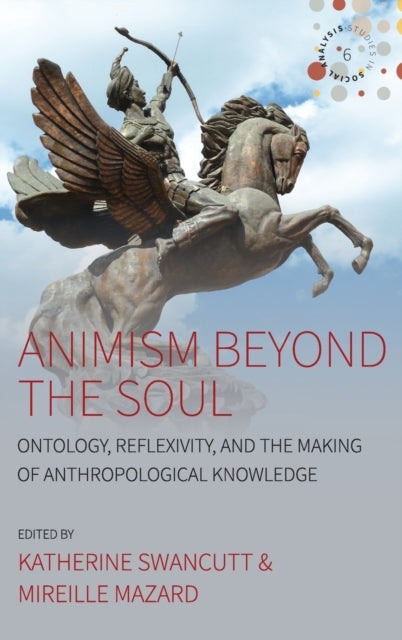
This volume explores how indigenous animistic practices, concepts, traditions, and ontologies are co-authored in reflexive ways by anthropologists and their interlocutors, revealing how native epistemologies influence anthropological notions and how they transform these concepts within anthropological theory.
Format: Hardback
Length: 160 pages
Publication date: 23 April 2018
Publisher: Berghahn Books
How might we envision animism through the lens of the 'anthropology of anthropology'? The contributors to this volume offer compelling case studies that demonstrate how indigenous animistic practices, concepts, traditions, and ontologies are co-authored in highly reflexive ways by anthropologists and their interlocutors. They explore how native epistemologies, which inform anthropological notions during fieldwork, underpin the dialogues between researchers and their participants. In doing so, the contributors reveal ways in which indigenous thinkers might be influenced by anthropological concepts of the soul and, equally, how they might subtly or dramatically then transform those same concepts within anthropological theory.
Animism, as a multifaceted and deeply rooted cultural phenomenon, presents a rich field of inquiry for the 'anthropology of anthropology'. This volume explores the intricate ways in which indigenous animistic practices, concepts, traditions, and ontologies are co-authored by anthropologists and their interlocutors. Through compelling case studies, the contributors shed light on how native epistemologies, which shape anthropological understandings during fieldwork, underpin the dialogues between researchers and their participants. By delving into these dynamics, the contributors unveil the profound influence that anthropological concepts of the soul can have on indigenous thinkers, as well as the subtle and dramatic transformations these concepts can undergo within anthropological theory.
In many indigenous cultures, animism is a holistic worldview that encompasses the interconnectedness of all living beings, the natural world, and the spiritual realm. It emphasizes the inherent agency and vitality of non-human entities, such as plants, animals, and spirits, and posits that these entities possess their own consciousness, intentions, and abilities. Anthropologists have long been fascinated by animism, as it challenges traditional Western notions of human exceptionalism and offers insights into the complex relationships between humans and the natural world.
Through the lens of the 'anthropology of anthropology', the contributors to this volume explore how indigenous animistic practices, concepts, traditions, and ontologies are co-authored in highly reflexive ways. They demonstrate how anthropologists engage with native communities as collaborative partners, seeking to understand and respect their unique worldviews and epistemologies. By doing so, they facilitate the exchange of knowledge and ideas, enabling indigenous thinkers to contribute to anthropological theories and frameworks.
One of the key insights of this volume is the recognition of the inherent reflexivity in the co-authoring process. Anthropologists are not passive observers but active participants in the construction of indigenous animistic knowledge. They bring their own cultural and theoretical perspectives to the field, which can shape the way they interpret and understand indigenous practices. At the same time, native interlocutors also bring their own expertise and knowledge, which can challenge anthropological assumptions and broaden the scope of anthropological inquiry.
The contributors to this volume offer a range of case studies that illustrate the co-authoring process in action. They explore how indigenous animistic practices are intertwined with broader cultural and social systems, and how they are shaped by historical, political, and economic factors. They also examine how indigenous animistic concepts are used to address contemporary challenges, such as environmental degradation, social inequality, and cultural preservation.
One particularly interesting case study is presented by anthropologist Sarah Tomley, who explores the relationship between animism and shamanism in the Amazon rainforest. Tomley argues that shamanism is not a separate tradition but rather a form of animism that has been influenced by Western cultural norms and practices. She demonstrates how shamanic practices are used to address social and environmental challenges, such as illness, drought, and conflict, and how they are intertwined with broader indigenous cosmologies and worldviews.
Another case study is presented by anthropologist Elizabeth Kapu'uwailani Lindsey, who explores the role of animism in Hawaiian culture. Lindsey argues that animism is not a static or fixed concept but rather a dynamic and evolving tradition that responds to changing social and environmental conditions. She demonstrates how animistic beliefs and practices are used to promote social harmony, cultural preservation, and environmental sustainability, and how they are intertwined with broader Hawaiian cultural values and practices.
In conclusion, the 'anthropology of anthropology' provides a valuable lens for envisioning animism. By exploring the co-authoring process between anthropologists and indigenous interlocutors, the contributors to this volume shed light on the complex and dynamic relationships between humans and the natural world. They demonstrate how indigenous animistic practices, concepts, traditions, and ontologies are co-authored in highly reflexive ways, and how they can influence and transform anthropological notions of the soul and the human condition. This volume offers a rich and nuanced understanding of animism, and its significance for contemporary anthropology and society.
Weight: 366g
Dimension: 161 x 236 x 15 (mm)
ISBN-13: 9781785338656
UK and International shipping information
UK and International shipping information
UK Delivery and returns information:
- Delivery within 2 - 3 days when ordering in the UK.
- Shipping fee for UK customers from £2.39. Fully tracked shipping service available.
- Returns policy: Return within 30 days of receipt for full refund.
International deliveries:
Shulph Ink now ships to Australia, Belgium, Canada, France, Germany, Ireland, Italy, India, Luxembourg Saudi Arabia, Singapore, Spain, Netherlands, New Zealand, United Arab Emirates, United States of America.
- Delivery times: within 5 - 10 days for international orders.
- Shipping fee: charges vary for overseas orders. Only tracked services are available for most international orders. Some countries have untracked shipping options.
- Customs charges: If ordering to addresses outside the United Kingdom, you may or may not incur additional customs and duties fees during local delivery.