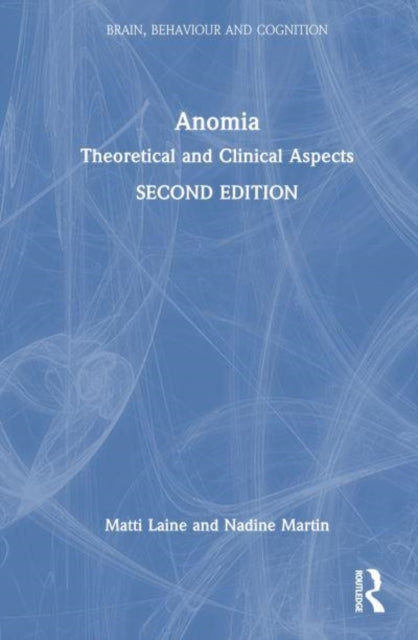
MattiLaine,NadineMartin
Anomia: Theoretical and Clinical Aspects
Anomia: Theoretical and Clinical Aspects
💎 Earn 811 Points (£8.11) on this item.
We can order this item for you. Delivery usually takes about 4 to 6 weeks.
This item is not held in our immediate stock. We will order it for you after checkout.
Estimated delivery: About 4 to 6 weeks
YOU SAVE £9.63
- Condition: Brand new
- UK Delivery times: Usually arrives within 2 - 3 working days
- UK Shipping: Fee starts at £2.39. Subject to product weight & dimension
Bulk ordering. Want 15 or more copies? Get a personalised quote and bigger discounts. Learn more about bulk orders.
Couldn't load pickup availability
- More about Anomia: Theoretical and Clinical Aspects
A comprehensive overview of word-finding deficit, anomia, and its clinical significance, written by two renowned researchers. It covers psycholinguistic research, cognitive models, neuroanatomical aspects, clinical assessment, and therapeutic approaches, with an updated coverage of cognitive modeling, neuroimaging, and therapy.
Format: Hardback
Length: 200 pages
Publication date: 01 December 2023
Publisher: Taylor & Francis Ltd
This comprehensive and cutting-edge book offers a thorough exploration of current research on word-finding deficit, also known as anomia, a prevalent symptom of language dysfunction that arises after brain damage. Beyond its clinical significance, anomia provides a captivating insight into the intricate mechanisms of language in the brain. Authored by two renowned experts in the field, the book begins by providing a comprehensive overview of psycholinguistic research on normal word retrieval, as well as the influential cognitive models of naming. It then delves into the various forms of anomia, examining neuroanatomical aspects, clinical assessment, and therapeutic approaches. This edition has been meticulously updated to encompass the latest advancements in cognitive modeling of lexical retrieval disorders, structural and functional neuroimaging findings related to naming and anomia, diagnostic techniques, and innovative approaches to anomia therapy. Spanning both theoretical foundations and practical applications, this book serves as an invaluable resource for researchers and practitioners in speech and language disorders, neuropsychology, neurology, as well as advanced undergraduate students and graduate students pursuing studies in the field.
Introduction:
Word-finding deficit, commonly referred to as anomia, is a significant symptom of language dysfunction that arises after brain damage. It involves the inability to retrieve the correct word from memory, often resulting in substitutions or paraphasias. Anomia not only affects communication but also has implications for cognitive and emotional functioning. This book aims to provide a comprehensive and up-to-date overview of current research on anomia, encompassing its clinical significance, cognitive mechanisms, and therapeutic approaches.
Clinical Significance:
Anomia has profound clinical implications, as it hinders the ability to communicate effectively. Individuals with anomia may struggle with everyday tasks such as naming objects, describing actions, and forming sentences. It can lead to social isolation, reduced quality of life, and increased dependence on others for assistance. Understanding the underlying mechanisms of anomia is crucial for developing effective interventions and improving the outcomes of patients with language disorders.
Cognitive Mechanisms:
The cognitive mechanisms underlying anomia are complex and multifaceted. Research has shown that anomia is associated with disruptions in various language-related areas of the brain, including the Broca's and Wernicke's areas, which are responsible for speech production and comprehension, respectively. Additionally, anomia is linked to deficits in executive functions, attention, and working memory, which are essential for language processing.
Neuroanatomical Aspects:
Neuroanatomical studies have provided valuable insights into the neural bases of anomia. Research has shown that anomia is associated with changes in the connectivity between different brain regions, particularly in the frontal and temporal lobes. These changes may involve alterations in the functional relationships between language-related areas and other cognitive functions.
Clinical Assessment:
Clinical assessment of anomia involves a comprehensive evaluation of language abilities, including word retrieval, naming, comprehension, and sentence production. Standardized tests and clinical interviews are commonly used to assess anomia severity, identify underlying cognitive deficits, and guide treatment planning.
Therapeutic Approaches:
Therapeutic approaches to anomia vary depending on the underlying causes and severity of the disorder. Cognitive-behavioral therapy (CBT) has been widely used to improve word retrieval and naming abilities. Techniques such as cueing, repetition, and semantic mapping can help individuals with anomia to strengthen their word associations and improve their language skills.
Structural and Functional Neuroimaging:
Structural and functional neuroimaging techniques have played a crucial role in understanding the neural bases of anomia. These techniques, such as magnetic resonance imaging (MRI) and positron emission tomography (PET), allow researchers to visualize the brain's activity and identify patterns of connectivity that may be associated with anomia.
Diagnostics and New Approaches:
Advances in diagnostic techniques have facilitated the identification and characterization of anomia. For example, computerized tests and virtual reality simulations can be used to assess word retrieval and naming abilities in a more standardized and objective manner.
Conclusion:
In conclusion, anomia is a significant symptom of language dysfunction that arises after brain damage. This book provides a comprehensive and cutting-edge exploration of current research on anomia, covering its clinical significance, cognitive mechanisms, neuroanatomical aspects, clinical assessment, therapeutic approaches, structural and functional neuroimaging, diagnostics, and new approaches. By understanding the underlying mechanisms of anomia, researchers and practitioners can develop more effective interventions and improve the quality of life for individuals with language disorders.
Dimension: 234 x 156 (mm)
ISBN-13: 9781032118949
Edition number: 2 ed
UK and International shipping information
UK and International shipping information
UK Delivery and returns information:
- Delivery within 2 - 3 days when ordering in the UK.
- Shipping fee for UK customers from £2.39. Fully tracked shipping service available.
- Returns policy: Return within 30 days of receipt for full refund.
International deliveries:
Shulph Ink now ships to Australia, Belgium, Canada, France, Germany, Ireland, Italy, India, Luxembourg Saudi Arabia, Singapore, Spain, Netherlands, New Zealand, United Arab Emirates, United States of America.
- Delivery times: within 5 - 10 days for international orders.
- Shipping fee: charges vary for overseas orders. Only tracked services are available for most international orders. Some countries have untracked shipping options.
- Customs charges: If ordering to addresses outside the United Kingdom, you may or may not incur additional customs and duties fees during local delivery.