Shulph Ink
Antibiotics - Therapeutic Spectrum and Limitations
Antibiotics - Therapeutic Spectrum and Limitations
💎 Earn 592 Points (£5.92) on this item.
YOU SAVE £15.41
- Condition: Brand new
- UK Delivery times: Usually arrives within 2 - 3 working days
- UK Shipping: Fee starts at £2.39. Subject to product weight & dimension
Bulk ordering. Want 15 or more copies? Get a personalised quote and bigger discounts. Learn more about bulk orders.
Couldn't load pickup availability
- More about Antibiotics - Therapeutic Spectrum and Limitations
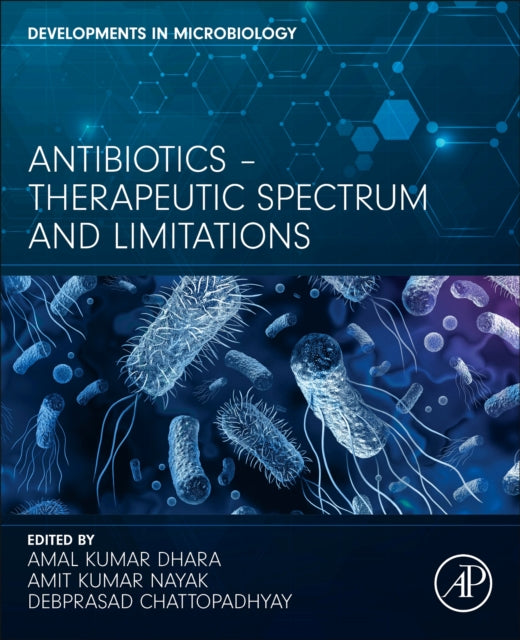
Antibiotics: Therapeutic Spectrum and Limitations is a comprehensive resource that provides up-to-date information on managing microbial infections,the development and types of antibiotics,the rationale for utilizing antibiotics,toxicity considerations,and the control of antibiotic resistance. Written by leading experts,the book covers important aspects of microbial infections,antibiotic therapies,and drug delivery,and includes updated literature reviews,illustrations,and tables.
Format: Paperback / softback
Length: 550 pages
Publication date: 01 July 2023
Publisher: Elsevier Science & Technology
Antibiotics: Therapeutic Spectrum and Limitations is a comprehensive resource that provides up-to-date information on managing microbial infections. It covers various aspects such as the development and types of antibiotics, the rationale for utilizing antibiotics, toxicity considerations, and the control of antibiotic resistance. The book also aims to provide comprehensive insights and current trends on antibiotic therapies to treat microbial infections, their mechanisms of action, and the role of modern drug delivery in improving their efficacy.
Written by leading experts from around the globe, the chapters in the book cover important aspects of microbial infections, including hospital-acquired infections, community-acquired infections, and adult sepsis. They examine the various types of antibiotics with different mechanisms and therapeutic uses, the global challenge of antibiotic resistance, and clinical trials, regulatory considerations, and market overview of antibiotics. Furthermore, the chapters include updated literature reviews of the relevant key topics, high-quality illustrations, chemical structures, flowcharts, and well-organized tables, all of which enable better understanding by the readers.
Antibiotics have revolutionized medicine by effectively treating bacterial infections, saving countless lives and reducing the burden of disease. However, their overuse and misuse have led to the emergence of antibiotic-resistant bacteria, which poses a significant threat to global health. Antibiotics work by targeting specific bacteria or bacterial enzymes, either killing them or inhibiting their growth. They are classified into different families based on their structure, mechanism of action, and spectrum of activity.
One of the most commonly used antibiotics is penicillin, which was discovered in 1928 by Alexander Fleming. Penicillin is effective against a wide range of bacteria, including streptococci, staphylococci, and pneumococci. However, resistance to penicillin has developed over time, and it is now less commonly used due to the emergence of more resistant strains. Other antibiotics include amoxicillin, cephalexin, and doxycycline, which are also effective against a variety of bacteria.
Antibiotics are typically administered orally, but they can also be administered intravenously, topically, or intraperitoneally. The choice of administration route depends on the type of infection, the severity of the symptoms, and the patient's medical history. Antibiotic therapy is generally effective against bacterial infections, but it may not be effective against viral infections, such as the common cold or the flu.
Antibiotic resistance is a major concern for public health. When bacteria develop resistance to antibiotics, it becomes difficult or impossible to treat infections with these drugs. This can lead to longer hospital stays, increased healthcare costs, and increased mortality rates. Antibiotic resistance can be caused by a variety of factors, including the overuse and misuse of antibiotics, the inappropriate use of antibiotics in agriculture and livestock, and the spread of bacteria that are resistant to antibiotics.
To prevent antibiotic resistance, it is important to use antibiotics only when necessary and to follow the recommended dosing and duration of treatment. Healthcare providers should also be aware of the local resistance patterns and should prescribe antibiotics only when they are likely to be effective. In addition, public education and awareness campaigns can help to reduce the overuse and misuse of antibiotics.
In conclusion, Antibiotics: Therapeutic Spectrum and Limitations is a valuable resource for healthcare professionals and researchers who need to stay up-to-date with the latest information on managing microbial infections. The book provides comprehensive insights and current trends on antibiotic therapies, their mechanisms of action, and the role of modern drug delivery in improving their efficacy. By understanding the therapeutic spectrum and limitations of antibiotics, healthcare providers can ensure that patients receive appropriate and effective treatment for their infections.
Dimension: 235 x 191 (mm)
ISBN-13: 9780323953887
This item can be found in:
UK and International shipping information
UK and International shipping information
UK Delivery and returns information:
- Delivery within 2 - 3 days when ordering in the UK.
- Shipping fee for UK customers from £2.39. Fully tracked shipping service available.
- Returns policy: Return within 30 days of receipt for full refund.
International deliveries:
Shulph Ink now ships to Australia, Belgium, Canada, France, Germany, Ireland, Italy, India, Luxembourg Saudi Arabia, Singapore, Spain, Netherlands, New Zealand, United Arab Emirates, United States of America.
- Delivery times: within 5 - 10 days for international orders.
- Shipping fee: charges vary for overseas orders. Only tracked services are available for most international orders. Some countries have untracked shipping options.
- Customs charges: If ordering to addresses outside the United Kingdom, you may or may not incur additional customs and duties fees during local delivery.