Shulph Ink
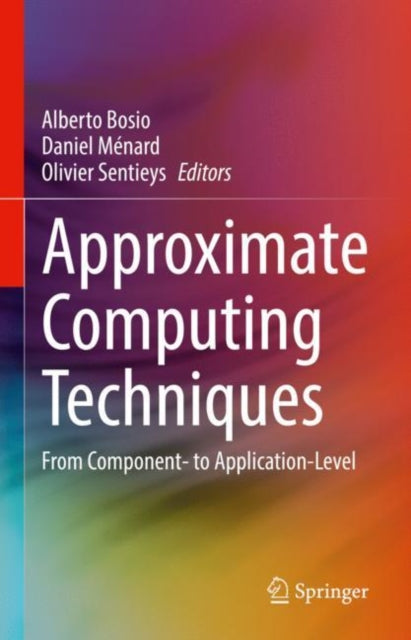
Approximate Computing Techniques: From Component- to Application-Level
Approximate Computing Techniques: From Component- to Application-Level
💎 Earn 247 Points (£2.47) on this item.
YOU SAVE £40.58
- Condition: Brand new
- UK Delivery times: Usually arrives within 2 - 3 working days
- UK Shipping: Fee starts at £2.39. Subject to product weight & dimension
Bulk ordering. Want 15 or more copies? Get a personalised quote and bigger discounts. Learn more about bulk orders.
Couldn't load pickup availability
- More about Approximate Computing Techniques: From Component- to Application-Level
This book provides a comprehensive overview of Approximate Computing (AxC), a technique for improving performance or reducing power consumption in computing systems, with real-world applications and design and validation techniques.
Format: Paperback / softback
Length: 531 pages
Publication date: 11 June 2023
Publisher: Springer Nature Switzerland AG
This comprehensive book serves as a vital resource for anyone seeking to delve into the cutting-edge field of Approximate Computing (AxC), a groundbreaking technique that holds immense potential for enhancing the performance, cost-effectiveness, and energy efficiency of computing systems. The authors, experts in their respective fields, provide a comprehensive exploration of the various design and validation techniques employed in AxC, as well as their seamless integration into computing systems. They also present a diverse range of real-world AxC applications, spanning from mobile devices to high-performance computing platforms and even safety-critical domains.
In the introductory chapter, the authors provide a succinct overview of AxC, highlighting its origins, principles, and applications. They explain how AxC leverages mathematical approximations and statistical techniques to achieve computational efficiency without compromising accuracy. The chapter also sheds light on the challenges and opportunities associated with AxC, such as the need for efficient algorithms, accurate models, and rigorous validation methodologies.
The subsequent chapters delve into the intricacies of AxC design and validation. The authors discuss various approaches, including genetic algorithms, neural networks, and machine learning, for designing efficient AxC systems. They also explore techniques for validating the accuracy and reliability of AxC solutions, such as simulation, experimental validation, and performance analysis.
The book further explores the integration of AxC into various computing systems. The authors discuss the challenges and opportunities of integrating AxC into existing hardware and software architectures, as well as the impact of AxC on system performance, power consumption, and energy efficiency. They also provide examples of successful AxC implementations in various industries, such as telecommunications, healthcare, and finance.
In conclusion, this book serves as a valuable resource for researchers, engineers, and practitioners interested in advancing the state-of-the-art in Approximate Computing. It provides a comprehensive and up-to-date overview of the field, covering the latest research, techniques, and applications. With its practical insights and comprehensive coverage, this book will empower readers to leverage the power of AxC to design and implement efficient and cost-effective computing systems that meet the ever-growing demands of modern computing.
This comprehensive book serves as a vital resource for anyone seeking to delve into the cutting-edge field of Approximate Computing (AxC), a groundbreaking technique that holds immense potential for enhancing the performance, cost-effectiveness, and energy efficiency of computing systems. The authors, experts in their respective fields, provide a comprehensive exploration of the various design and validation techniques employed in AxC, as well as their seamless integration into computing systems. They also present a diverse range of real-world AxC applications, spanning from mobile devices to high-performance computing platforms and even safety-critical domains.
In the introductory chapter, the authors provide a succinct overview of AxC, highlighting its origins. Its origins, principles, and applications. They explain how AxC leverages mathematical approximations and statistical techniques to achieve computational efficiency without compromising accuracy. The chapter also sheds light on the challenges and opportunities associated with AxC, such as the need for efficient algorithms, accurate models, and rigorous validation methodologies.
The subsequent chapters delve into the intricacies of AxC design and validation. The authors discuss various approaches, including genetic algorithms, neural networks, and machine learning, for designing efficient AxC systems. They also explore techniques for validating the accuracy and reliability of AxC solutions, such as simulation, experimental validation, and performance analysis.
The book further explores the integration of AxC into various computing systems. The authors discuss the challenges and opportunities of integrating AxC into existing hardware and software architectures, as well as the impact of AxC on system performance, power consumption, and energy efficiency. They also provide examples of successful AxC implementations in various industries, such as telecommunications, healthcare, and finance.
In conclusion, this book serves as a valuable resource for researchers, engineers, and practitioners interested in advancing the state-of-the-art in Approximate Computing. It provides a comprehensive and up-to-date overview of the field, covering the latest research, techniques, and applications. With its practical insights and comprehensive coverage, this book will empower readers to leverage the power of AxC to design and implement efficient and cost-effective computing systems that meet the ever-growing demands of modern computing.
Weight: 842g
Dimension: 235 x 155 (mm)
ISBN-13: 9783030947071
Edition number: 1st ed. 2022
This item can be found in:
UK and International shipping information
UK and International shipping information
UK Delivery and returns information:
- Delivery within 2 - 3 days when ordering in the UK.
- Shipping fee for UK customers from £2.39. Fully tracked shipping service available.
- Returns policy: Return within 30 days of receipt for full refund.
International deliveries:
Shulph Ink now ships to Australia, Belgium, Canada, France, Germany, Ireland, Italy, India, Luxembourg Saudi Arabia, Singapore, Spain, Netherlands, New Zealand, United Arab Emirates, United States of America.
- Delivery times: within 5 - 10 days for international orders.
- Shipping fee: charges vary for overseas orders. Only tracked services are available for most international orders. Some countries have untracked shipping options.
- Customs charges: If ordering to addresses outside the United Kingdom, you may or may not incur additional customs and duties fees during local delivery.