LaraHarb
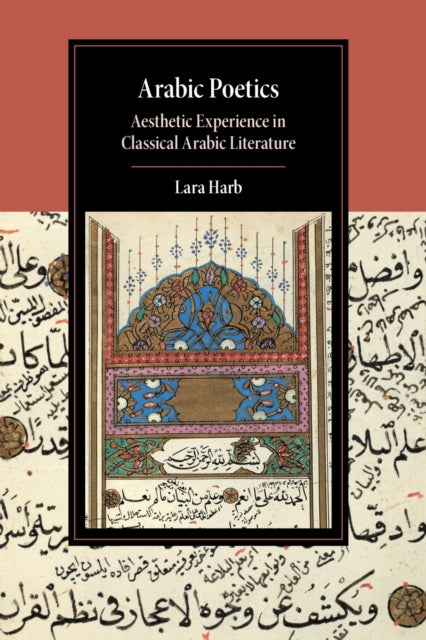
Arabic Poetics: Aesthetic Experience in Classical Arabic Literature
Arabic Poetics: Aesthetic Experience in Classical Arabic Literature
💎 Earn 160 Points (£1.60) on this item.
We can order this item for you. Delivery usually takes about 4 to 6 weeks.
This item is not held in our immediate stock. We will order it for you after checkout.
Estimated delivery: About 4 to 6 weeks
YOU SAVE £1.90
- Condition: Brand new
- UK Delivery times: Usually arrives within 2 - 3 working days
- UK Shipping: Fee starts at £2.39. Subject to product weight & dimension
Bulk ordering. Want 15 or more copies? Get a personalised quote and bigger discounts. Learn more about bulk orders.
Couldn't load pickup availability
- More about Arabic Poetics: Aesthetic Experience in Classical Arabic Literature
Arabic Poetics argues that literary quality depended on the ability of linguistic expression to produce an experience of discovery and wonder in the listener, challenging the misconception that Arabic criticism was traditionalist or static. It provides a conceptual framework of literary beauty in the post-eleventh-century Islamicate world.
Format: Paperback / softback
Length: 319 pages
Publication date: 28 October 2021
Publisher: Cambridge University Press
Language is a remarkable tool that has the power to evoke emotions, convey ideas, and connect people from different cultures and backgrounds. It is a complex system that involves not only words but also gestures, facial expressions, and body language. Language is also a reflection of the society in which it is used, reflecting its values, beliefs, and customs.
One of the most fascinating aspects of language is its ability to create beauty. Beauty is a subjective concept, and what one person may find beautiful, another may not. However, there are certain qualities that are commonly associated with beauty, such as harmony, symmetry, and rhythm.
Arabic poetry is a prime example of how language can create beauty. Arabic is a rich and complex language that has been used for centuries to express emotions, ideas, and stories. Arabic poetry is known for its use of rhyme, meter, and metaphor, which create a sense of beauty and harmony in the text.
One of the key elements of Arabic poetry is the use of simile and metaphor. These literary devices allow the poet to compare two different things and create a new meaning that is both beautiful and profound. For example, the poet may use a simile to compare the beauty of a flower to the beauty of the moon, or may use a metaphor to compare the heart to a bird.
Another important element of Arabic poetry is the use of rhyme and meter. These devices help to create a sense of rhythm and melody in the text, which can be incredibly soothing and calming. The use of rhyme and meter also allows the poet to create a sense of urgency or tension in the text, depending on the context.
In addition to these literary devices, Arabic poetry is also known for its use of imagery and symbolism. The poet may use images of nature, such as flowers, trees, and rivers, to create a sense of beauty and harmony, or may use images of the human body, such as the eyes, hands, and lips, to create a sense of intimacy and passion.
One of the most important aspects of Arabic poetry is its ability to convey emotions. The poet may use language to express joy, sadness, love, anger, or any other emotion that is felt by the human experience. The use of language to convey emotions is a powerful tool that can help to connect people from different cultures and backgrounds.
Another important aspect of Arabic poetry is its ability to transcend time and place. Arabic poetry has been used for centuries to express the experiences of people from different cultures and backgrounds, and it continues to be relevant today. The poetry of the past is still read and studied by people all over the world, and it continues to inspire new generations of poets and writers.
In conclusion, language is a remarkable tool that has the power to create beauty. Arabic poetry is a prime example of how language can be used to create beauty and convey emotions. The use of simile, metaphor, rhyme, meter, imagery, and symbolism are all important elements of Arabic poetry that help to create a sense of beauty and harmony in the text. In addition, the poetry of the past is still read and studied by people all over the world, and it continues to inspire new generations of poets and writers.
Weight: 474g
Dimension: 151 x 229 x 22 (mm)
ISBN-13: 9781108748292
This item can be found in:
UK and International shipping information
UK and International shipping information
UK Delivery and returns information:
- Delivery within 2 - 3 days when ordering in the UK.
- Shipping fee for UK customers from £2.39. Fully tracked shipping service available.
- Returns policy: Return within 30 days of receipt for full refund.
International deliveries:
Shulph Ink now ships to Australia, Belgium, Canada, France, Germany, Ireland, Italy, India, Luxembourg Saudi Arabia, Singapore, Spain, Netherlands, New Zealand, United Arab Emirates, United States of America.
- Delivery times: within 5 - 10 days for international orders.
- Shipping fee: charges vary for overseas orders. Only tracked services are available for most international orders. Some countries have untracked shipping options.
- Customs charges: If ordering to addresses outside the United Kingdom, you may or may not incur additional customs and duties fees during local delivery.