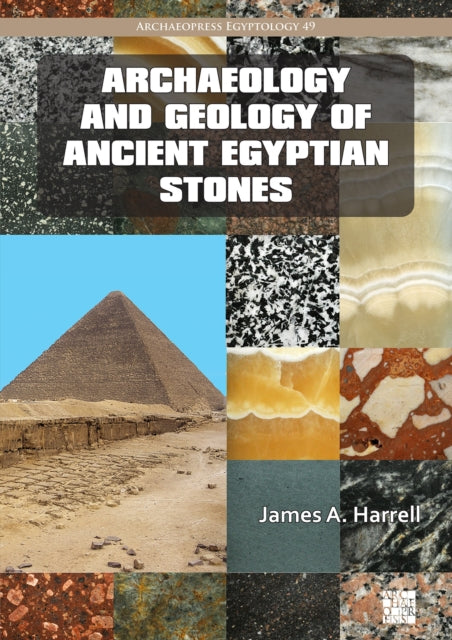
James A.Harrell
Archaeology and Geology of Ancient Egyptian Stones
Archaeology and Geology of Ancient Egyptian Stones
💎 Earn 590 Points (£5.90) on this item.
YOU SAVE £7.00
- Condition: Brand new
- UK Delivery times: Usually arrives within 2 - 3 working days
- UK Shipping: Fee starts at £3.89. Subject to product weight & dimension
Bulk ordering. Want 15 or more copies? Get a personalised quote and bigger discounts. Learn more about bulk orders.
Couldn't load pickup availability
- More about Archaeology and Geology of Ancient Egyptian Stones
The ancient Egyptian civilization dominated the northeast corner of Africa from 3000 BC to AD 642, leaving behind stones for temples, pyramids, tombs, tools, weapons, and other applications. The book aims to identify and describe these stones, their sources, and their uses, as well as the technologies employed to extract, transport, carve, and thermally treat them.
Format: Multiple-component retail product, shrink-wrapped
Length: 1074 pages
Publication date: 02 May 2024
Publisher: Archaeopress
The ancient Egyptian civilization, which flourished from around 3000 BC at the start of the Dynastic period to AD 642 at the conclusion of the Roman era, exerted its dominance over the northeastern corner of Africa, encompassing modern-day Egypt and, at certain times, northern Sudan. The majority of the remnants left behind by this remarkable civilization consist of a diverse array of stones. These stones served various purposes, including the construction of temples, pyramids, mastaba tombs, and other awe-inspiring monumental structures. They were also utilized for practical purposes, such as the production of tools, weapons, and a wide range of everyday items, including raw materials for faience, glass, medicines, paint pigments, and pottery. Additionally, these stones were used for ornamental purposes, enhancing the decorative and structural aspects of buildings, obelisks, statues, sarcophagi, stelae, vessels, shrines, offering tables, mace heads, cosmetic palettes, and other intricately sculpted objects. Furthermore, stones were mined and processed to extract valuable metals like gold, copper, iron, and lead.
Two enduring challenges in Egyptology have been the geological identification of these stones and the determination of their origins. The field of Archaeology and Geology of Ancient Egyptian Stones aims to accomplish two primary objectives. Firstly, it seeks to accurately identify and describe all the rocks and minerals utilized by the ancient Egyptians using the appropriate geological nomenclature. Secondly, it endeavors to provide an account of the known sources of these stones whenever possible. A secondary goal is to comprehensively document the diverse applications of these stones and the technological processes employed to extract, transport, carve, and thermally treat them.
The ancient Egyptians were skilled artisans who utilized a wide range of stones to create their magnificent structures and artifacts. These stones, which were sourced from various locations within Egypt and its surrounding regions, played a crucial role in shaping the civilization's architectural and artistic achievements. Some of the most commonly used stones included granite, limestone, sandstone, and slate. Granite, known for its durability and strength, was primarily used for the construction of pyramids and other monumental structures. Limestone, on the other hand, was utilized for the carving of intricate reliefs and sculptures. Sandstone, with its fine grain and soft texture, was preferred for the production of decorative objects such as vases and sculptures. Slate, with its distinctive black and gray color, was used for roofing and flooring purposes.
In addition to these primary stones, the ancient Egyptians also employed a variety of other materials for their construction and artistic endeavors. These materials included wood, clay, bronze, and gold. Wood was used for the construction of houses, temples, and other structures, while clay was used for the production of pottery and other ceramic objects. Bronze was used for the production of weapons, tools, and other metal objects, while gold was used for the creation of jewelry, ornaments, and other decorative items.
The ancient Egyptians were skilled in the extraction and processing of these materials. They used various techniques, such as quarrying, mining, and carving, to obtain the necessary materials for their construction and artistic endeavors. Quarrying involved the extraction of large blocks of stone from the earth, which were then transported to construction sites using sleds and carts. Mining involved the extraction of valuable minerals from the earth, which were then processed to obtain the desired metals. Carving involved the shaping of stone into intricate designs and patterns using tools such as chisels and hammers.
The ancient Egyptians also developed advanced technologies for the transportation and processing of these materials. They used waterways, such as the Nile River, to transport large blocks of stone from quarries to construction sites. They also developed a system of canals and irrigation systems to facilitate the cultivation of crops and the distribution of water throughout their civilization. Additionally, they developed advanced techniques for heating and treating stone, such as firing and polishing, to enhance its durability and aesthetic appeal.
The ancient Egyptians were known for their meticulous attention to detail and their dedication to craftsmanship. They took great pride in their work and sought to create objects that were both beautiful and functional. Their use of stones and other materials in their construction and artistic endeavors was a testament to their skill and ingenuity. The legacy of the ancient Egyptian civilization continues to inspire and fascinate people around the world, and their use of stones and other materials in their construction and artistic endeavors is a significant part of that legacy.
In conclusion, the ancient Egyptian civilization was a remarkable achievement that left a lasting impact on the world. The use of stones and other materials in their construction and artistic endeavors was a testament to their skill, ingenuity, and dedication to craftsmanship. The field of Archaeology and Geology of Ancient Egyptian Stones seeks to identify and describe all the rocks and minerals utilized by the ancient Egyptians, as well as to provide an account of their sources and the diverse applications of these materials. By studying the ancient Egyptians' use of stones and other materials, we can gain a deeper understanding of their civilization and the remarkable achievements they made.
Dimension: 290 x 205 (mm)
ISBN-13: 9781803275819
UK and International shipping information
UK and International shipping information
We deliver throughout the United Kingdom and to 128 countries and territories worldwide, including the United States, Australia, Canada, Germany, Spain and France.