Koji Mizoguchi
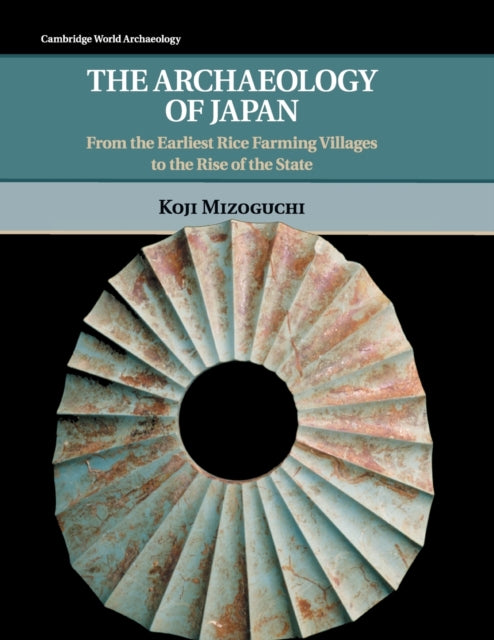
Archaeology of Japan: From the Earliest Rice Farming Villages to the Rise of the State
Archaeology of Japan: From the Earliest Rice Farming Villages to the Rise of the State
💎 Earn 160 Points (£1.60) on this item.
We can order this item for you. Delivery usually takes about 4 to 6 weeks.
This item is not held in our immediate stock. We will order it for you after checkout.
Estimated delivery: About 4 to 6 weeks
YOU SAVE £1.90
- Condition: Brand new
- UK Delivery times: Usually arrives within 2 - 3 working days
- UK Shipping: Fee starts at £2.39. Subject to product weight & dimension
Bulk ordering. Want 15 or more copies? Get a personalised quote and bigger discounts. Learn more about bulk orders.
Couldn't load pickup availability
- More about Archaeology of Japan: From the Earliest Rice Farming Villages to the Rise of the State
This book explores the Yayoi and Kofun periods of Japan, where the introduction of rice paddy-field farming led to social complexity and hierarchy. It traces the historical trajectory of these periods by employing sociological, anthropological, and archaeological theories and methods, revealing how sophisticated hunter-gatherer communities were transformed into a state.
\n Format: Paperback / softback
\n Length: 391 pages
\n Publication date: 01 March 2018
\n Publisher: Cambridge University Press
\n
This is the first book-length study of the Yayoi and Kofun periods of Japan (c.600 BC–AD 700), in which the introduction of rice paddy-field farming from the Korean peninsula ignited the rapid development of social complexity and hierarchy that culminated with the formation of the ancient Japanese state. The author traces the historical trajectory of the Yayoi and Kofun periods by employing cutting-edge sociological, anthropological and archaeological theories and methods. The book reveals a fascinating process through which sophisticated hunter-gatherer communities in an archipelago on the eastern fringe of the Eurasian continent were transformed materially and symbolically into a state.
The Yayoi and Kofun periods, spanning from c.600 BC to AD 700, represent a pivotal era in Japanese history, marked by significant social and cultural transformations. This study, the first of its kind in book-length, delves into the intricate dynamics that shaped these periods. Through the application of cutting-edge sociological, anthropological, and archaeological theories and methodologies, the author meticulously traces the historical trajectory of the Yayoi and Kofun periods.
What emerges from this comprehensive analysis is a captivating narrative of how sophisticated hunter-gatherer communities in an archipelago on the eastern fringes of the Eurasian continent underwent a profound material and symbolic transformation into a state. The introduction of rice paddy-field farming from the Korean peninsula played a pivotal role in this process, igniting a rapid development of social complexity and hierarchy. This transformation led to the formation of the ancient Japanese state, characterized by its distinct political organization, social structures, and cultural practices.
The book offers a rich and detailed account of the various aspects that contributed to this remarkable transformation. It explores the social, economic, and political developments that unfolded during the Yayoi and Kofun periods, shedding light on the complex interplay between different groups and societies. The author examines the emergence of new social classes, the development of centralized governance structures, and the establishment of trade networks that facilitated the exchange of goods and ideas across Japan and beyond.
Furthermore, the book delves into the cultural changes that accompanied this transition. It explores the development of new religious beliefs, the emergence of artistic styles, and the adoption of new technologies, such as pottery and ironworking. These cultural developments not only reflected the evolving social and political landscape but also played a crucial role in shaping the identity and heritage of the ancient Japanese people.
In conclusion, this book provides a groundbreaking exploration of the Yayoi and Kofun periods, shedding light on the complex processes that led to the formation of the ancient Japanese state. Through the application of cutting-edge theories and methodologies, the author offers a comprehensive and nuanced account of the social, economic, and cultural transformations that shaped these periods. This study is a valuable contribution to the field of Japanese history and archaeology, and it will be of interest to scholars, researchers, and enthusiasts alike.
\n Weight: 974g\n
Dimension: 215 x 279 x 26 (mm)\n
ISBN-13: 9780521711883\n \n
UK and International shipping information
UK and International shipping information
UK Delivery and returns information:
- Delivery within 2 - 3 days when ordering in the UK.
- Shipping fee for UK customers from £2.39. Fully tracked shipping service available.
- Returns policy: Return within 30 days of receipt for full refund.
International deliveries:
Shulph Ink now ships to Australia, Belgium, Canada, France, Germany, Ireland, Italy, India, Luxembourg Saudi Arabia, Singapore, Spain, Netherlands, New Zealand, United Arab Emirates, United States of America.
- Delivery times: within 5 - 10 days for international orders.
- Shipping fee: charges vary for overseas orders. Only tracked services are available for most international orders. Some countries have untracked shipping options.
- Customs charges: If ordering to addresses outside the United Kingdom, you may or may not incur additional customs and duties fees during local delivery.