Marianna Charitonidou
Architectural Drawings as Investigating Devices: Architecture's Changing Scope in the 20th Century
Architectural Drawings as Investigating Devices: Architecture's Changing Scope in the 20th Century
💎 Earn 811 Points (£8.11) on this item.
We can order this item for you. Delivery usually takes about 4 to 6 weeks.
This item is not held in our immediate stock. We will order it for you after checkout.
Estimated delivery: About 4 to 6 weeks
YOU SAVE £9.63
- Condition: Brand new
- UK Delivery times: Usually arrives within 2 - 3 working days
- UK Shipping: Fee starts at £3.89. Subject to product weight & dimension
Bulk ordering. Want 15 or more copies? Get a personalised quote and bigger discounts. Learn more about bulk orders.
Couldn't load pickup availability
- More about Architectural Drawings as Investigating Devices: Architecture's Changing Scope in the 20th Century
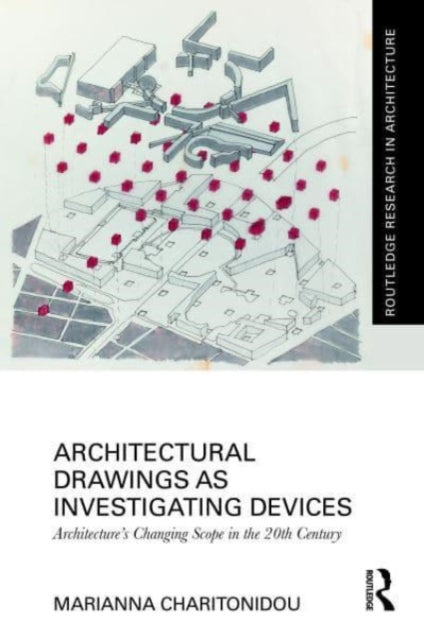
Architectural Drawings as Investigating Devices explores how the modes of representation in architecture and urbanism have transformed, tracing the dominant epistemological debates from Le Corbusier to the post-autonomy era. It emphasizes the spirit of truth and clarity in modernist architecture, the relationship between individual and community, the decodification of design process, and the potentialities hidden in architectural programs. Based on extensive archival research, the book is of interest to architects, artists, researchers, and students in architecture, architectural history, theory, cultural theory, philosophy, and aesthetics.
Format: Hardback
Length: 270 pages
Publication date: 10 July 2023
Publisher: Taylor & Francis Ltd
Architectural Drawings as Investigating Devices delves into the intricate relationship between the evolving modes of representation in architecture and urbanism and the profound shift in how the recipients of these disciplines are perceived. It serves as a comprehensive diagnosis of the dominant epistemological debates that have shaped architecture and urbanism throughout the 20th and 21st centuries. The book meticulously traces the evolution of these debates, paying close attention to the preferences of influential figures such as Le Corbusier and Ludwig Mies van der Rohe for perspective representation, the diagrams created by Team 10 architects, the critiques of functionalism, the elevation of the artistic value of architectural drawings in the works of Aldo Rossi, John Hejduk, Peter Eisenman, and Oswald Mathias Ungers, and the subsequent reinvention of architectural programs through the events of Bernard Tschumi and the Office for Metropolitan Architecture (OMA).
A particular emphasis is placed on the spirit of truth and clarity that characterized modernist architecture, the exploration of the relationship between individuals and communities in post-war era architecture, the decoding of the design process as a syntactic analogy, and the emergence of the paradigm of autonomy in the 1970s and 1980s. Furthermore, the book delves into the concerns about the dynamic nature of urban conditions and the untapped potentialities hidden within architectural programs in the post-autonomy era.
This groundbreaking work is the result of extensive archival research conducted in Canada, the United States, and Europe. It appeals to a wide range of audiences, including architects, artists, researchers, and students specializing in architecture, architectural history, theory, cultural theory, philosophy, and aesthetics. Architectural Drawings as Investigating Devices offers a profound exploration of the dynamic interplay between representation and perception, shedding light on the transformative forces that have shaped the built environment over the past century.
Weight: 710g
Dimension: 234 x 156 (mm)
ISBN-13: 9781032431109
UK and International shipping information
UK and International shipping information
We deliver throughout the United Kingdom and to 128 countries and territories worldwide, including the United States, Australia, Canada, Germany, Spain and France.