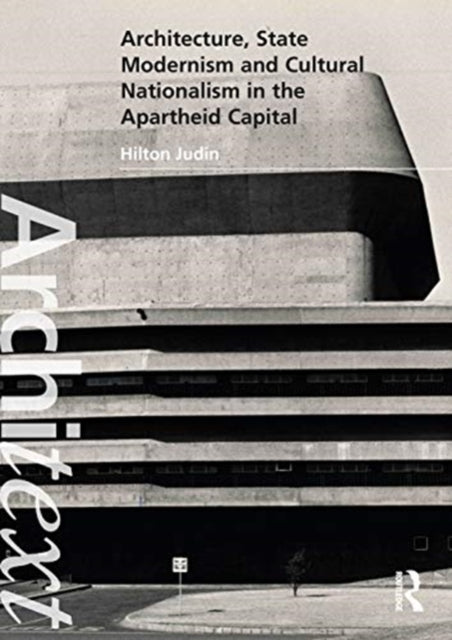
HiltonJudin
Architecture, State Modernism and Cultural Nationalism in the Apartheid Capital
Architecture, State Modernism and Cultural Nationalism in the Apartheid Capital
💎 Earn 207 Points (£2.07) on this item.
YOU SAVE £2.47
- Condition: Brand new
- UK Delivery times: Usually arrives within 2 - 3 working days
- UK Shipping: Fee starts at £2.39. Subject to product weight & dimension
Bulk ordering. Want 15 or more copies? Get a personalised quote and bigger discounts. Learn more about bulk orders.
Couldn't load pickup availability
- More about Architecture, State Modernism and Cultural Nationalism in the Apartheid Capital
This book explores the architecture of the apartheid state in Pretoria from 1957 to 1966, during rapid economic growth and political repression. It examines how buildings took on an ideological role that reflected the usurpation of regional modernism and contributed to wider discourses on international postwar modernism. The book uses unpublished documents, drawings, and photographs from archives and includes classified material from the National Nuclear Research Centre and Afrikaner Broederbond archives. State architecture became the most iconic public manifestation of white cultural identity, as architects in Pretoria sought to find form to their prospects and beliefs.
Format: Paperback / softback
Length: 206 pages
Publication date: 08 April 2021
Publisher: Taylor & Francis Ltd
This book is a groundbreaking exploration of the architectural landscape of the apartheid state during a period of rapid economic growth and political repression from 1957 to 1966. During this time, buildings assumed an ideological role that was intricately intertwined with the increasingly dominant administrative, legislative, and policing mechanisms of the regime. The book delves into how this process reflected the usurpation of a regional modernism and seeks to contribute to broader discourses on international postwar modernism in architecture.
As case studies, the book examines buildings in Pretoria that came to embody the ambitions of the apartheid state for industrialization and progress. These projects were widely acclaimed and celebrated by apartheid officials as symbols of modernity and progress. However, they also carried latent apprehensions among Afrikaners about their growing economic prospects and cultural estrangement in Africa. This lesser-known and marginalized story is brought to light through the use of unpublished documents, drawings, and photographs, as well as classified material and photographs from the National Nuclear Research Centre, negatives of 1960s from Pretoria News, and documents and pamphlets from Afrikaner Broederbond archives.
State architecture became the most iconic public manifestation of an evolving expression of white cultural identity as a new generation of architects in Pretoria took up the challenge of finding form to their prospects and beliefs. This was an opportunistic faith in Afrikaners, who urgently needed to entrench their vulnerable and contested position on the African continent. The shift from provincial town to apartheid capital was swift and relentless, leaving little in the way of obstacles to the ambitions and aims of the regime.
The book offers a comprehensive analysis of the architectural landscape during this period, shedding light on the ways in which buildings became instruments of ideology, surveillance, and control. It explores the ways in which architects responded to the political and social context of the time, incorporating symbols and motifs that reflected the values and aspirations of the apartheid state. The book also examines the broader cultural and social implications of state architecture, exploring how it shaped the experiences of both the privileged and marginalized communities in South Africa.
In conclusion, this book is a vital contribution to the study of architecture and politics in the apartheid era. It provides a detailed and nuanced exploration of the architectural landscape, shedding light on the ways in which buildings became agents of ideology and control. Through its use of unpublished materials and a multidisciplinary approach, the book offers a fresh perspective on this critical period in South African history.
Weight: 536g
Dimension: 174 x 245 x 23 (mm)
ISBN-13: 9780367519445
UK and International shipping information
UK and International shipping information
UK Delivery and returns information:
- Delivery within 2 - 3 days when ordering in the UK.
- Shipping fee for UK customers from £2.39. Fully tracked shipping service available.
- Returns policy: Return within 30 days of receipt for full refund.
International deliveries:
Shulph Ink now ships to Australia, Belgium, Canada, France, Germany, Ireland, Italy, India, Luxembourg Saudi Arabia, Singapore, Spain, Netherlands, New Zealand, United Arab Emirates, United States of America.
- Delivery times: within 5 - 10 days for international orders.
- Shipping fee: charges vary for overseas orders. Only tracked services are available for most international orders. Some countries have untracked shipping options.
- Customs charges: If ordering to addresses outside the United Kingdom, you may or may not incur additional customs and duties fees during local delivery.