Shulph Ink
Architectures of Security: Design, Control, Mobility
Architectures of Security: Design, Control, Mobility
💎 Earn 509 Points (£5.09) on this item.
We can order this item for you. Delivery usually takes about 4 to 6 weeks.
This item is not held in our immediate stock. We will order it for you after checkout.
Estimated delivery: About 4 to 6 weeks
- Condition: Brand new
- UK Delivery times: Usually arrives within 2 - 3 working days
- UK Shipping: Fee starts at £2.39. Subject to product weight & dimension
Bulk ordering. Want 15 or more copies? Get a personalised quote and bigger discounts. Learn more about bulk orders.
Couldn't load pickup availability
- More about Architectures of Security: Design, Control, Mobility
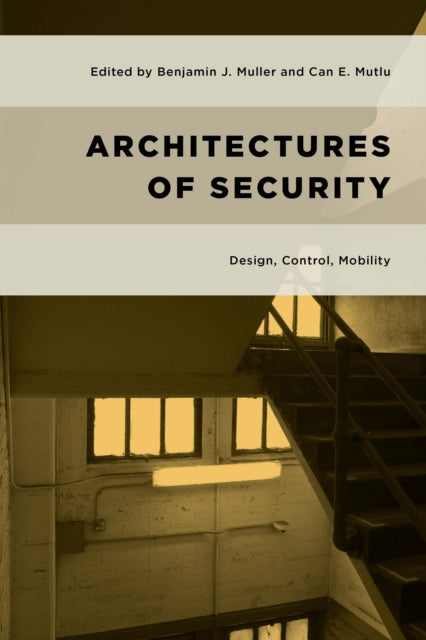
Architectures of Security: Design, Control, Mobility explores the relationship between architecture, security, and technology, highlighting how they create a "ferocious" architecture that controls and disciplines populations, reinforcing socioeconomic cleavages. Examples from urban spaces in the global north and south are provided.
Format: Hardback
Length: 182 pages
Publication date: 18 November 2024
Publisher: Rowman & Littlefield International
Architectures of Security: Design, Control, Mobility explores the intricate relationship between architecture, security, and technology, highlighting the creation of a "ferocious" architecture that encompasses the violent nature of sovereign power and neoliberalism. Through a series of examples from urban spaces in both the global north and south, the text reveals the ways in which architecture disciplines the mobility and movement of populations, perpetuating socioeconomic cleavages. From borders and borderlands to airports, museums, and public buildings, the authors vividly depict instances of inhumane sovereign power.
The book begins by examining the historical origins of security architecture, tracing its development from ancient times to the present day. It highlights the role of architecture in shaping the political landscape, from the construction of fortifications to the design of prisons. The authors argue that security architecture is not merely a physical structure but also a social and cultural phenomenon that plays a crucial role in shaping the way individuals perceive and interact with the world.
One of the key themes of the book is the impact of security architecture on the mobility and movement of populations. The authors argue that security architecture is often designed to restrict movement, control access, and monitor individuals. This can have a significant impact on the lives of individuals, particularly those who are marginalized or vulnerable. For example, borders and borderlands are often designed to prevent the movement of people across national borders, which can lead to forced migration, poverty, and social exclusion. Similarly, airports and other transportation hubs are often designed to control the movement of people, with security measures such as screening and surveillance.
However, the authors also argue that security architecture can have positive effects on society. For example, security architecture can help to prevent crime and terrorism. By designing buildings and spaces that are secure, architects can help to reduce the risk of harm to individuals and property. Security architecture can also help to promote social cohesion and stability. For example, public buildings such as schools and hospitals can help to create a sense of community and belonging, which can reduce the risk of social unrest.
However, the authors also point out that security architecture can be problematic. For example, security architecture can be used to justify discrimination and oppression. For example, border walls and other security measures can be used to prevent the movement of people from certain countries, which can be seen as a form of discrimination against those countries. Similarly, security architecture can be used to monitor and control individuals, which can be seen as a form of oppression.
To address these problems, the authors propose a number of solutions. One of the solutions is to design security architecture that is more inclusive and equitable. This can be done by designing buildings and spaces that are accessible to all individuals, regardless of their background or status. This can also be done by designing security architecture that is less intrusive and less oppressive.
Another solution is to use technology to improve security architecture. For example, security cameras and sensors can be used to monitor and control individuals, but they can also be used to prevent crime and terrorism. Security architecture can also be designed to be more resilient to natural disasters and other emergencies.
However, the authors also point out that the use of technology can be problematic. For example, security cameras and sensors can be used to monitor and control individuals, but they can also be used to violate their privacy. Security architecture can also be designed to be vulnerable to cyberattacks.
In conclusion, Architectures of Security: Design, Control, Mobility is a fascinating book that explores the relationship between architecture, security, and technology. The book provides a series of examples from urban spaces in both the global north and south, which reveal the ways in which security architecture disciplines the mobility and movement of populations, perpetuating socioeconomic cleavages. While security architecture can have positive effects on society, it can also be problematic. To address these problems, the authors propose a number of solutions, including designing security architecture that is more inclusive and equitable, using technology to improve security architecture, and being aware of the potential risks associated with the use of technology.
Weight: 445g
Dimension: 229 x 152 x 20 (mm)
ISBN-13: 9781786612229
This item can be found in:
UK and International shipping information
UK and International shipping information
UK Delivery and returns information:
- Delivery within 2 - 3 days when ordering in the UK.
- Shipping fee for UK customers from £2.39. Fully tracked shipping service available.
- Returns policy: Return within 30 days of receipt for full refund.
International deliveries:
Shulph Ink now ships to Australia, Belgium, Canada, France, Germany, Ireland, Italy, India, Luxembourg Saudi Arabia, Singapore, Spain, Netherlands, New Zealand, United Arab Emirates, United States of America.
- Delivery times: within 5 - 10 days for international orders.
- Shipping fee: charges vary for overseas orders. Only tracked services are available for most international orders. Some countries have untracked shipping options.
- Customs charges: If ordering to addresses outside the United Kingdom, you may or may not incur additional customs and duties fees during local delivery.