Barbara Scalvini
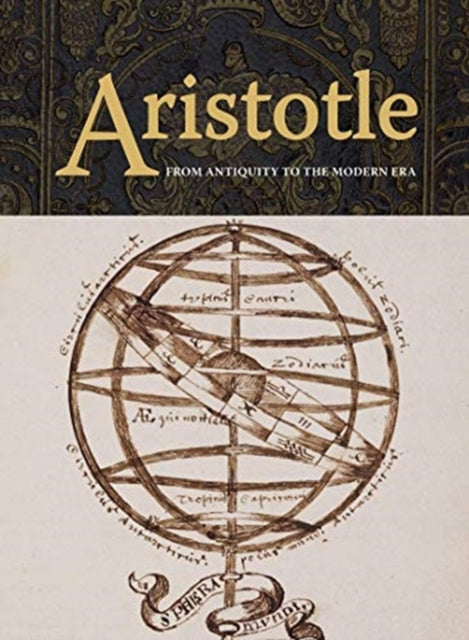
Aristotle: From Antiquity to the Modern Era
Aristotle: From Antiquity to the Modern Era
💎 Earn 115 Points (£1.15) on this item.
YOU SAVE £6.99
- Condition: Brand new
- UK Delivery times: Usually arrives within 2 - 3 working days
- UK Shipping: Fee starts at £2.39. Subject to product weight & dimension
Bulk ordering. Want 15 or more copies? Get a personalised quote and bigger discounts. Learn more about bulk orders.
Couldn't load pickup availability
- More about Aristotle: From Antiquity to the Modern Era
Aristotle is an influential figure in Western philosophy and science, and his works have been studied for over two thousand years. This volume illustrates the ways in which his corpus has been transmitted over time, focusing on the late 15th and 16th centuries when his works became widely available in Latin, Greek, and vernacular languages. It also highlights the extent of the age's engagement with Aristotle through commentaries, treatises, lecture courses, and written marginalia of books.
\n Format: Hardback
\n Length: 128 pages
\n Publication date: 15 February 2021
\n Publisher: D Giles Ltd
\n
Aristotle stands as an unparalleled figure in Western philosophy and science, surpassing all others in his influence. As we have inherited his works, they encompass a vast encyclopedia of philosophy, logic, physical and natural sciences, ethics, and politics. Aristotle's remarkable breadth and depth have cemented his status as the most influential intellectual figure in the Western tradition preceding the modern era. Despite the enduring scrutiny of his ideas for over two thousand years, the individual works of Aristotle were dispersed, lost, recovered, and gradually reunited. The physical transmission of the Aristotelian corpus was a complex and fragmented process, involving multiple chains of transmission rather than a single unbroken chain. From the Roman Empire to the Western Middle Ages, through the intermediation of Arab and Jewish scholars, Aristotle's works were copied and recopied by scribes in Greek, Arabic, Hebrew, and Latin before finally being re-made available in their original Greek.
The present volume aims to showcase the various ways in which the Aristotelian corpus has been transmitted throughout history. In particular, it delves into a crucial and extended period: the late 15th and early 16th centuries, marked by the invention of printing, which made Aristotle's works widely accessible in Latin, Greek, and even vernacular languages. At this juncture, Aristotle's authority faces increasing scrutiny as the emerging science and philosophy of early modern Europe chart their distinct paths forward. Nevertheless, Aristotle serves as both a challenge to be overcome and a bridge to the new age, particularly in the works of Jesuit philosophers and scientists. In one way or another, Aristotle's ideas had to be reckoned with, as he could not be avoided.
The significance of Aristotle's writings extends far beyond the confines of philosophy and science. His ideas have permeated various fields, including theology, literature, art, and politics. His treatises on ethics, politics, and metaphysics have shaped the development of moral and political thought for centuries. Aristotle's concept of the natural world, based on the observation and classification of phenomena, has provided a framework for understanding the physical universe. His works on logic and metaphysics have laid the foundation for modern philosophical inquiry, challenging traditional notions of reality and exploring the nature of existence.
Despite the enduring impact of Aristotle's ideas, his works have faced challenges and controversies throughout history. Some scholars have criticized his views on women, slavery, and the natural world, arguing that they reflect the biases and prejudices of his time. Others have challenged his philosophical methodology, questioning the validity of his arguments and the reliability of his evidence. Nevertheless, Aristotle's influence remains profound, and his works continue to be studied and debated by scholars across the world.
In conclusion, Aristotle towers over Western philosophy and science as an unparalleled figure, leaving an indelible mark on the intellectual landscape. His extraordinary range and depth have made him the most important intellectual figure in the Western tradition preceding the modern age. Despite the challenges and controversies that have accompanied his works, Aristotle's ideas continue to resonate and shape our understanding of the world. The transmission of his corpus has been a complex and fragmented process, reflecting the diverse paths his ideas have taken throughout history. However, the enduring significance of Aristotle's ideas ensures that he will remain a central figure in the ongoing dialogue between philosophy, science, and the broader human experience.
\n Weight: 870g\n
Dimension: 288 x 210 x 18 (mm)\n
ISBN-13: 9781911282754\n \n
UK and International shipping information
UK and International shipping information
UK Delivery and returns information:
- Delivery within 2 - 3 days when ordering in the UK.
- Shipping fee for UK customers from £2.39. Fully tracked shipping service available.
- Returns policy: Return within 30 days of receipt for full refund.
International deliveries:
Shulph Ink now ships to Australia, Belgium, Canada, France, Germany, Ireland, Italy, India, Luxembourg Saudi Arabia, Singapore, Spain, Netherlands, New Zealand, United Arab Emirates, United States of America.
- Delivery times: within 5 - 10 days for international orders.
- Shipping fee: charges vary for overseas orders. Only tracked services are available for most international orders. Some countries have untracked shipping options.
- Customs charges: If ordering to addresses outside the United Kingdom, you may or may not incur additional customs and duties fees during local delivery.