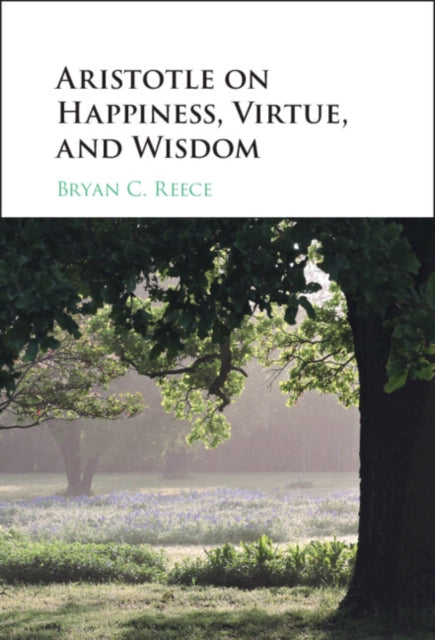
Bryan C.Reece
Aristotle on Happiness, Virtue, and Wisdom
Aristotle on Happiness, Virtue, and Wisdom
💎 Earn 372 Points (£3.72) on this item.
We can order this item for you. Delivery usually takes about 4 to 6 weeks.
This item is not held in our immediate stock. We will order it for you after checkout.
Estimated delivery: About 4 to 6 weeks
YOU SAVE £4.42
- Condition: Brand new
- UK Delivery times: Usually arrives within 2 - 3 working days
- UK Shipping: Fee starts at £2.39. Subject to product weight & dimension
Bulk ordering. Want 15 or more copies? Get a personalised quote and bigger discounts. Learn more about bulk orders.
Couldn't load pickup availability
- More about Aristotle on Happiness, Virtue, and Wisdom
Aristotle believes that happiness is an activity rather than a feeling and that it is the best activity of which humans are capable, spread out over the course of a life. Bryan Reece offers a new approach to determining what kind of activity Aristotle thinks happiness is, challenging widespread assumptions and displaying the boldness and systematicity of his practical philosophy.
Format: Hardback
Length: 240 pages
Publication date: 29 June 2023
Publisher: Cambridge University Press
Aristotle believes that happiness is an active pursuit rather than a passive emotion. It encompasses the best that humans can achieve and extends throughout their lives. However, the nature of this ultimate activity remains a subject of debate. Some of his remarks suggest that it is a single, exceptional kind of activity, namely intellectual contemplation. On the other hand, there is evidence to suggest that happiness is a broader endeavor that includes various virtuous activities, both ethical and intellectual. Different interpreters have offered contrasting views on Aristotle's answers to these questions, leading to significant disagreements.
In this book, Bryan Reece presents a groundbreaking approach to understanding what Aristotle considers happiness to be. He challenges prevailing assumptions that have hindered a dialectical interpretation of Aristotle's philosophy. Reece's approach showcases the boldness and systematicity of Aristotle's practical philosophy.
Aristotle's view on happiness revolves around the idea that it is an active pursuit rather than a passive emotion. He believes that happiness consists in doing something, rather than merely experiencing a feeling. This activity, which is the best that humans can achieve, extends throughout their lives.
One of the key debates surrounding Aristotle's concept of happiness is the nature of the ultimate activity. Some interpreters argue that it is a single best kind of activity, namely intellectual contemplation. According to this view, happiness is achieved through deep thinking and intellectual inquiry, leading to a profound understanding of the world and oneself.
On the other hand, there is evidence to suggest that happiness is a broader endeavor that includes various virtuous activities, both ethical and intellectual. Aristotle emphasizes the importance of virtue and moral character in achieving happiness. He believes that living a virtuous life, characterized by honesty, courage, and self-control, is essential for attaining a fulfilling and happy existence.
In addition to these virtuous activities, Aristotle also suggests that happiness involves engaging in productive and creative endeavors. He believes that humans are naturally inclined to seek out activities that allow them to express their talents and abilities, leading to a sense of fulfillment and purpose. This can include activities such as artistic creation, scientific discovery, or helping others.
Another aspect of Aristotle's philosophy of happiness is the idea of eudaimonia, which is often translated as "human flourishing." Eudaimonia is a more comprehensive concept that encompasses not only personal happiness but also social and political well-being. It involves living a life that is in harmony with nature, living with others in a just and peaceful society, and achieving a sense of fulfillment and purpose in one's life.
Despite the diverse interpretations of Aristotle's philosophy of happiness, Reece's approach offers a fresh and insightful perspective. He challenges the notion that happiness is a single best kind of activity and proposes that it is a broader endeavor that includes various virtuous activities, both ethical and intellectual. Reece's systematic approach to analyzing Aristotle's texts and arguments demonstrates the boldness and coherence of his practical philosophy.
In conclusion, Aristotle's philosophy of happiness is a complex and multifaceted concept that has been the subject of much debate and interpretation. While some interpreters argue that intellectual contemplation is the ultimate activity, others suggest that happiness is a broader endeavor that includes various virtuous activities, both ethical and intellectual. Bryan Reece's approach to determining what kind of activity Aristotle thinks happiness is offers a fundamentally new perspective that challenges prevailing assumptions and demonstrates the boldness and systematicity of Aristotle's practical philosophy. By exploring the nature of happiness and the various activities that contribute to it, Reece's book provides valuable insights into the pursuit of a fulfilling and happy life.
ISBN-13: 9781108486736
This item can be found in:
UK and International shipping information
UK and International shipping information
UK Delivery and returns information:
- Delivery within 2 - 3 days when ordering in the UK.
- Shipping fee for UK customers from £2.39. Fully tracked shipping service available.
- Returns policy: Return within 30 days of receipt for full refund.
International deliveries:
Shulph Ink now ships to Australia, Belgium, Canada, France, Germany, Ireland, Italy, India, Luxembourg Saudi Arabia, Singapore, Spain, Netherlands, New Zealand, United Arab Emirates, United States of America.
- Delivery times: within 5 - 10 days for international orders.
- Shipping fee: charges vary for overseas orders. Only tracked services are available for most international orders. Some countries have untracked shipping options.
- Customs charges: If ordering to addresses outside the United Kingdom, you may or may not incur additional customs and duties fees during local delivery.