James G.Lennox
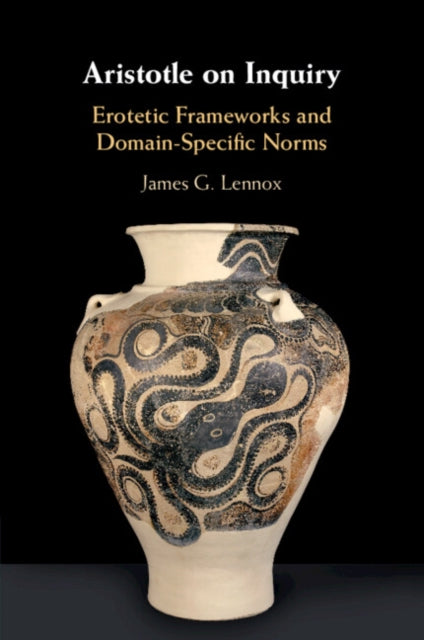
Aristotle on Inquiry: Erotetic Frameworks and Domain-Specific Norms
Aristotle on Inquiry: Erotetic Frameworks and Domain-Specific Norms
💎 Earn 136 Points (£1.36) on this item.
We can order this item for you. Delivery usually takes about 4 to 6 weeks.
This item is not held in our immediate stock. We will order it for you after checkout.
Estimated delivery: About 4 to 6 weeks
YOU SAVE £1.62
- Condition: Brand new
- UK Delivery times: Usually arrives within 2 - 3 working days
- UK Shipping: Fee starts at £2.39. Subject to product weight & dimension
Bulk ordering. Want 15 or more copies? Get a personalised quote and bigger discounts. Learn more about bulk orders.
Couldn't load pickup availability
- More about Aristotle on Inquiry: Erotetic Frameworks and Domain-Specific Norms
Aristotle's philosophical reflections on scientific knowledge impact his actual scientific inquiries, with a general, question-guided framework and domain-specific norms applicable to all scientific inquiries.
Format: Paperback / softback
Length: 336 pages
Publication date: 06 April 2023
Publisher: Cambridge University Press
Aristotle stands as a remarkable figure in the annals of philosophy and science, towering over both disciplines with his profound contributions. Furthermore, he dedicated significant philosophical energies to exploring the essence of scientific knowledge. How, then, do his philosophical reflections on scientific inquiry shape his actual scientific endeavors? In his book, James Lennox endeavors to address this intriguing question. He posits that Aristotle possesses a deeply normative perspective on scientific inquiry, encompassing two distinct types of norms: a general, question-guided framework applicable to all scientific inquiries, and domain-specific norms that account for variations in the object of study and the tools of observation available to researchers. To illustrate these inquiry norms in action, the second half of the book delves into Aristotle's investigations into various subjects, including animals, the soul, material compounds, the movements of celestial bodies, and respiration.
Aristotle's philosophical reflections on scientific knowledge have a profound impact on his actual scientific inquiries. Lennox argues that Aristotle holds a richly normative view of scientific inquiry, with two distinct types of norms: a general, question-guided framework applicable to all scientific inquiries, and domain-specific norms that reflect differences in the target of inquiry and the means of observation available to researchers.
To illustrate these norms in action, the second half of the book examines Aristotle's investigations into various subjects, including animals, the soul, material compounds, the movements of celestial bodies, and respiration. Through these investigations, Lennox demonstrates how Aristotle's philosophical insights shape his scientific inquiries, guiding his observations, questions, and conclusions.
Aristotle's normative perspective on scientific inquiry emphasizes the importance of questioning, observation, and logical reasoning in the pursuit of knowledge. He believed that scientific inquiry should be guided by a systematic approach, starting with general questions and gradually narrowing down to specific observations and conclusions. This approach, known as the scientific method, is still widely used today and is considered a cornerstone of modern scientific practice.
In addition to his normative views, Aristotle made significant contributions to various scientific fields, including biology, physics, and metaphysics. His investigations into animals, for example, provided valuable insights into the nature of living organisms and their behavior. His work on the soul, while controversial, contributed to the understanding of the human mind and its relationship to the body.
Aristotle's philosophical reflections on scientific knowledge also have implications for contemporary debates about the nature of science and the role of philosophy in scientific inquiry. Lennox argues that Aristotle's normative perspective can provide a valuable framework for evaluating scientific theories and methods, and can help to ensure that scientific research is conducted ethically and responsibly.
In conclusion, Aristotle's philosophical reflections on scientific knowledge have a profound impact on his actual scientific inquiries. Lennox's book provides a valuable exploration of these connections, demonstrating how Aristotle's philosophical insights shape his scientific endeavors and contribute to our understanding of the natural world.
ISBN-13: 9781009382557
This item can be found in:
UK and International shipping information
UK and International shipping information
UK Delivery and returns information:
- Delivery within 2 - 3 days when ordering in the UK.
- Shipping fee for UK customers from £2.39. Fully tracked shipping service available.
- Returns policy: Return within 30 days of receipt for full refund.
International deliveries:
Shulph Ink now ships to Australia, Belgium, Canada, France, Germany, Ireland, Italy, India, Luxembourg Saudi Arabia, Singapore, Spain, Netherlands, New Zealand, United Arab Emirates, United States of America.
- Delivery times: within 5 - 10 days for international orders.
- Shipping fee: charges vary for overseas orders. Only tracked services are available for most international orders. Some countries have untracked shipping options.
- Customs charges: If ordering to addresses outside the United Kingdom, you may or may not incur additional customs and duties fees during local delivery.