NinaAthanassoglou-Kallmyer
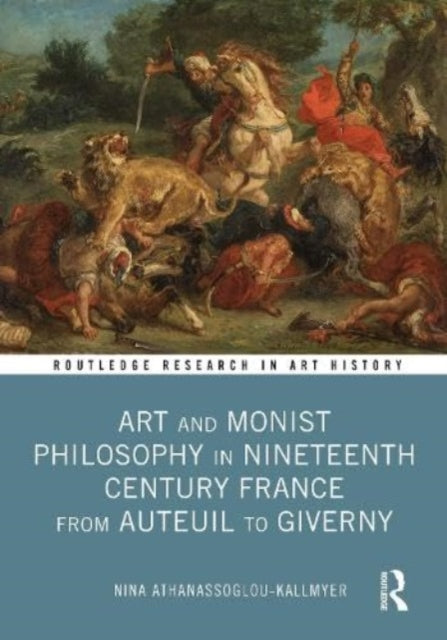
Art and Monist Philosophy in Nineteenth Century France From Auteuil to Giverny
Art and Monist Philosophy in Nineteenth Century France From Auteuil to Giverny
💎 Earn 811 Points (£8.11) on this item.
YOU SAVE £9.63
- Condition: Brand new
- UK Delivery times: Usually arrives within 2 - 3 working days
- UK Shipping: Fee starts at £2.39. Subject to product weight & dimension
Bulk ordering. Want 15 or more copies? Get a personalised quote and bigger discounts. Learn more about bulk orders.
Couldn't load pickup availability
- More about Art and Monist Philosophy in Nineteenth Century France From Auteuil to Giverny
This book explores the relationship between the fine arts and philosophy in France from the 1789 revolution to the end of the nineteenth century, focusing on the transformative force of monist thought on French art and culture. It examines the works of three major artists, Théodore Géricault, Eugène Delacroix, and Claude Monet, and their interpretation of this concept.
Format: Hardback
Length: 182 pages
Publication date: 25 September 2023
Publisher: Taylor & Francis Ltd
This captivating exploration delves into the intricate relationship between the fine arts and philosophy in France, spanning from the aftermath of the 1789 revolution to the end of the nineteenth century. During this period, a profound philosophical movement known as "monism" gained widespread popularity among intellectuals, artists, and scientists, emphasizing the unity of matter and spirit. Nina Athanassoglou-Kallmyer meticulously charts the evolution and profound impact of this monist thought, its various permutations, and its transformative influence on various aspects of French art and culture. Chapters focus on three prominent artists, Théodore Géricault (1791–1824), Eugène Delacroix (1798–1863), and Claude Monet (1840–1926), who each approached and interpreted this unitarian concept in their unique ways. This insightful book appeals to scholars engaged in art history, philosophy, and cultural history, offering a rich tapestry of insights into the interplay between these two disciplines.
Introduction:
The study of the relationship between the fine arts and philosophy in France is a fascinating journey that spans several centuries. From the aftermath of the 1789 revolution to the end of the nineteenth century, a philosophy of being known as "monism" emerged and gained widespread popularity among intellectuals, artists, and scientists. This philosophical movement emphasized the unity of matter and spirit, and its influence can be seen in various aspects of French art and culture.
Evolution of Monism:
Nina Athanassoglou-Kallmyer traces the evolution and impact of monist thought in France, exploring its various permutations and its transformative force on certain aspects of French art and culture. The book focuses on three major artists, Théodore Géricault (1791–1824), Eugène Delacroix (1798–1863), and Claude Monet (1840–1926), who each approached and interpreted the unitarian concept in their unique ways.
Théodore Géricault:
Chapter 1 delves into the life and work of Théodore Géricault, a renowned French artist known for his dramatic and expressive paintings. Géricault's approach to monism is evident in his portrayal of human suffering and the human body in his works, such as "The Raft of the Medusa" (1818). He believed that the human body was a manifestation of the unity of matter and spirit, and his paintings sought to capture the essence of this unity.
Eugène Delacroix:
Chapter 2 explores the life and work of Eugène Delacroix, another influential French artist known for his bold and colorful paintings. Delacroix's interpretation of monism was influenced by his study of ancient Egyptian art and philosophy. He believed that the human body was a vessel for the soul and that the soul was the ultimate source of creativity and inspiration. His paintings, such as "The Slave Market" (1856), depict the human body as a site of both physical and spiritual suffering.
Claude Monet:
Chapter 3 focuses on the life and work of Claude Monet, a pioneer of the Impressionist movement. Monet's approach to monism was influenced by his observations of nature and his desire to capture the fleeting moments of light and color. He believed that the natural world was a manifestation of the unity of matter and spirit, and his paintings, such as "Impression, Sunrise" (1872), depict the beauty and complexity of the natural world.
Conclusion:
In conclusion, this book offers a comprehensive exploration of the relationship between the fine arts and philosophy in France, from the aftermath of the 1789 revolution to the end of the nineteenth century. Through the analysis of the works of three major artists and their unique approaches to monism, the book demonstrates the profound influence of this philosophical movement on various aspects of French art and culture. This book will be of interest to scholars working in art history, philosophy, and cultural history, as it provides a valuable insight into the complex interplay between these two disciplines.
Weight: 510g
Dimension: 246 x 174 (mm)
ISBN-13: 9781032465388
This item can be found in:
UK and International shipping information
UK and International shipping information
UK Delivery and returns information:
- Delivery within 2 - 3 days when ordering in the UK.
- Shipping fee for UK customers from £2.39. Fully tracked shipping service available.
- Returns policy: Return within 30 days of receipt for full refund.
International deliveries:
Shulph Ink now ships to Australia, Belgium, Canada, France, Germany, Ireland, Italy, India, Luxembourg Saudi Arabia, Singapore, Spain, Netherlands, New Zealand, United Arab Emirates, United States of America.
- Delivery times: within 5 - 10 days for international orders.
- Shipping fee: charges vary for overseas orders. Only tracked services are available for most international orders. Some countries have untracked shipping options.
- Customs charges: If ordering to addresses outside the United Kingdom, you may or may not incur additional customs and duties fees during local delivery.